obijime and obiage
the cord and scarf that finish a kimono's sash
帯締めと帯揚げ(おびじめとおびあげ)
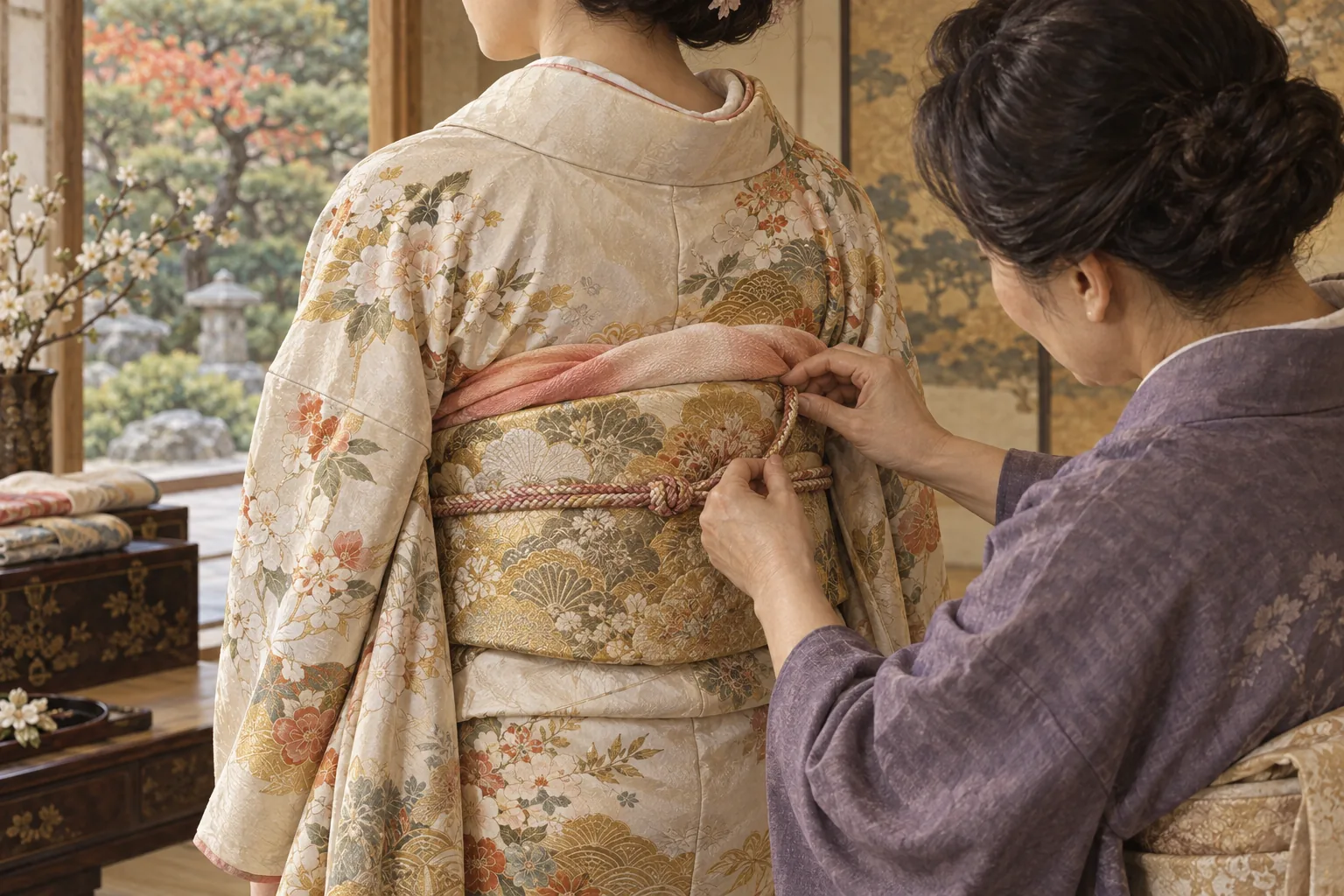
In one line
The shortest answer that works
Obijime and obiage are the cord and scarf that hold a kimono's obi sash together.
帯締めと帯揚げは、着物の帯を結んだあとにその形を留める紐と布のことです。
In 30 seconds
The standard explanation
Obijime is a thin braided cord tied across the front of the obi to keep the bow from coming undone. Obiage is a soft scarf tucked in just above the obi, hiding the small pad that holds the knot in shape. Neither one holds up the kimono itself, but a look isn't finished without them. Their color is chosen to match the season, the fabric, and even the wearer's age, with brighter shades for younger women.
帯締めは、帯の結び目がほどけないように前面で結ぶ細い組み紐です。帯揚げは、帯の上にのぞかせる柔らかい布で、結び目の形を支える帯枕を隠す役目があります。どちらも着物を支えているわけではありませんが、この二つがないと装いは完成しません。色は季節や生地、着る人の年齢に合わせて選ばれ、若い女性ほど明るい色を使う傾向があります。
As a short speech
A full paragraph you can read aloud
When a kimono is tied, the obi sash is finished off with two small but important pieces: the obijime, a braided cord knotted across the front, and the obiage, a scarf tucked above the obi to hide the padding underneath. Neither piece is essential for keeping the kimono on the body, yet a kimono without them looks unfinished, almost like a suit without a tie.
What I find interesting is how much information they carry. Bright, vivid colors are typical for young women in furisode; a muted gray or beige suits an older guest at a formal event. Professional kimono dressers follow detailed color rules for weddings, funerals, and tea ceremonies, so a glance at someone's obijime can tell you a lot about the occasion.
着物を着るとき、帯はこの二つの小さくも大切な部品で仕上げられます。帯締めは前面で結ぶ組み紐、帯揚げは帯の上にのぞかせ、下の芯を隠すスカーフです。
どちらも着物を体に留めておくために必須ではありませんが、これらがない着物は、ネクタイのないスーツのようにどこか未完成に見えます。興味深いのは、これらがどれほど多くの情報を伝えるかということです。
鮮やかな色は振袖を着る若い女性に多く、落ち着いたグレーやベージュは改まった場に出る年配の客にふさわしいとされます。着付けの専門家は結婚式や葬儀、茶道のために細かい色の決まりに従っており、帯締めを一目見るだけで場面がわかることもあります。
Questions people actually ask
And how to answer them.
If I just rent a yukata for a festival, do I need these too?
Usually not. A yukata is tied with a simpler, narrower sash called a hanhaba obi, or half-width obi, and most rental sets skip the obijime and obiage entirely. You'll mostly see these two on formal kimono, like at weddings or tea ceremonies.
通常は不要です。浴衣は半幅帯という、もっと簡単で幅の狭い帯で結ぶことが多く、レンタルセットには帯締めも帯揚げも含まれないのが普通です。この二つは、結婚式や茶道など、格式のある着物のときによく使われます。
Why does the color matter so much?
Because kimono dressing has fairly strict, unwritten rules about formality and age, and the obijime and obiage are the easiest way to show both. Someone trained in kimono dressing can often guess a wearer's age and the event just from these two small items.
着物の装いには、格式や年齢についてのかなり厳格な、しかし明文化されていない決まりがあり、帯締めと帯揚げはそれを示す一番手っ取り早い方法だからです。着付けに詳しい人は、この二つの小物だけで着ている人のおおよその年齢や場面を言い当てることもあります。
Can I buy just these, without a full kimono?
Yes, kimono shops and department stores sell obijime and obiage separately, and many people build a small collection to change the look of the same kimono for different seasons or occasions.
はい、着物店やデパートでは帯締めと帯揚げは単品でも売られていて、同じ着物でも季節や場面に合わせて表情を変えられるよう、これらを何本も持っている人も多くいます。
Phrases you can use
- What color obijime would suit this kimono?この着物にはどんな色の帯締めが合いますか。
- This obiage is a little too bright for a funeral.この帯揚げはお葬式にはちょっと明るすぎますね。
- Could you help me tie the obijime?帯締めを結ぶのを手伝っていただけますか。
- I bought a plain obijime so it goes with everything.どの着物にも合うように、無地の帯締めを買いました。
- The knot on the obijime has a name too.帯締めの結び方にもちゃんと名前があるんですよ。
Words you need
- obi sash帯
- braided cord組み紐
- kimono dresser着付け師
- formality (of dress)格
- tea ceremony茶道
Watch
From YouTubeBackground (Japanese)
帯締めの結び方には、基本の「本結び」や、振袖などで華やかに見せる「飾り結び」など複数の型があり、弔事では房の向きを下にするなど、慶弔で使い分けることもある。帯締めには帯留めという小さな装飾金具を通して使うこともあり、これも季節や場面に合わせて選ばれる。帯揚げの色や柄で四季を表すのは着物文化ならではの遊びで、未婚女性の振袖には華やかな絞りの帯揚げ、既婚女性の留袖には控えめな色柄が好まれる傾向がある。上等な帯締めは今も職人が一本ずつ手で組んでおり、高価なものも多い。