Nobunaga, Hideyoshi and Ieyasu
the three who unified Japan
信長・秀吉・家康(のぶなが・ひでよし・いえやす)
In one line
The shortest answer that works
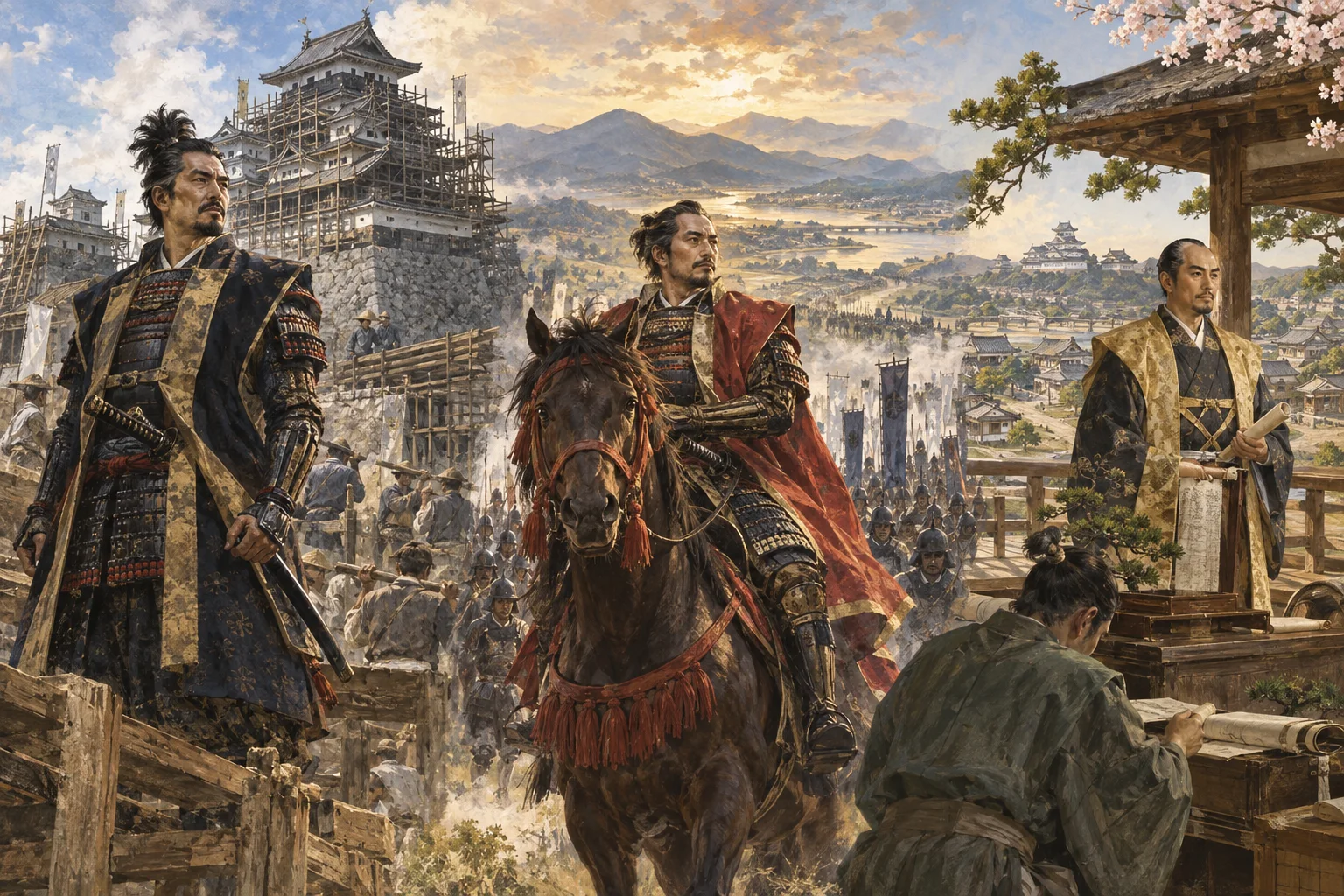
Nobunaga, Hideyoshi and Ieyasu are the three successive leaders who unified Japan after a century of civil war.
信長・秀吉・家康とは、百年の内戦のあと、相次いで日本を統一した三人の指導者です。
In 30 seconds
The standard explanation
Oda Nobunaga broke the old order by force and controlled much of central Japan before being killed by one of his own generals in 1582. Toyotomi Hideyoshi, who rose from a peasant background, completed the unification. Tokugawa Ieyasu won the decisive battle in 1600 and founded the government that then held Japan for over 250 years.
織田信長は力によって古い秩序を壊し、中央の多くを支配しましたが、1582年に自らの家臣に討たれました。百姓の出から身を起こした豊臣秀吉が統一を完成させます。徳川家康は1600年の決戦に勝ち、その後250年以上にわたって日本を保つ政権を開きました。
As a short speech
A full paragraph you can read aloud
Three men ended Japan's century of civil war, and Japanese people learn them as a set. Oda Nobunaga broke down the old order: he was open to new technology, willing to burn a monastery that opposed him, and he had brought much of central Japan under control when one of his own generals turned on him in 1582 and he died at a temple in Kyoto.
Toyotomi Hideyoshi, who had risen from a peasant family to be Nobunaga's sandal-bearer and then his general, avenged him and finished the unification, then froze the social order by disarming the peasantry and surveying every field, and launched two invasions of Korea, which ended with a withdrawal after his death. Tokugawa Ieyasu waited. After Hideyoshi died he won the battle of Sekigahara in 1600, was appointed shogun in 1603, and built a government designed above all to prevent anyone doing to him what he had done to the Toyotomi.
三人の男が日本の百年の内戦を終わらせました。日本人はこの三人をひとまとまりとして習います。織田信長は古い秩序を崩しました。新しい技術に開かれ、逆らう寺を焼くこともいとわず、中央の多くを支配下に収めたところで、1582年に自らの家臣に背かれ、京都の寺で死にました。
百姓の家から信長の草履取りとなり、やがて武将となった豊臣秀吉が、その仇を討ち、統一を完成させます。そして刀狩で百姓から武器を取り上げ、全国の田を検地して身分の秩序を固定し、二度にわたる朝鮮への出兵を行い、それは彼の死後の撤兵で終わりました。
徳川家康は待ちました。秀吉の死後、1600年の関ヶ原の戦いに勝ち、1603年に征夷大将軍に任じられ、何よりも、自分が豊臣家にしたことを誰かに自分にされないよう設計された政権を築きました。
Questions people actually ask
And how to answer them.
What is the rice cake poem about?
It is a later saying: Oda pounded the rice cake of the realm, Hashiba kneaded it, and Tokugawa ate it sitting down. It sums up the division of labor, with a jab at Ieyasu for taking what the other two had made.
後の世に作られた戯れ歌です。天下という餅を織田が搗き、羽柴がこね、徳川が座ったまま食べた、という意味で、三人の役割分担を言い当てつつ、二人がこしらえたものを取った家康を皮肉っています。
Are the famous quotes about the cuckoo real?
No. The three verses about what each man would do if a cuckoo would not sing, kill it, make it sing, or wait for it, were written long after they died. They are a neat summary of their reputations, not their words.
本人の言葉ではありません。鳴かない時鳥をどうするか、殺す、鳴かせてみせる、鳴くまで待つ、という三つの句は、三人の死後ずっとあとに作られたものです。それぞれの評判をうまくまとめたものであって、発言ではありません。
A common misunderstanding
MYTHThe three were allies working toward a shared plan.
FACTEach took over from the last by force or opportunity. Hideyoshi destroyed Nobunaga's killer and sidelined his heirs, and Ieyasu destroyed the Toyotomi house after Hideyoshi's death.
Phrases you can use
- Each one finished what the last started.それぞれが前の者の仕事を引き継ぎました。
- Nobunaga was killed by his own general.信長は自らの家臣に討たれました。
- Hideyoshi rose from a peasant family.秀吉は百姓の家から身を起こしました。
- Ieyasu won at Sekigahara in 1600.家康は1600年の関ヶ原に勝ちました。
Words you need
- to unify統一する
- successor後継者
- decisive battle決戦
- to betray裏切る
Watch
From YouTubeBackground (Japanese)
信長が本能寺で明智光秀に討たれた1582年の出来事は本能寺の変と呼ばれ、その動機については今も諸説があります。秀吉は刀狩令と太閤検地によって、武士と百姓の身分を固定しました。家康は1603年に将軍となり、わずか2年で子に将軍職を譲って、徳川が世襲することを内外に示しました。三人はまとめて「三英傑」と呼ばれ、いずれも尾張と三河、いまの愛知県の出身です。