hikikomori
long-term withdrawal from society
引きこもり(ひきこもり)
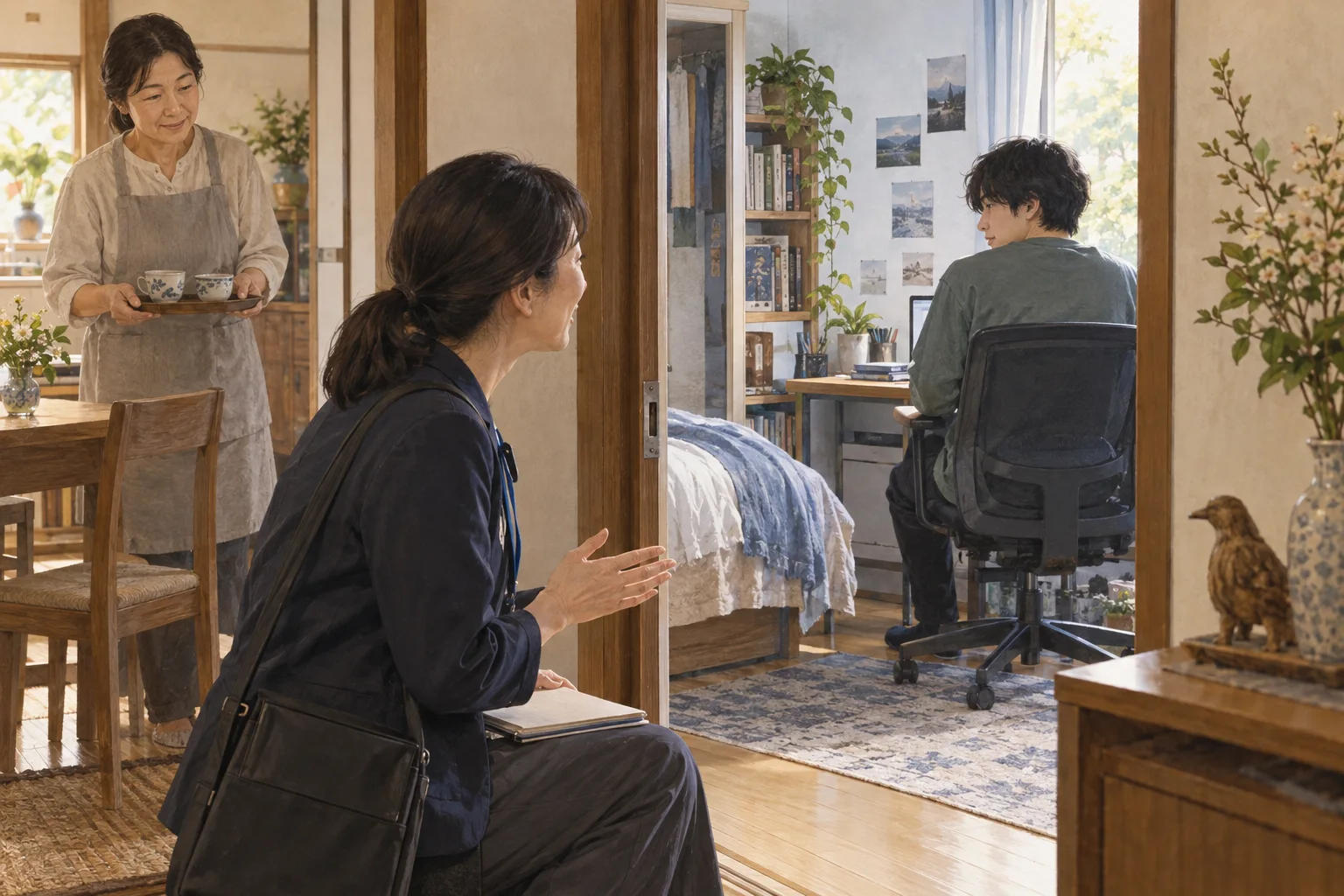
In one line
The shortest answer that works
Hikikomori means staying withdrawn from society at home for six months or more, and it affects all ages.
引きこもりとは半年以上、社会との接触を断って家にとどまる状態で、年齢を問わず起きます。
In 30 seconds
The standard explanation
Hikikomori describes people who have stayed out of work, school and social contact for at least six months, going out rarely or not at all, where illness is not the reason. The word entered English because the pattern was first described in Japan, but similar cases are now reported in other countries. A 2022 government survey estimated about 1.46 million people aged 15 to 64 in this state. Roughly half are middle-aged.
引きこもりとは、病気が理由ではないのに、半年以上にわたって仕事や学校や人との交わりから離れ、ほとんど外に出ない状態の人を指します。この状態が最初に日本で記述されたためこの語が英語にも入りましたが、今では他の国でも同様の例が報告されています。2022年の国の調査では、15歳から64歳で約146万人と推計されました。およそ半数は中高年です。
As a short speech
A full paragraph you can read aloud
Hikikomori is one of the few Japanese social terms that has gone into English unchanged. It refers to people who have withdrawn from work, school and social life for six months or more, going out only for hobbies or to a nearby convenience store, or not leaving the house at all, where illness is not the cause.
The Japanese government surveyed this in 2022 and estimated about 1.46 million people between 15 and 64, which is roughly one in fifty. Two things surprise people. First, it is not only a youth problem: about half of those counted are aged 40 to 64, many of them supported by parents who are now elderly, a situation discussed under the name the 8050 problem.
Second, similar cases have since been reported in other countries, so it is less uniquely Japanese than it was once presented. Causes vary: bullying, a failed job hunt, leaving a job, or simply a slow drift. Support now focuses on the family as much as the person.
引きこもりは、そのままの形で英語に入った数少ない日本の社会用語の一つです。病気が理由でないのに、半年以上にわたって仕事や学校や人づきあいから退き、趣味か近所のコンビニに出るだけか、まったく家を出ない状態の人を指します。
日本政府は2022年にこれを調査し、15歳から64歳で約146万人、およそ50人に1人と推計しました。驚かれる点が二つあります。第一に、若者だけの問題ではありません。数えられた人のおよそ半数は40歳から64歳で、その多くを今では高齢になった親が支えており、これは8050問題という名で語られます。
第二に、その後ほかの国でも同様の例が報告されており、かつて語られたほど日本に固有ではありません。原因はさまざまで、いじめ、就職活動の失敗、退職、あるいはただ少しずつそうなったという場合もあります。支援は今、本人と同じくらい家族に向けられています。
Questions people actually ask
And how to answer them.
Is hikikomori a mental illness?
It is a description of a social state, not a diagnosis. The survey definition specifically excludes cases where illness is the reason for staying home. Some people in this state do have a mental health condition and some do not, so treating it as one illness misses most of what is going on.
診断名ではなく、社会的な状態を表す言葉です。調査の定義は、病気が在宅の理由である場合を明確に除いています。この状態の人に精神的な不調がある場合もない場合もあり、一つの病気として扱うと実態の大半を見落とします。
What is the 8050 problem?
The shorthand for a parent in their eighties supporting a child in their fifties who has been withdrawn for decades. When the parent's health or pension fails, the household can collapse with no one aware of it, so municipalities now try to find these families before that point.
80代の親が、何十年も引きこもっている50代の子を支えている状態を指す言い方です。親の健康や年金が尽きたとき、誰にも気づかれないまま家庭が立ち行かなくなるため、自治体はそうなる前にこうした家族を把握しようとしています。
Is this a uniquely Japanese phenomenon?
It was first described and named in Japan, which is why the word traveled, but comparable cases have since been reported elsewhere, including in Korea, Spain, Italy and the United States. What may be more particular to Japan is how much shame keeps families from asking for help.
最初に記述され名前がついたのが日本なのでこの語が広まりましたが、その後、韓国、スペイン、イタリア、アメリカなどでも同様の例が報告されています。日本により特徴的なのは、恥の意識が家族に助けを求めさせない度合いかもしれません。
A common misunderstanding
MYTHHikikomori are lazy young men addicted to games and anime.
FACTAbout half of those counted are aged 40 to 64, women are included in the estimates, and the survey lists triggers such as leaving a job and difficulties at school.
Phrases you can use
- The word means withdrawing from society for six months or more.半年以上、社会から退いた状態を指す言葉です。
- It isn't only a young people's problem anymore.もう若者だけの問題ではありません。
- A government survey put the figure at about 1.46 million.政府の調査では約146万人と推計されました。
- Families often feel too ashamed to ask for help.家族が恥ずかしさから助けを求められないことがよくあります。
- Many local governments have a support desk for this now.今は多くの自治体に相談窓口があります。
Words you need
- social withdrawal社会的なひきこもり
- estimate推計
- support desk相談窓口
- shame / stigma恥・後ろめたさ
- middle-aged中高年の
Watch
From YouTubeBackground (Japanese)
内閣府が2022年11月に行った「こども・若者の意識と生活に関する調査」では、広義の引きこもりにあたる人が15〜39歳で2.05パーセント、40〜64歳で2.02パーセントとされ、全国でおよそ146万人と推計されました。定義は、趣味の用事のときだけ外出する、近所のコンビニなどには出る、自室から出るが家からは出ない、自室からほとんど出ない、のいずれかが半年以上続き、病気が理由でない場合です。調査自体が、同じ定義を一律に当てはめたため実態とずれる可能性があると注記しています。かつては若者の問題とされましたが、長期化により中高年の割合が高まり、80代の親が50代の子を支える「8050問題」が福祉の現場の課題として語られるようになりました。都道府県や政令指定都市にはひきこもり地域支援センターが置かれ、市町村にも相談窓口が広がっています。