haikei and keigu
the formal opening and closing words that bracket a proper Japanese letter
手紙の拝啓と敬具(てがみのはいけいとけいぐ)
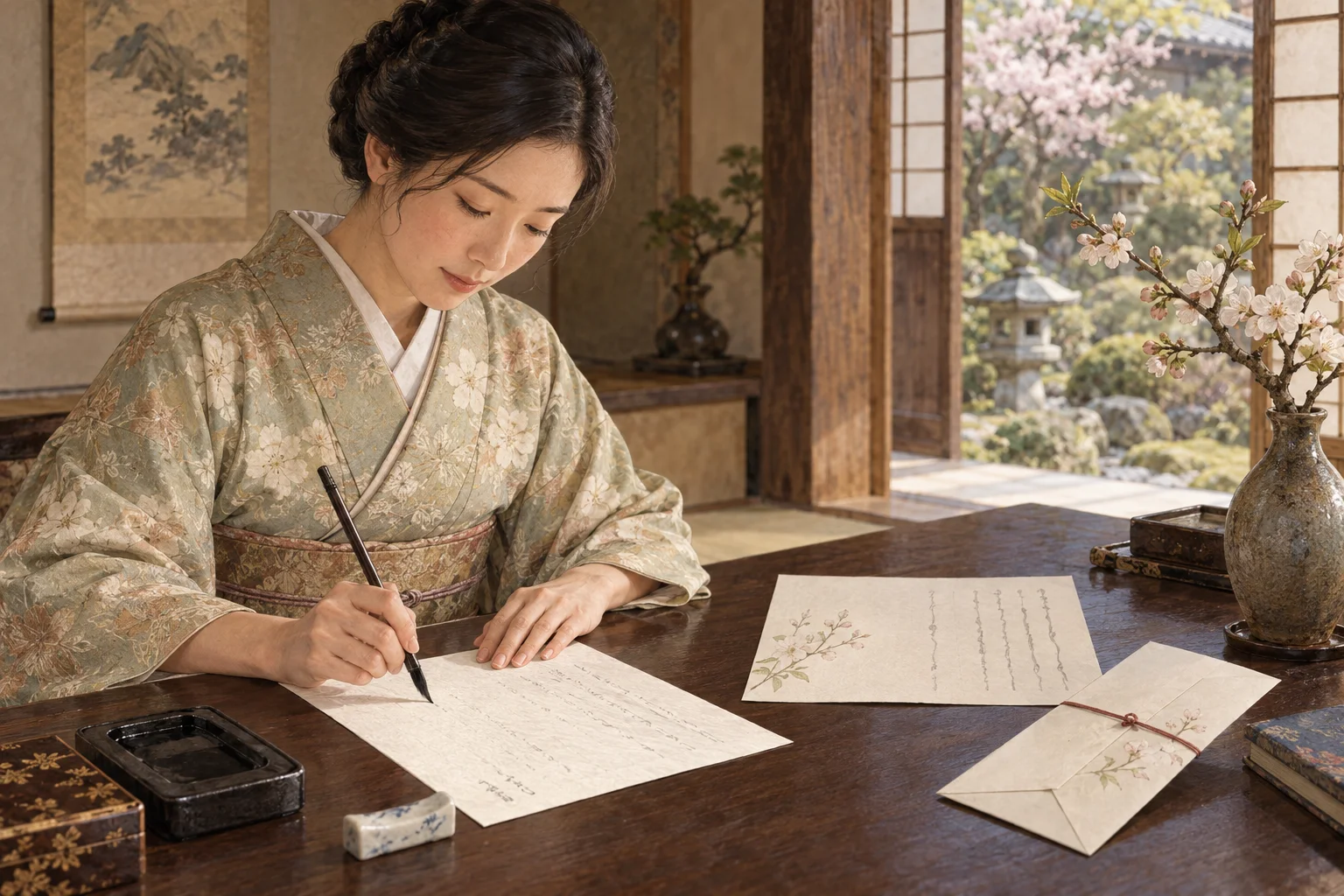
In one line
The shortest answer that works
Haikei and keigu are the matched opening and closing words that formal Japanese letters use, like a formal Dear and Sincerely.
拝啓と敬具は、正式な日本語の手紙で対になって使われる、書き出しと結びの言葉です。
In 30 seconds
The standard explanation
A formal Japanese letter traditionally opens with haikei, a respectful word meaning something like respectfully stating, followed by a short seasonal greeting before the main content, and closes with keigu, meaning respectfully yours, on its own line. These opening and closing words are fixed pairs; using haikei but forgetting keigu, or mismatching them with a more casual pair, looks like a mistake. The custom survives mainly in formal letters, invitations and some business correspondence, even as everyday communication has moved to email and text.
正式な日本語の手紙は、伝統的に「拝啓」という「謹んで申し上げます」に近い意味の言葉で始まり、続けて短い時候のあいさつを入れてから本文に入り、最後は「敬具」という「謹んで」を意味する言葉を独立した行に書いて結びます。この書き出しと結びの言葉は決まった組み合わせであり、拝啓で始めながら敬具を忘れたり、もっとくだけた組み合わせと混ぜたりすると、間違いに見えます。日常のやりとりがメールやメッセージに移った今も、正式な手紙や招待状、一部のビジネス文書にはこの習慣が残っています。
As a short speech
A full paragraph you can read aloud
A formal Japanese letter is bracketed by matched opening and closing words, somewhat like Dear and Sincerely, but with stricter, fixed pairings. The most common opening is haikei, roughly respectfully stating, immediately followed by a short seasonal greeting before the writer moves on to the content. The letter closes with keigu, respectfully yours, on its own line, and the two words must match; haikei pairs with keigu, while a more casual or more formal opening takes a different closing word, so mixing them looks like a real error rather than a style choice.
There is also a faster version for urgent letters, zenryaku, meaning omitting the preamble, which skips the seasonal greeting and closes with soso instead of keigu. What makes this worth knowing is less the vocabulary than the mindset behind it: even a short, practical letter is expected to open by acknowledging the season and close with a fixed, humble word, a small ritual of formality that email has mostly abandoned in everyday use but that still appears in wedding invitations, formal requests and complaints, and letters of thanks.
正式な日本語の手紙は、英語のDearとSincerelyに近いものの、より厳格で決まった組み合わせの、書き出しと結びの言葉で挟まれます。もっとも一般的な書き出しは「拝啓」で、「謹んで申し上げます」に近い意味を持ち、すぐあとに季節についての短い時候のあいさつが続き、そのあとで本文に入ります。
手紙は「敬具」、「謹んで」を意味する言葉を独立した行に書いて結ばれ、この二つは必ず組み合わせが決まっています。拝啓には敬具が対応し、もっとくだけた、あるいはもっと格式の高い書き出しには別の結びの言葉が対応するため、これらを混ぜると単なる文体の違いではなく、はっきりした誤りに見えます。
急ぎの手紙向けには「前略」という、前置きを省略する書き出しもあり、時候のあいさつを省き、敬具ではなく「草々」で結びます。ここで知っておく価値があるのは語彙そのものより、その背後にある考え方です。実用的な短い手紙でも、季節への言及から始め、決まった謙虚な言葉で結ぶことが期待され、この小さな儀礼は日常のメールではほぼ手放されましたが、結婚式の招待状や正式な依頼・苦情、礼状には今も残っています。
Questions people actually ask
And how to answer them.
Do people still use this in everyday communication?
Rarely for texts or casual emails, but it still appears in formal business letters, wedding invitations, letters of thanks or congratulation, and some official correspondence. Condolence letters are the exception: they traditionally skip the opening word and the seasonal greeting. Schoolchildren are typically taught the format even though they may never use it much themselves.
メッセージやくだけたメールではめったに使いませんが、正式なビジネス文書や結婚式の招待状、礼状や祝いの手紙、一部の公的な文書には今も残っています。お悔やみの手紙は例外で、頭語や時候のあいさつを省くのがならわしです。子どもたちは学校でこの形式を習いますが、実際に使う機会は少ないこともあります。
What happens if I mix up haikei and a casual closing?
It reads as a genuine mistake rather than an intentional style, similar to opening a formal English letter with Dear Sir and closing it with Bye. It will not usually cause offense, but it can make the writer look unfamiliar with formal conventions.
意図的な文体の違いではなく、明らかな間違いに見えます。英語の正式な手紙をDear Sirで始めてByeで結ぶようなものです。ふつう相手を怒らせることはありませんが、書き手が正式な作法に不慣れだという印象を与えかねません。
Is there a simpler version for less formal letters?
Yes, many people drop haikei and keigu entirely for letters to friends or family, and just open with a casual greeting and close with their name. The formal pair is reserved for situations where politeness and distance need to be signaled clearly.
はい、友人や家族への手紙では拝啓と敬具をまったく使わず、気軽なあいさつで始めて署名だけで結ぶ人も多くいます。この正式な組み合わせは、丁寧さと距離感をはっきり示す必要がある場面に限られます。
Phrases you can use
- Start with haikei and a line about the season.拝啓と、季節についての一文から始めてください。
- Don't forget to close with keigu.結びの敬具を忘れないでください。
- This is too formal for a text message.メッセージにするには堅すぎます。
- We still use this format for wedding invitations.結婚式の招待状には今もこの形式を使います。
- Casual letters just skip the formal opening.気軽な手紙では正式な書き出しを省きます。
Words you need
- formal opening word拝啓
- formal closing word敬具
- seasonal greeting時候のあいさつ
- correspondence書簡
- salutationあいさつ文
Watch
From YouTubeBackground (Japanese)
拝啓・敬具の組み合わせのほかに、前置きを省く急ぎの手紙用の「前略」と「草々」、目上への特に丁重な「謹啓」と「謹白」など、格式の異なる複数の組み合わせが存在する。時候のあいさつには「若葉の候」「厳寒のみぎり」のように季節ごとの決まった言い回しがあり、手紙の書き方を教える市販のマナー本や辞典でも定番の項目として扱われる。近年はビジネス文書でも簡略化が進んでいるが、目上への正式な文書や慶事の手紙では今も標準的な形式として教えられている。なお、お悔やみの手紙や年賀状では、頭語を使わないのがふつうである。