eshaku
the small nod-bow used in passing
会釈(えしゃく)
In one line
The shortest answer that works
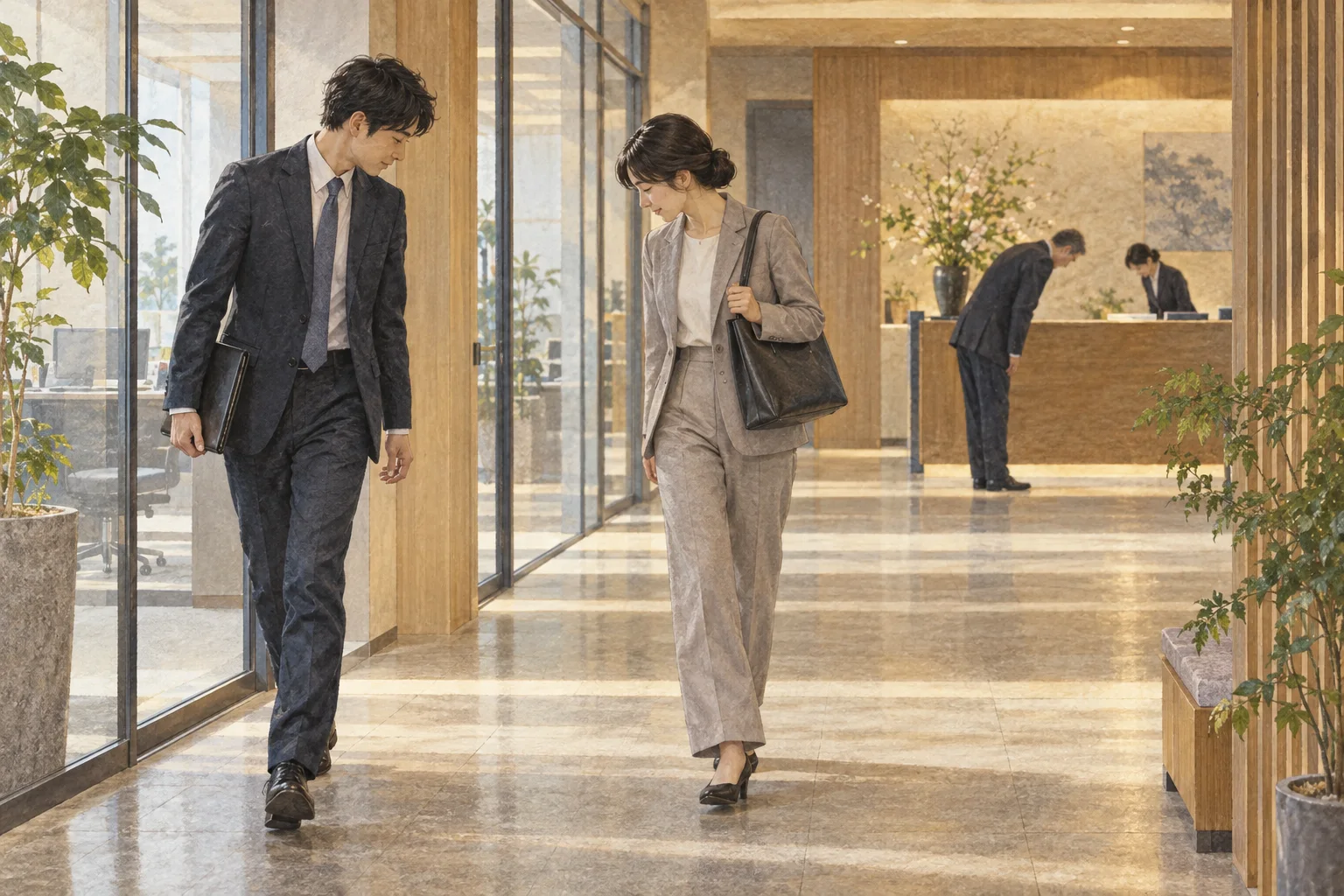
An eshaku is the shallow, quick bow you give in passing, about fifteen degrees.
会釈とは、すれ違うときにする浅く短いお辞儀で、15度ほどの角度です。
In 30 seconds
The standard explanation
Japanese bowing is not one gesture. The shallowest and by far the most common is the eshaku: a small nod from the upper body, around fifteen degrees, over in a second. You use it passing someone in a hallway, getting into an elevator, being handed something, or acknowledging a stranger who has let you through. It is the everyday one, and learning just this covers most situations.
日本のお辞儀はひとつではありません。いちばん浅く、いちばん多く使われるのが会釈です。上半身を15度ほど傾け、一秒で終わります。廊下ですれ違うとき、エレベーターに乗るとき、物を受け取るとき、道を譲ってくれた人に対して使います。日常のお辞儀で、これだけ覚えればたいていの場面は足ります。
As a short speech
A full paragraph you can read aloud
Visitors often worry about how deeply to bow in Japan, and the honest answer is that you almost never need a deep one. There are roughly three depths. The eshaku is about fifteen degrees, a small dip of the upper body that takes a second, and it is what people actually use dozens of times a day: passing a colleague, taking a receipt, letting someone off an elevator first.
The keirei is around thirty degrees and belongs to greeting a customer or a client. The saikeirei is forty-five degrees and is for apology or deep gratitude, and if you use it casually it looks strange.
The mechanics matter more than the angle: bend from the hips with your back straight rather than nodding your head, keep your hands at your sides or folded in front, and do not bow while talking. Finish speaking, then bow. And do not try to shake hands and bow at once, which produces the awkward half-crouch every visitor eventually performs at least once.
日本でどれだけ深くお辞儀をすればよいかを心配される方が多いのですが、正直なところ、深いお辞儀はほとんど要りません。だいたい三段階あります。会釈は15度ほど、上半身を少し下げて一秒で終わるもので、実際に一日に何十回も使います。
同僚とすれ違うとき、レシートを受け取るとき、エレベーターで人を先に降ろすとき。敬礼は30度ほどで、お客様や取引先への挨拶に使います。最敬礼は45度で、謝罪や深い感謝のためのもので、軽い場面で使うと不自然に見えます。角度より大事なのは動きです。
首だけ動かすのではなく、背筋を伸ばして腰から曲げる。手は体の横か、前で軽く重ねる。そして話しながらお辞儀をしない。言い終えてから下げます。握手とお辞儀を同時にやろうとしないことも大事です。旅行で来た方が一度はやってしまう、あの中腰になります。
Questions people actually ask
And how to answer them.
Do I need to bow back to shop staff?
You do not have to. A small nod is plenty and is what many Japanese customers do. Staff bows are part of the job and are not waiting for a response.
必ずしも必要ありません。軽くうなずけば十分で、日本人の客もたいていそうしています。店員のお辞儀は仕事としてのもので、返事を待っているわけではありません。
What do I do if someone bows very deeply to me?
Return something shallower than theirs unless you are apologizing for something. Matching a deep bow exactly can read as formal distance rather than warmth.
謝る場面でなければ、相手より浅く返します。深いお辞儀を同じだけ返すと、親しみよりも改まった距離に見えることがあります。
Can I bow while sitting?
Yes, and it happens constantly at meetings and in restaurants. Just lower your upper body a little; there is no need to stand up for an eshaku.
できますし、会議でも飲食店でも絶えず行われています。上半身を少し下げるだけで、会釈のために立ち上がる必要はありません。
A common misunderstanding
MYTHJapanese people bow deeply all the time, and getting the angle wrong is a serious mistake.
FACTAlmost all everyday bowing is the shallow eshaku. Nobody measures the angle, and a foreigner making a small respectful nod is entirely sufficient.
Phrases you can use
- A small nod is enough here.軽く会釈するだけで十分です。
- Bend from the hips, not just the neck.首だけでなく、腰から曲げます。
- Finish what you're saying, then bow.話し終えてから、お辞儀をします。
- Don't try to bow and shake hands at the same time.お辞儀と握手を同時にしようとしないでください。
- You don't need to bow back to shop staff.店員さんに、お辞儀を返さなくても大丈夫です。
Words you need
- nod, slight bow会釈
- from the waist腰から
- upper body上半身
- acknowledge気づいて応じる
- formal bow敬礼、最敬礼
Watch
From YouTubeBackground (Japanese)
お辞儀は角度によって会釈(約15度)、敬礼(約30度)、最敬礼(約45度)に分けて説明されることが多い。これは接客業の研修などで使われる整理の仕方で、法律や古い作法書に定められた数字ではない。座ったまま行う座礼には、手をつく位置によってさらに細かい型があり、茶道や武道ではそれぞれの流派の作法に従う。なお電話中に相手に見えないままお辞儀をする人が多いことは、日本でもよく笑い話にされる。