erebeta no saho
who stands where and who presses the buttons
エレベーターの作法(えれべーたーのさほう)
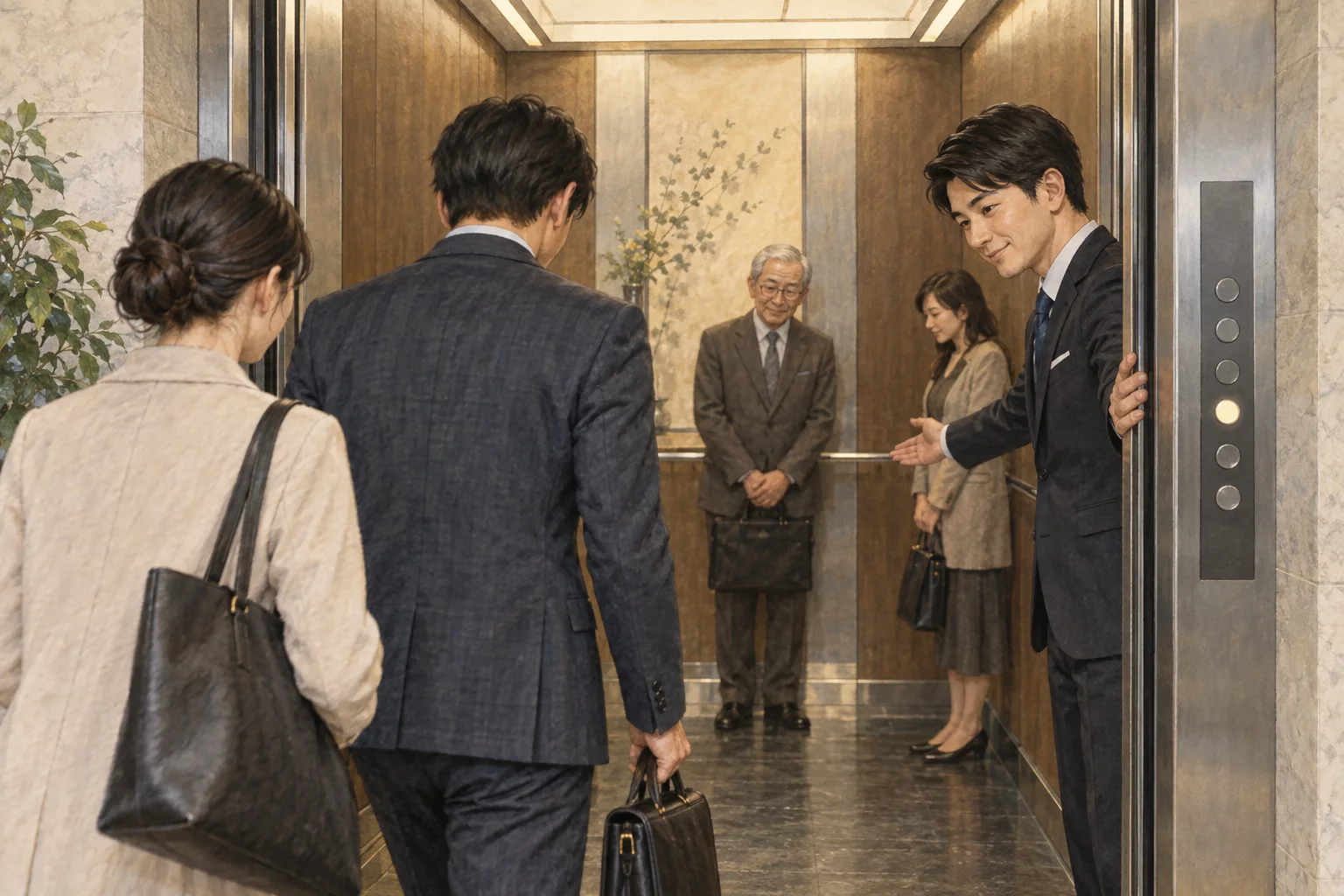
In one line
The shortest answer that works
Erebeta no saho, or elevator etiquette, is the custom of juniors standing at the buttons and seniors at the back.
エレベーターの作法とは、いちばん立場の下の人が操作盤の前に立ち、目上の人が奥に立つという決まりです。
In 30 seconds
The standard explanation
In a business setting, the junior person stands by the control panel, holds the door, and presses the floors for everyone. The position of honor is at the back, away from the panel. This matters when you are traveling with clients or senior colleagues, and it is one of the first things new employees are taught.
仕事の場では、立場の下の人が操作盤の脇に立ち、扉を押さえ、全員の階を押します。上座は操作盤から離れた奥です。取引先や目上の人と一緒に乗るときに効いてくることで、新入社員が最初に教わることの一つでもあります。
As a short speech
A full paragraph you can read aloud
Japanese business etiquette assigns positions in an elevator the same way it assigns seats in a car or a meeting room, and new employees are taught it explicitly. The junior person stands at the control panel. Their job is to hold the open button while others get in, ask which floors they need, press them, hold the door again at the destination, and get out last.
The senior position is at the back, diagonally opposite the panel. If a client is present, the client goes in first and comes out first, and you hold the door with your hand rather than letting it close on anyone.
None of this applies in an ordinary apartment building or a department store, and no Japanese person expects a visitor to know it. But it explains something you will notice: in an office building, one person always gets to the panel first and stays there, and it is almost never the most senior person in the group.
日本の仕事の作法は、車や会議室の席次と同じやり方でエレベーターの立ち位置を定めていて、新入社員はそれをはっきり教わります。立場の下の人が操作盤の脇に立ちます。役目は、ほかの人が乗る間「開」を押さえ、何階かを尋ねて押し、着いたらまた扉を押さえ、最後に降りることです。
上座は奥、操作盤から対角線上にあたる位置です。取引先がいる場合は、先に乗って先に降りてもらい、扉は手で押さえて、誰にも当たらないようにします。ふつうの集合住宅や百貨店では関係ありませんし、訪れた人がこれを知っていると期待する日本人もいません。
それでも、目にする光景の説明にはなります。事務所の建物では、必ず誰か一人が真っ先に操作盤の前へ行き、そこに留まります。そしてそれが、その集団で最も立場の上の人であることは、まずありません。
Questions people actually ask
And how to answer them.
Does this apply in everyday life?
No. In an apartment building, a shop or a hotel it is just an elevator, and the only real convention is to let people out before getting in and to hold the door if someone is hurrying toward it.
しません。集合住宅でも店でもホテルでも、ただのエレベーターです。実際の決まりは、降りる人を先に通すことと、急いで来る人がいたら扉を押さえることくらいです。
What if I'm the guest?
You will be shown in first and out first, and someone will hold the door. Accept it rather than insisting on going last; refusing the offered position creates more awkwardness than taking it.
先に乗るよう、先に降りるよう案内され、誰かが扉を押さえます。最後でいいと言い張らずに受けてください。勧められた位置を断るほうが、受けるより場を気まずくします。
Phrases you can use
- Which floor would you like?何階でしょうか。
- Please go ahead.どうぞお先に。
- I'll hold the door.押さえておきます。
- Let people out first.降りる人が先です。
Words you need
- control panel操作盤
- seat of honor上座
- to hold the door扉を押さえる
- to get off last最後に降りる
Watch
From YouTubeBackground (Japanese)
席次の考え方は上座と下座に基づき、エレベーター、会議室、車、和室、応接室のそれぞれに型があります。車では運転手がいる場合、後部座席の運転席の後ろが上座になります。会議室では入口から最も遠い席が上座です。これらは新入社員研修で図とともに教えられ、ビジネスマナーの本の定番の項目です。一方で、形式にこだわりすぎることへの批判もあり、簡略化する職場も増えています。