okurimono o ichido kotowaru
the polite custom of refusing a gift once before accepting it
贈り物を一度断る(おくりものをいちどことわる)
In one line
The shortest answer that works
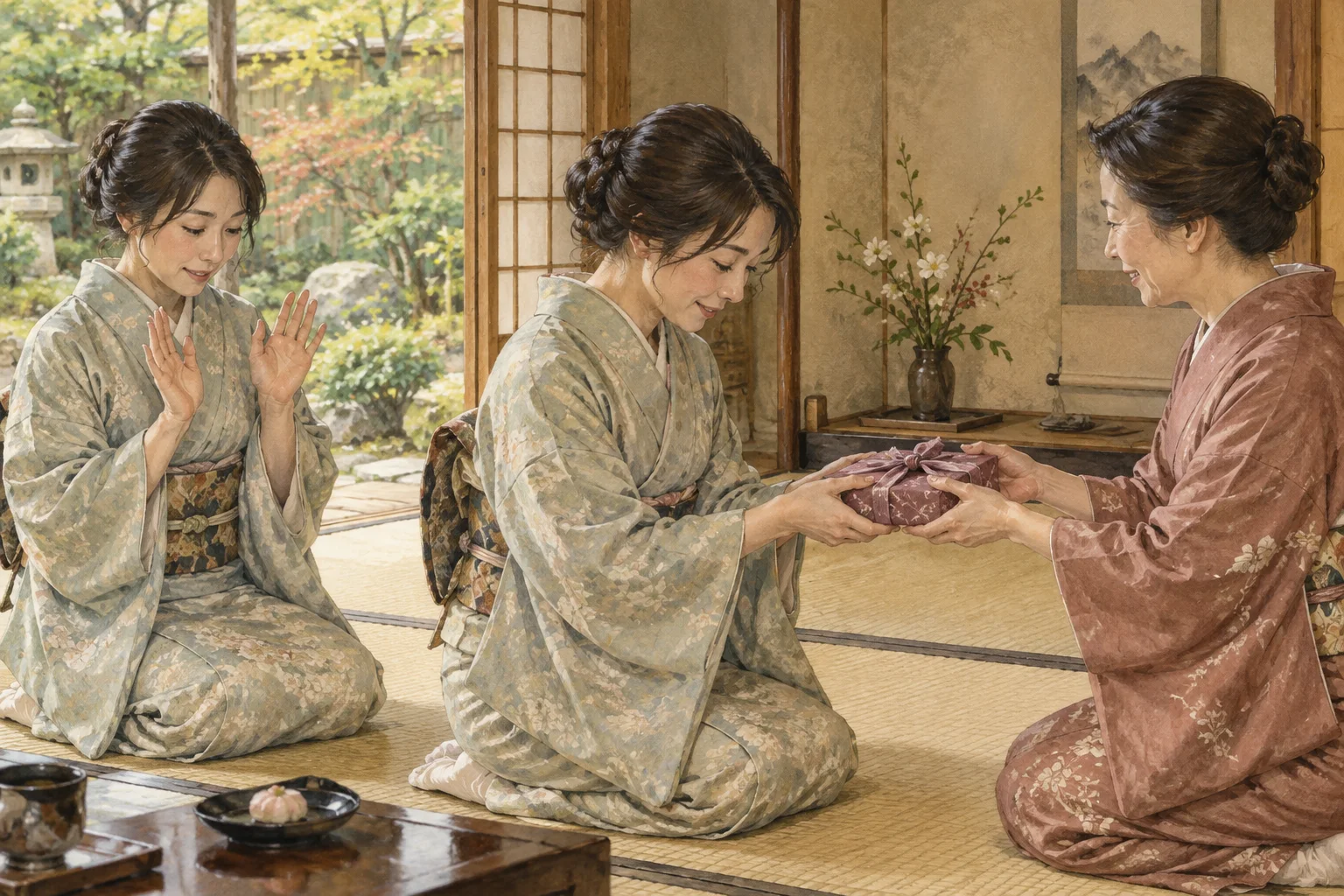
When offered a gift, many Japanese people politely decline once before accepting, as a small show of humility, not real refusal.
贈り物を差し出されたとき、多くの日本人は一度遠慮してから受け取ります。本当に断っているわけではありません。
In 30 seconds
The standard explanation
When someone offers a gift in Japan, the receiver will often say something like oh, you shouldn't have, or I couldn't possibly, before accepting it, a small ritual of enryo, or humble restraint. Immediately reaching for a gift with visible eagerness can come across as presumptuous. The giver usually expects this brief hesitation and gently insists a second time, at which point the gift is accepted. It is a short, almost scripted exchange, not a genuine negotiation.
日本で贈り物を差し出されると、受け取る側はよく「そんな、悪いです」「いいんですか」といった言葉を口にしてから受け取ります。これは「遠慮」と呼ばれる、控えめさを示す小さな儀礼です。すぐに嬉しそうに手を伸ばすと、図々しく見えかねません。贈る側もこの短いためらいを見込んでいて、もう一度やさしく勧め直し、そこで受け取るのがふつうです。ほとんど台本どおりの短いやりとりで、本気の駆け引きではありません。
As a short speech
A full paragraph you can read aloud
When someone in Japan offers a gift, the polite response is often not to take it right away, but to hesitate for a moment, saying something like oh, you really didn't need to, before finally taking it. This is a small piece of enryo, the broader custom of modest self-restraint, and its logic is that reaching for something too eagerly can look presumptuous, as if you expected or wanted it.
A giver who knows the custom expects exactly this brief pushback and will usually insist gently a second time, please, I want you to have it, at which point the receiver accepts with thanks. The whole exchange typically lasts only a few seconds, and both sides understand it as scripted politeness rather than genuine reluctance.
Where this trips up visitors is in reading how far to push it. Declining once and then accepting is normal and expected, but declining three or four times starts to look like you actually do not want the gift, which puts the giver in an awkward position instead.
日本で誰かに贈り物を差し出されたとき、丁寧な返し方はすぐに受け取ることではなく、一瞬ためらって「そんな、いいんですか」といった言葉を口にしてから、最後に受け取ることです。これは「遠慮」と呼ばれる、控えめさを重んじる広い習慣の一部で、その根底には、あまりに積極的に手を伸ばすと、期待していた、あるいは欲しがっていたように見えて図々しく映るという考え方があります。
この習慣を知っている贈る側は、まさにこの短い遠慮を見込んでおり、たいてい「どうぞ、受け取ってください」ともう一度やさしく勧め、そこで受け取る側が感謝を述べて受け取ります。このやりとり全体はたいてい数秒しか続かず、どちらの側も、本当に気が進まないのではなく、ある種の台本どおりの礼儀だと理解しています。
訪れる人がつまずきやすいのは、どこまで遠慮を続けるかの見極めです。一度断ってから受け取るのはふつうで期待されていますが、三度も四度も断り続けると、本当にその贈り物を望んでいないように見え始め、かえって贈る側を困らせてしまいます。
Questions people actually ask
And how to answer them.
How many times should I decline before accepting?
Once is normal, twice at most if the giver keeps insisting warmly. Beyond that, it starts to look like you genuinely do not want the gift, which puts the other person in an uncomfortable spot.
一度が標準で、相手が温かく重ねて勧めてくるなら二度までです。それ以上続けると、本当に受け取りたくないように見え始め、相手を気まずくさせてしまいます。
Will the giver actually take the gift back if I decline?
Almost never for a gift offered with real intent; the giver expects the polite hesitation and will simply insist again. If someone takes the first decline literally and withdraws the gift, it may mean the offer was not very serious to begin with.
本気で贈るつもりの贈り物であれば、ほとんどありません。贈る側はこの丁寧なためらいを見込んでいて、単にもう一度勧め直すだけです。もし最初の遠慮を文字どおりに受け取って引っ込めてしまうなら、その申し出自体があまり本気ではなかったのかもしれません。
Does this apply to invitations and favors too, not just physical gifts?
Yes, the same brief hesitation appears when someone offers to pay for a meal, help carry something, or give up a seat. It is really about not appearing to expect kindness, more than about the gift itself.
はい。食事をおごると言われたときや、荷物を持とうかと言われたとき、席を譲ろうかと言われたときにも同じ短いためらいが見られます。贈り物そのものというより、「親切を当然のように期待していない」と示すことのほうが本質です。
Phrases you can use
- Oh, you really didn't have to.そんな、いいんですか。
- Please, I want you to have it.どうぞ、受け取ってください。
- Well, if you insist, thank you.それでは、お言葉に甘えて、ありがとうございます。
- I couldn't possibly accept something this nice.こんな立派なもの、いただけません。
- Don't decline too many times, or they'll worry.何度も断ると、相手が心配してしまいますよ。
Words you need
- humble restraint遠慮
- to hesitateためらう
- to insist (politely)重ねて勧める
- gift-giving custom贈答の習慣
- presumptuous図々しい
Watch
From YouTubeBackground (Japanese)
一度断ってから受け取るこの型は、遠慮という日本語の中心的な概念の実践例としてよく紹介される。同じ構造は、食事をおごる・おごられる場面や、上座・下座を譲り合う場面にも見られる。マナー講師の解説では「一度は遠慮、二度目は感謝して受け取る」という目安がよく示されるが、地域差や個人差もあり、親しい間柄ではこの手順を省くことも珍しくない。海外では贈り物をその場で開けて感想を伝える習慣があるのに対し、日本では人前で開けず持ち帰る習慣も根強く、あわせて紹介されることが多い。