koin rokka
station luggage lockers
コインロッカー(コインロッカー)
In one line
The shortest answer that works
Coin lockers at stations let you leave luggage for the day without finding a staffed office.
駅のコインロッカーは、有人の窓口を探さなくても、その日一日、荷物を預けられる場所です。
In 30 seconds
The standard explanation
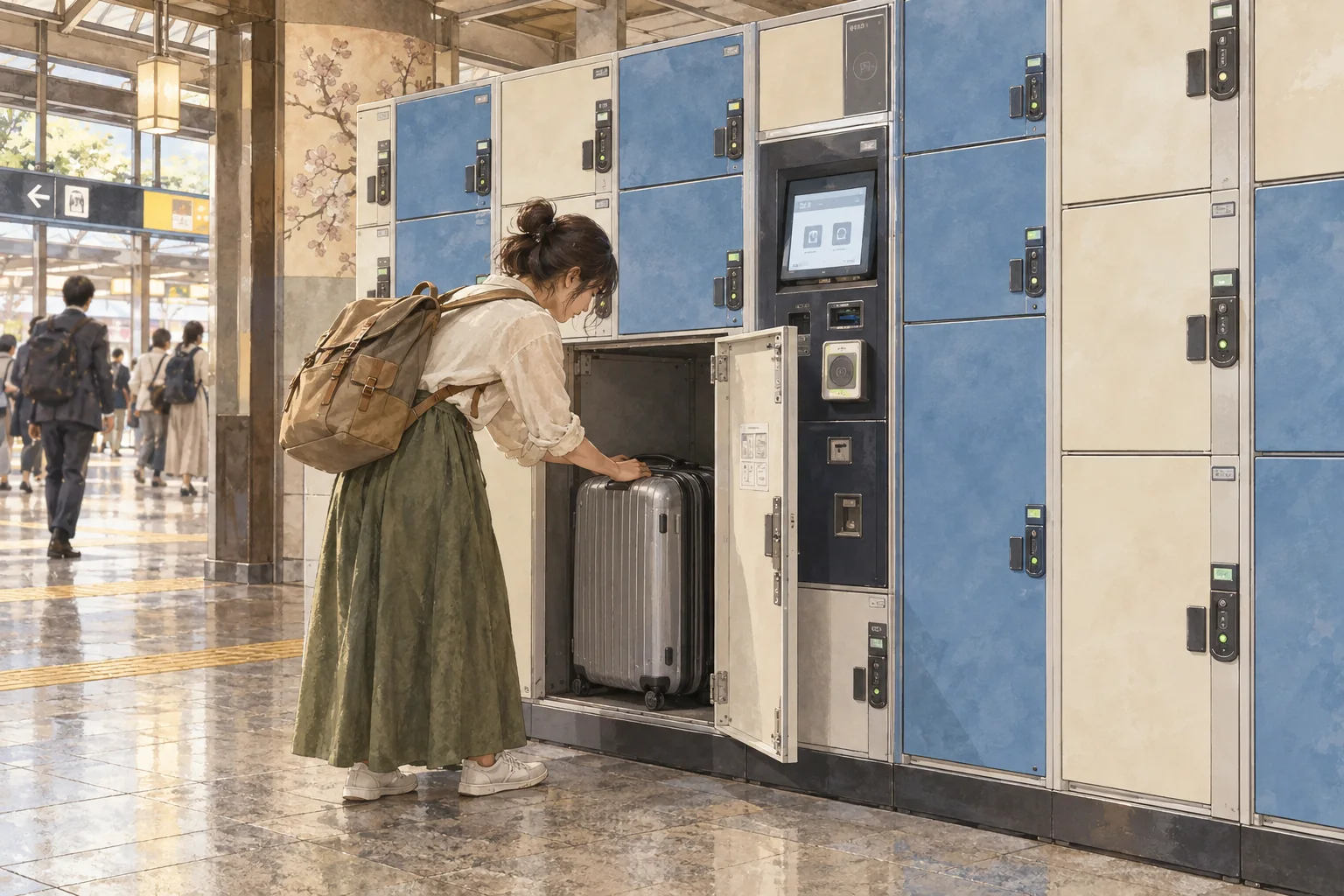
Coin lockers are banks of self-service lockers found in almost every station of any size. Small ones cost a few hundred yen a day, and larger ones take a suitcase. Most now accept IC transit cards instead of coins, and they issue a paper slip or use the card itself as the key.
コインロッカーは、ある程度の規模の駅ならほぼどこにでもある、自分で使う鍵つきの箱の集まりです。小型は一日に数百円、大型ならスーツケースが入ります。今は硬貨ではなく交通系ICカードが使えるものが多く、紙の控えが出るか、カードそのものが鍵になります。
As a short speech
A full paragraph you can read aloud
Coin lockers are a small piece of Japanese infrastructure that travelers come to depend on. Any station of moderate size has rows of them, in three or four sizes, and the largest will take a full suitcase.
The older ones take coins and give you a key; newer banks are operated from a touch panel and use your IC transit card as the key, which means nothing to lose. Prices run from a few hundred yen for a small locker to around a thousand for the biggest, usually charged by calendar day rather than by twenty-four hours, so a locker used overnight costs two days.
They fill up in tourist areas by mid-morning, and there are apps and station signs showing which banks have space. If everything is full, station luggage offices and some hotels will hold bags for a fee, and courier services will simply send the bag ahead.
コインロッカーは日本の小さな社会基盤で、旅行者はこれに頼るようになります。ある程度の大きさの駅なら三、四種類の大きさのものが並び、いちばん大きいものにはスーツケースが丸ごと入ります。
古いものは硬貨を入れて鍵を受け取る方式、新しいものは操作盤で使い、交通系ICカードを鍵にします。なくすものがないわけです。値段は小型の数百円から、最大のもので千円ほどまでで、たいてい二十四時間単位ではなく暦の日で課金されるため、夜をまたげば二日分になります。
観光地では午前のうちに埋まってしまい、どこが空いているかを示すアプリや駅の案内があります。すべて埋まっていれば、駅の手荷物預かり所や一部のホテルが有料で預かってくれますし、宅配便に頼めば荷物を先に送ってしまうこともできます。
Questions people actually ask
And how to answer them.
How long can I leave things in one?
Usually up to three days, with the charge counted by calendar day. After the limit, staff remove the contents and hold them at a station office, and you pay the accumulated fee to get them back.
たいてい三日までで、料金は暦の日ごとに加算されます。期限を過ぎると係員が中身を取り出して駅の事務所で保管し、たまった料金を払って受け取ることになります。
Can I pay with an IC card?
At most newer banks, yes, and the card then opens the door, so keep using the same card. Coin-only lockers still exist and need hundred-yen coins, and there is sometimes a change machine beside them.
新しいものはたいてい使え、そのカードが扉を開ける鍵になるので、同じカードを使い続けてください。硬貨専用のものもまだあり、百円玉が必要です。横に両替機が置かれていることもあります。
What if all the lockers are full?
Look for a staffed luggage office in the station, a luggage storage counter in a department store, or use a courier to send the bag to your next accommodation. Tourist information centers can point you to the nearest option.
駅の手荷物預かり所、百貨店の預かり窓口を探すか、宅配便で次の宿へ送ってしまう手があります。観光案内所で近くの選択肢を教えてもらえます。
Phrases you can use
- Are there coin lockers in this station?この駅にコインロッカーはありますか。
- Is there one big enough for a suitcase?スーツケースが入る大きさはありますか。
- How much is it per day?一日いくらですか。
- Can I pay with this card?このカードで払えますか。
- They're all full, unfortunately.あいにく全部ふさがっています。
Words you need
- lockerロッカー
- luggage荷物
- to store, to leave預ける
- vacant空き
- luggage office手荷物預かり所
Watch
From YouTubeBackground (Japanese)
コインロッカーは駅の売店や改札の脇に置かれ、大きさごとに値段が分かれています。料金は二十四時間ではなく、午前零時を越えると一日分が加算される方式が一般的です。多くは三日程度で預かり期限となり、それを過ぎた荷物は係員が取り出して別に保管します。近年は交通系ICカードで開け閉めするものが増え、空き状況をアプリや駅の案内板で確認できる場所もあります。観光地の駅では朝のうちに埋まることがあります。