semi no koe
the sound of a Japanese summer
蝉の声(せみのこえ)
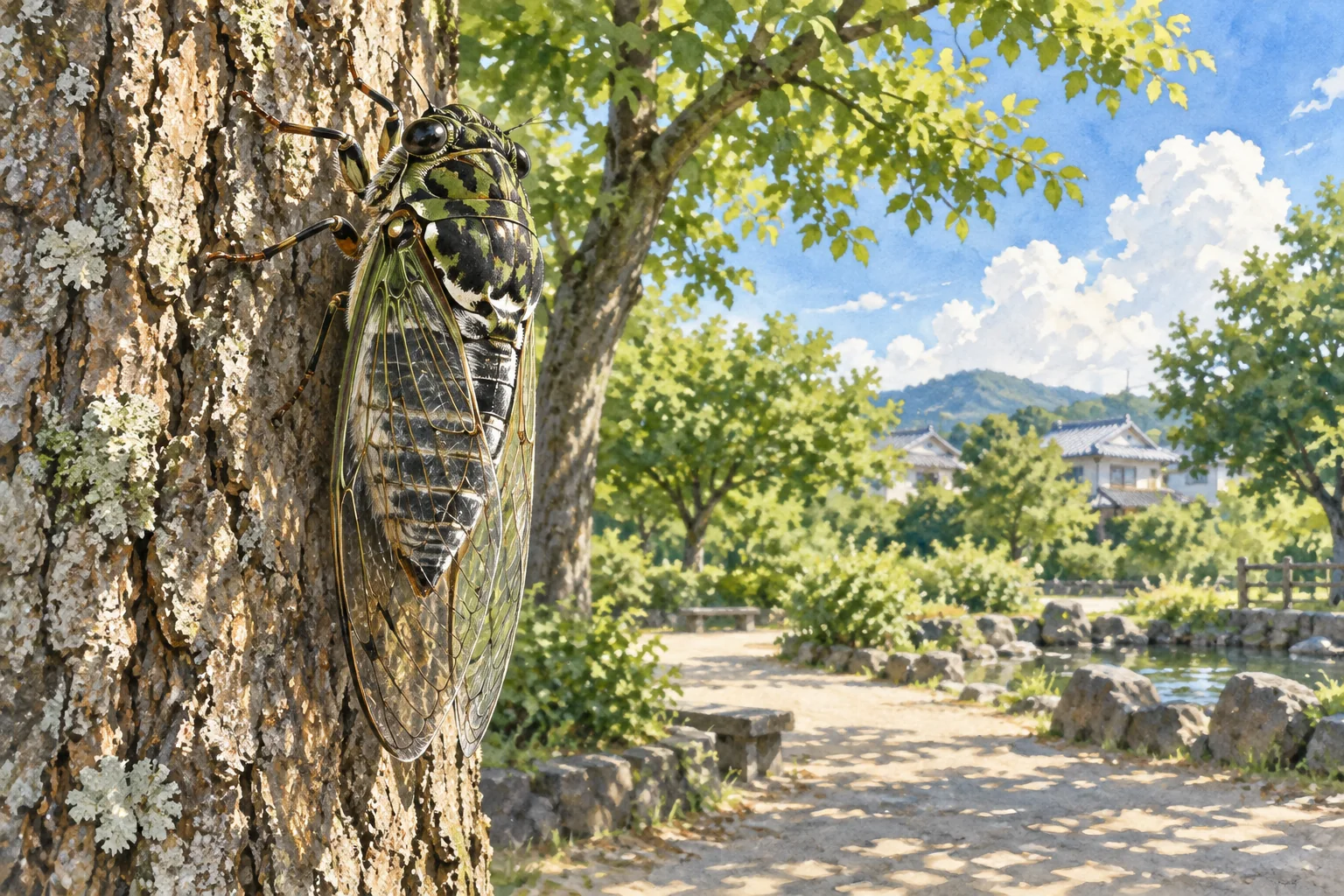
In one line
The shortest answer that works
Cicadas are the defining sound of a Japanese summer, and each species sounds completely different.
蝉の声は日本の夏を決定づける音で、種類ごとにまったく違う鳴き方をします。
In 30 seconds
The standard explanation
From July, cicadas make Japanese summers extremely loud. Several species sing at different times of the season and the day, and people read the progress of summer from which one they hear. Films and anime use cicada sound to say summer without a word of dialogue.
7月になると、蝉が日本の夏をとてつもなくやかましくします。種類によって鳴く時期も時刻も違い、人はどの蝉が鳴いているかで夏の進み具合を読み取ります。映画やアニメは、台詞なしで夏を示すために蝉の音を使います。
As a short speech
A full paragraph you can read aloud
If you arrive in Japan in July, the first thing you will notice outdoors is the noise. Cicadas here are loud enough to make conversation difficult under a tree, and there are several species that sound nothing like each other.
One makes a continuous frying sound, one a rhythmic pulse, one a metallic screech that dominates western cities and has been spreading east as the climate warms, and one, heard at dusk and dawn, a clear falling whistle that Japanese people describe as lonely rather than noisy.
Because the species appear in a rough order through the season, the soundscape marks the progress of summer, and the arrival of the one that sings at the very end is heard as a sign that the holidays are ending. Visitors often find it unbearable at first. Japanese people mostly do not notice it until it stops.
7月に日本に着けば、外に出て最初に気づくのは音です。日本の蝉は木の下で会話が難しくなるほど大きく、しかも互いにまったく似ていない何種類かがいます。
油で揚げるような連続した音を出すもの、規則正しく脈打つように鳴くもの、西日本の街を覆い、温暖化とともに東へ広がっている金属的な鋭い声のもの。そして夕暮れと明け方に鳴く、澄んだ下降の笛のような声のものがいて、日本人はその声をやかましいというより寂しいと表現します。
種類がおおよその順で現れるため、音の風景が夏の進み具合を刻みます。夏の終わりに鳴く種の声が聞こえると、休みが終わる合図として受け取られます。訪れた人は初めのうち耐えがたいと感じることが多く、日本人はたいてい、鳴きやむまで気づきません。
Questions people actually ask
And how to answer them.
Is it true they only live a week?
Above ground, roughly one to a few weeks, but that is only the last stage. The larvae live underground for several years before emerging, so the animal's life is long and the noisy part is short.
地上では一週間から数週間ほどですが、それは最後の段階にすぎません。幼虫は何年も土の中で過ごしてから出てくるので、生き物としての一生は長く、やかましい期間が短いだけです。
Why do the species matter?
Because each is tied to a time. One sings in the morning, one at dusk, one appears late in August, so the sound tells you where you are in the season. Japanese poetry and film rely on this, and the wrong cicada in a scene is noticed.
種ごとに時期と時刻が決まっているからです。朝に鳴くもの、夕方に鳴くもの、8月の終わりに現れるものがあり、音が季節のどこにいるかを教えます。詩も映画もこれに頼っていて、場面に合わない蝉が鳴いていると気づかれます。
Phrases you can use
- That sound is cicadas.あの音は蝉です。
- Each species sounds different.種類ごとに鳴き方が違います。
- The evening one sounds lonely.夕方に鳴くのは寂しい声です。
- They spend years underground first.その前に何年も土の中にいます。
Words you need
- cicada蝉
- to chirp / to sing鳴く
- larva幼虫
- shed shell抜け殻
Watch
From YouTubeBackground (Japanese)
日本でよく聞かれるのはアブラゼミ、ミンミンゼミ、クマゼミ、ヒグラシ、ツクツクボウシなどです。ヒグラシは朝夕に鳴き、その声は秋の近さと結びつけて語られます。クマゼミは西日本に多い種でしたが、近年は分布が東へ広がっていると報告されています。木に残る抜け殻は子どもの夏の収集物で、俳句では蝉は夏、ヒグラシは秋の季語として扱われます。松尾芭蕉の「閑さや岩にしみ入る蝉の声」は、この音を静けさとして詠んだ句です。