chochin
paper lanterns
提灯(ちょうちん)
In one line
The shortest answer that works
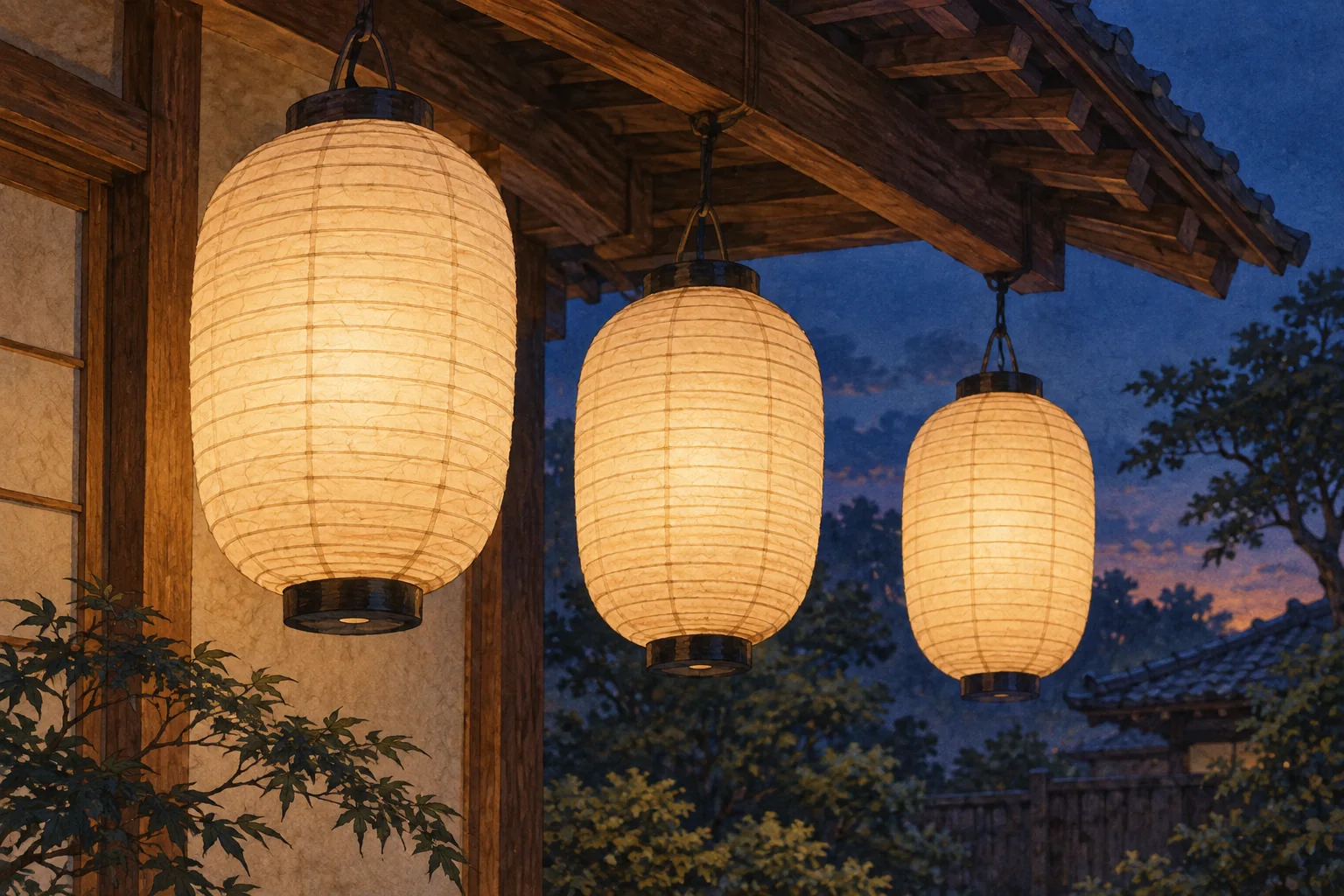
Chochin are collapsible paper lanterns, used at festivals, shrines and outside small bars.
提灯とは折りたためる紙の灯りで、祭りや神社、小さな居酒屋の店先で使われます。
In 30 seconds
The standard explanation
A chochin is a lantern made of paper pasted over a ribbed bamboo frame, which lets it collapse flat when not in use. They hang at festivals and shrines, carry the names of donors, and mark the entrance of bars and restaurants. A red one outside a small drinking place is a recognized sign, and shopkeepers take it in when they close.
提灯は、竹の骨に紙を貼ったもので、使わないときは平らにたためます。祭りや神社に吊るされ、寄進した人の名が書かれ、居酒屋や食堂の入口の目印にもなります。小さな飲み屋の前の赤い提灯は広く知られた合図で、店主は閉めるときにそれをしまいます。
As a short speech
A full paragraph you can read aloud
A chochin is a Japanese paper lantern. The frame is often a single strip of split bamboo wound in a spiral, and paper is pasted over it, so the whole thing folds flat like a concertina for storage. That portability is why they spread: you could carry one folded and open it when you needed light.
Today they do three jobs. At festivals and shrines, rows of them hang with the names of people and businesses who donated, so the lanterns are a public list of who supported the event. At temples, large ones hang at the gate.
And outside small drinking places, a red lantern called an akachochin marks the kind of cheap, friendly bar that word now stands for in general. If the lantern is lit and hanging out, the place is open. When the owner takes it in, that is the end of service.
提灯は日本の紙の灯りです。骨は割った竹を一本、螺旋に巻いたものが多く、その上に紙を貼るので、全体が蛇腹のように平らに折りたためます。この持ち運びやすさが広まった理由でした。折って持ち歩き、明かりが要るときに開くことができたのです。
今の提灯には三つの役目があります。祭りや神社では、寄進した人や店の名を書いたものが並んで吊るされ、誰がその催しを支えたかを示す公の名簿になります。寺では大きなものが門にかかります。
そして小さな飲み屋の前では、赤提灯が、今ではその言葉自体が意味する安くて気安い店の目印になっています。提灯に灯が入って出ていれば、その店は開いています。店主がそれをしまったら、営業は終わりです。
Questions people actually ask
And how to answer them.
What does the writing on them say?
At a festival, usually the name of a person, shop or company that donated money, sometimes with the amount implied by the lantern's position. At a shop it is the shop's name or what it sells. At a temple gate it may be the temple's name or a deity.
祭りの提灯はたいてい寄進した人や店、会社の名前で、吊るされる位置がおよその金額を表すこともあります。店のものは屋号や扱う品です。寺の門のものは寺の名や仏の名のことがあります。
Are they still made by hand?
The traditional ones are. A maker winds the bamboo on a wooden form, pastes the paper panel by panel, and writes the characters by brush afterwards. Cheap printed vinyl versions exist for festivals, and the difference is easy to see when they are lit.
伝統的なものは今も手仕事です。職人は木型に竹を巻き、紙を一面ずつ貼り、あとから筆で文字を書きます。祭り用には印刷したビニールの安価なものもあり、灯を入れると違いがすぐ分かります。
Phrases you can use
- If the lantern is hanging outside, the shop is open.提灯が出ていれば店は開いています。
- The names are the people who donated.書かれているのは寄進した人の名前です。
- It folds flat when you're not using it.使わないときは平らにたためます。
- A red one means a cheap, friendly bar.赤提灯は安くて気安い飲み屋の目印です。
Words you need
- paper lantern提灯
- bamboo frame竹の骨
- to donate寄進する
- to fold flat平らにたたむ
Watch
From YouTubeBackground (Japanese)
提灯は室町時代ごろから使われ、江戸時代に折りたためる形が広まりました。産地としては岐阜提灯、小田原提灯、八女提灯などが知られます。浅草の雷門の大提灯のように、寺社の名物になっているものもあります。「赤提灯」は今では店の種類そのものを指す言葉で、「今日は赤提灯でいいか」と言えば、気取らない安い店で飲もうという意味になります。ちなみに「提灯記事」は、実態より持ち上げて書いた記事を指す言い方です。