 ワークシート
 ぬりえ
 迷路
町を救うため命を差し出した6人。でも英雄らしくない!?Six men offer their lives to save their town, but they don't look like traditional heroes.
 美術館アンテナ:オーギュスト・ロダンの作品に会える展覧会
全国の展覧会をさがす →この作品のお話
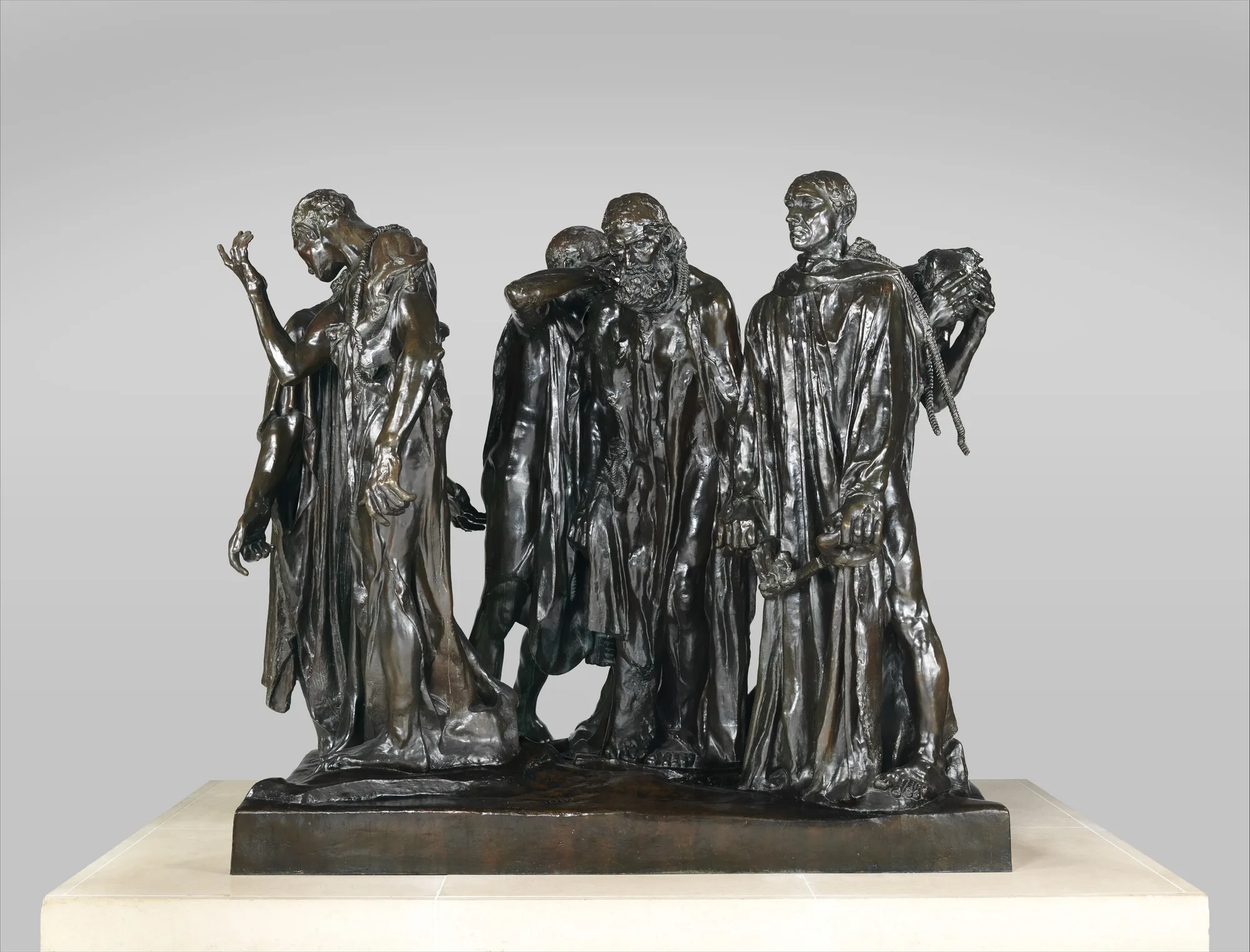
Story長い衣を着た6人の男たちが、それぞれちがう方向を向き、苦しげな表情で立っています。フランスの彫刻家オーギュスト・ロダンの「カレーの市民」です。写真はニューヨークのメトロポリタン美術館にある等身大のブロンズ像で、ロダンが作った原型から1985年に鋳造されました。
Six men in long robes stand facing different ways, with pained faces. This is The Burghers of Calais by the French sculptor Auguste Rodin. The photo shows a life-size bronze in the Metropolitan Museum of Art. It was cast in 1985 from Rodin's model.
1347年、イギリスとフランスの百年戦争のさなか、フランスの港町カレーはイギリス王エドワード3世に長く包囲されました。王は「町の代表6人が首に縄をかけ、城門のかぎを持って出てくれば、町の人々の命は助ける」と言います。そこで自ら名乗り出た6人の市民の姿を、ロダンは形にしました。
In 1347, during the Hundred Years' War, the French port of Calais was surrounded by the army of King Edward III of England. The king said he would spare the people if six leaders came out with ropes around their necks and the keys of the city. Rodin showed the six men who stepped forward.
カレー市は1884年にこの記念像をロダンに注文し、1895年に公開されました。言い伝えでは、イギリスの王妃フィリッパが命ごいをし、6人は許されたとされます。像は世界に12体の「オリジナル」が鋳造され、ロンドンや東京・上野の国立西洋美術館などにも置かれています。
Calais ordered the monument in 1884, and it was unveiled in 1895. According to the old story, Queen Philippa of England begged for mercy, and the six men were spared. Twelve original casts were made, and they stand in places like London and the National Museum of Western Art in Tokyo.
むかし、敵の王がフランスの町にやってきました。6人の男が町を守るため、王のところへ向かいました。勇敢でしたが、こわくもありました。顔を見てください。1人ひとり、ちがう気持ちです。
Long ago, an enemy king came to a French town. Six men went to him to save their town. They were brave, but they were also scared. Look at their faces. Each man feels something different.
英語のレベルは上の「やさしい/ふつう」で切りかえられます。
えっ!?な裏ネタ
Secretsカレー市は、堂々とした英雄が先頭に立つ記念像を期待していました。ところがロダンが作ったのは、迷い、なげき、恐れる、ふつうの人間たち。はじめは批判されましたが、この「弱さを見せる英雄」こそが、見る人の心を強く打つのです。
Calais expected proud heroes with a strong leader in front. But Rodin made ordinary men who are afraid, sad and unsure. At first, people criticized it. But heroes who show weakness touch our hearts even more.
ロダンは、像を高い台座にのせず、町の人と同じ地面の高さに置くことを考えていたと言われます。英雄を見上げるのではなく、自分たちと同じ人間として向き合ってほしかったのでしょう。
It is said that Rodin wanted the statue placed low, at the same level as people in the street. He wanted us to meet the heroes as fellow humans, not look up at them.
ロダンは6人それぞれを、まず衣のない体で作り、筋肉や骨格をしっかり決めてから、上に重い衣をかぶせていきました。だから衣の下にも、体の重さや動きが感じられるのです。
Rodin first made each man's body without clothes. After the muscles and bones were right, he added heavy robes. That's why you can feel the weight and movement of the bodies under the cloth.
フランスの規定では、ロダンの原型から正式に鋳造される各作品のオリジナル・エディションは12体まで。メトロポリタン美術館のこの像も、その正式なエディションの1体です。
Under French rules, the authorized original edition of each Rodin sculpture cast from his models is limited to 12 bronzes. The Met's statue is one of this authorized edition.
ここを見て!
Look Closer1ひげの長老The bearded elder
まん中で頭をたれる、ひげの男性。最初に名乗り出たとされる長老ウスタッシュ・ド・サン=ピエールです。
The bearded man in the middle bows his head. He is Eustache de Saint-Pierre, the elder said to be the first to volunteer.
2城門のかぎThe key of the city
右の男性は、両手で大きなかぎをにぎり、まっすぐ前を見つめています。町のかぎを王にわたしに行くのです。
The man on the right holds a large key in both hands and stares ahead. He will hand the key of the city to the king.
3手を上げる男The man raising his hand
左の男性は、手を頭の横に上げ、何かをうったえるようなしぐさ。6人とも、ちがう気持ちを体で表しています。
The man on the left raises his hand beside his head, as if pleading or crying out. Each man shows a different feeling with his body.
4首の縄Rope around the neck
男性たちの首には太い縄がかけられています。命を差し出す覚悟のしるしです。
Thick ropes hang around the men's necks. They show the men are ready to give their lives.
英語で名画を語ろう
Talk about Art in EnglishThe six men are about to give themselves up to the king.
6人は今にも王に身を差し出そうとしています。
💡 be about to + 動詞の原形で「まさに〜するところ」。決定的な瞬間を表せます。
英語で説明すると… Describe it
これは6人の男性のブロンズ像です。長い衣を着ています。それぞれちがう方向を向き、悲しそうです。右の男性は大きなかぎを持っています。
This is a bronze sculpture of six men. They are wearing long robes. They are looking in different directions, and they look sad. The man on the right is holding a big key.
考えてみよう Think & Talk
- 人は、勇敢でありながら同時にこわがることができると思いますか?Can a person be brave and afraid at the same time?
- 6人のうち、いちばん気持ちがわかるのは誰ですか?それはなぜ?Which of the six men do you feel closest to? Why?
この作品の英単語
WordsSix citizens left the town.
6人の市民が町を出ました。
They were brave, but they were also afraid.
彼らは勇敢でしたが、こわがってもいました。
The king spared the six men.
王は6人の命を助けました。
They have ropes around their necks.
彼らは首に縄をかけています。
ミニクイズ
QuizQ. 6人が持っていった物は?What did the six men carry out to the king?
降伏のしるしとして、城門のかぎを王にわたしに行きました。
They carried the keys of the city as a sign of surrender.
ウソ?ホント? このできごとは、百年戦争のときの話だ。This story happened during the Hundred Years' War.
1347年、カレーがイギリス軍に包囲されたときの話です。
It happened in 1347, when the English army surrounded Calais.
ウソ?ホント? ロダンは6人を、自信満々で胸をはった英雄として作った。Rodin made the six men look proud and confident.
迷いや悲しみ、恐れをかかえた人間らしい姿で作りました。
He showed them as human, full of fear, sadness and doubt.
 画像の出典とライセンス / Image credit
- CC0The Burghers of Calais MET DP221863.jpg(Wikimedia Commons)
ライセンス:CC0(パブリックドメイン提供)/作者・撮影者の表記:Auguste Rodin/提供元:This file was donated to Wikimedia Commons as part of a project by the Metropolitan Museum of Art. See the Image and Data Resources Open Access Policy
この作品は、作者の死後長い年月がたち著作権の保護期間が終わっています。写真は撮影者がパブリックドメインとして公開したもの、または著作権の保護期間が終わった古い写真です。 所蔵:メトロポリタン美術館(The Metropolitan Museum of Art)。画像は表示のために縮小・WebP 形式に変換しています。