 ワークシート
 ぬりえ
 迷路
「雪だるま」とからかわれた像が、近代彫刻の出発点に!Mocked as a 'snowman', this statue became a starting point of modern sculpture!
 美術館アンテナ:オーギュスト・ロダンの作品に会える展覧会
全国の展覧会をさがす →この作品のお話
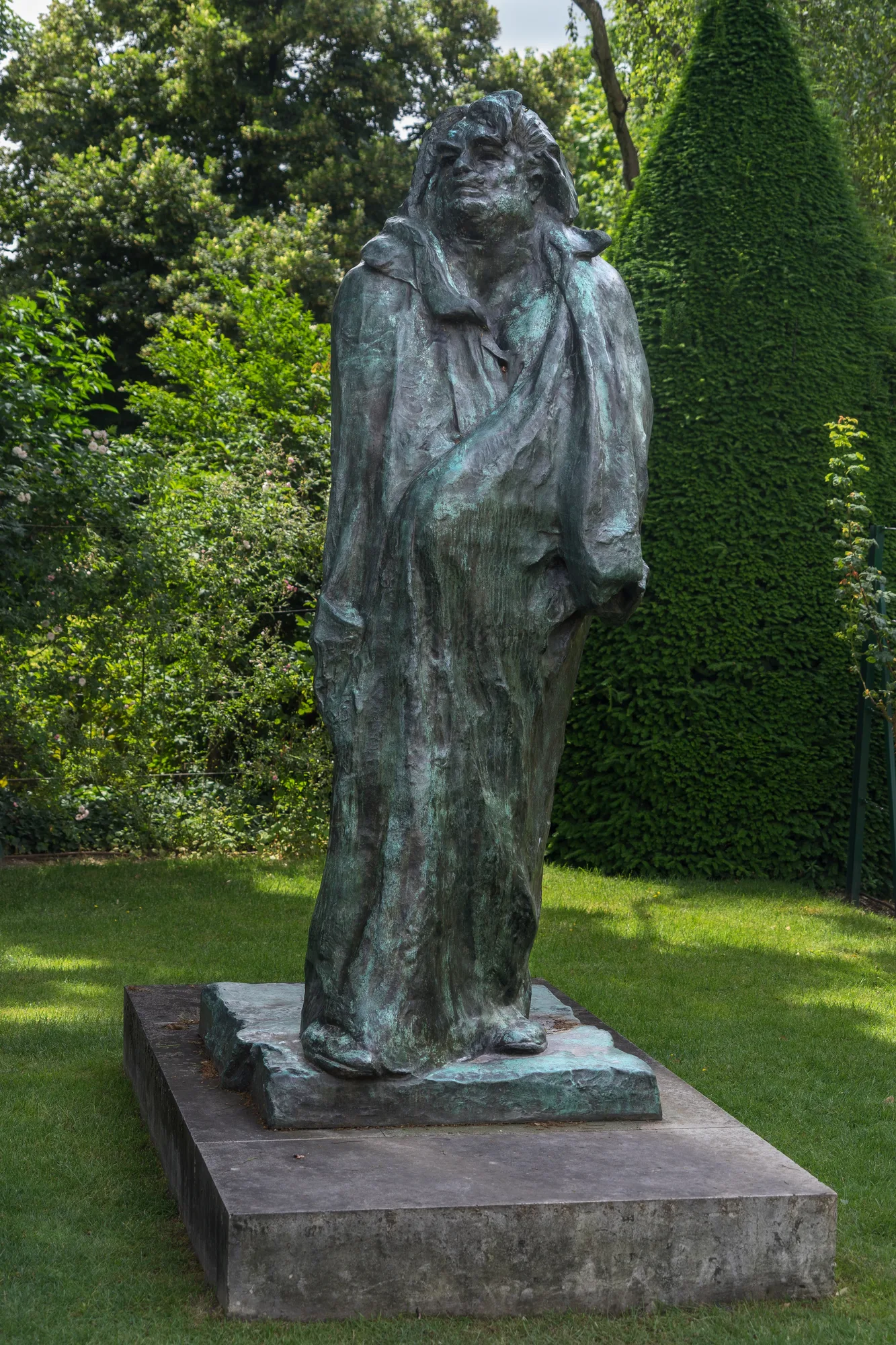
Storyフランスの彫刻家ロダンが、19世紀の大作家オノレ・ド・バルザックをたたえて作った記念像です。写真はパリのロダン美術館の庭に立つブロンズ像。大きなガウンにすっぽり包まれたバルザックが、胸をそらし、遠くを見上げるように立っています。手も足もほとんど見えず、全体がひとつの大きなかたまりのようです。
This monument by the French sculptor Auguste Rodin honors Honoré de Balzac, a great writer of the 19th century. The photo shows the bronze statue in the garden of the Musée Rodin in Paris. Balzac is wrapped in a huge robe. He stands with his chest out and looks up into the distance. His hands and feet are almost hidden, and the whole figure looks like one big mass.
1891年、フランス文芸家協会がロダンに記念像を注文しました。当時の会長だった作家エミール・ゾラの後押しもありました。ロダンはバルザックのふるさとの地方を訪ね、彼に似た体つきの人をモデルにし、昔バルザックの服を作った仕立て屋に服まで作らせて研究しました。長い年月をかけ、1898年に実物大の石膏原型を展覧会で発表します。
In 1891, the Society of Men of Letters ordered the monument from Rodin, with the support of its president, the writer Émile Zola. Rodin visited Balzac's home region and used local men with a similar body as models. He even had clothes made by Balzac's former tailor. After years of work, he showed the full-size plaster model at the Salon in 1898.
しかし作品は大きな論争を呼び、協会は受け取りを断りました。ロダンは石膏像をパリ近郊ムードンの自宅に引き取ります。ブロンズ像がパリの町角(モンパルナス大通りとラスパイユ大通りの交差点)に立ったのは、ロダンの死後の1939年のことでした。今では、近代彫刻の出発点ともいわれる傑作です。
But the work caused a major controversy, and the Society refused to accept it. Rodin took the plaster statue back to his home in Meudon, near Paris. A bronze version was finally placed at a Paris crossroads, where Boulevard du Montparnasse meets Boulevard Raspail, in 1939, long after Rodin's death. Today it is called a masterpiece and a starting point of modern sculpture.
これは作家バルザックの像です。大きなガウンを着ています。最初、人々はこの像を気に入りませんでした。雪だるまみたいだと言う人もいました!今ではロダンの有名な作品です。
This is a statue of a writer, Balzac. He wears a big robe. People did not like it at first. Some said it looked like a snowman! Now it is a famous work by Rodin.
英語のレベルは上の「やさしい/ふつう」で切りかえられます。
えっ!?な裏ネタ
Secrets1898年の展覧会で石膏像が発表されると、ガウンに包まれた形が「雪だるま」や「袋」のようだ、などとさんざんにからかわれたといわれます。人々が期待した、本物そっくりの立派な作家の像とは、あまりにもちがっていたのです。
When the plaster statue was shown in 1898, it is said that people laughed at it, calling it a 'snowman' or a 'sack'. It was very different from the realistic, dignified statue of a writer that they had expected.
ロダンはガウンのしわや重さを表すため、本物のガウンを石膏液にひたし、それを人体の像に着せて固める実験をしました。この方法で作られた「ガウンの習作」は、今もロダン美術館に残っています。
To show the folds and weight of the robe, Rodin dipped a real robe in liquid plaster and let it harden on a figure. This 'study of the robe', made that way, is still kept at the Musée Rodin.
1908年、写真家エドワード・スタイケンは、ムードンの屋外に置かれた石膏像を、月明かりの下で2夜続けて撮影しました。黒い影のように立つバルザックの写真を見て、ロダンはとても喜んだといわれます。
In 1908, the photographer Edward Steichen photographed the plaster statue outdoors at Meudon by moonlight over two nights. The photos showed Balzac as a dark, powerful shape, and it is said that Rodin was very pleased.
バルザックは夜通し小説を書くとき、修道士の服のようなゆったりしたガウンを着ていたことで知られます。眠気ざましに、コーヒーを1日に何十杯も飲んだという言い伝えもあります。ロダンはその「書きつづける作家」の姿を像にしたのです。
Balzac was known for wearing a loose robe, like a monk's, when he wrote all night. There is also a story that he drank dozens of cups of coffee a day to stay awake. Rodin made a statue of this hard-working writer.
ここを見て!
Look Closer1見上げる顔The upward-looking face
長い髪とあごを上げた顔。遠くの何かをじっと見つめているようです。
Long hair and a raised chin. He seems to stare at something far away.
2大きなガウンThe huge robe
体をすっぽり包むガウン。深いしわが光と影を作り、像を力強く見せています。
The robe covers his whole body. Its deep folds make light and shadow and give the statue power.
3台座The base
ごつごつした台座の上に、少し後ろにそるように立っています。
He stands on a rough base, leaning back a little.
英語で名画を語ろう
Talk about Art in EnglishHis arms are hidden under the robe.
彼の腕はガウンの下にかくれています。
💡 見えない部分を説明するときに便利。is hidden behind(〜のうしろにかくれている)も。
英語で説明すると… Describe it
これは庭に立つブロンズ像の写真です。男の人が石の台の上に立っています。長いガウンに包まれていて、腕はその下にかくれています。うしろには緑の木々があります。
This is a photo of a bronze statue in a garden. A man stands on a stone base. He is wrapped in a long robe, and his arms are hidden under it. In the background, there are green trees.
考えてみよう Think & Talk
- ロダンはなぜバルザックの腕や手をかくしたのだと思いますか?Why do you think Rodin hid Balzac's arms and hands?
- 像は本人そっくりであるべきだと思いますか?それはなぜ?Should a statue look exactly like the real person? Why or why not?
この作品の英単語
WordsBalzac is wrapped in a long robe.
バルザックは長いガウンに包まれています。
Rodin was a famous French sculptor.
ロダンは有名なフランスの彫刻家でした。
The society refused to accept the statue.
協会は像を受け取ることを断りました。
He stands with a proud face.
彼は誇らしげな顔で立っています。
ミニクイズ
QuizQ. 1898年に石膏像を見た文芸家協会はどうした?What did the writers' society do after seeing the plaster statue in 1898?
評判が悪く、協会は受け取りを断りました。ブロンズ像が町に立ったのは1939年です。
People disliked it, and the Society refused it. A bronze was placed in the city only in 1939.
ウソ?ホント? ロダンはバルザックの昔の仕立て屋に服を作らせた。Rodin had Balzac's former tailor make clothes for his study.
体つきを知るため、バルザックの服を作っていた仕立て屋に服を作らせました。
To understand Balzac's body, he had the writer's old tailor make clothes.
ウソ?ホント? ブロンズ像は、ロダンが生きているうちにパリの町角に立った。The bronze stood on a Paris street while Rodin was alive.
町角に立ったのはロダンの死後、1939年のことです。
It was placed on the street in 1939, after Rodin's death.
 画像の出典とライセンス / Image credit
- CC0Balzac Musée Rodin S.1296 Paris.jpg(Wikimedia Commons)
ライセンス:CC0(パブリックドメイン提供)/作者・撮影者の表記:Auguste Rodin
この作品は、作者の死後長い年月がたち著作権の保護期間が終わっています。写真は撮影者がパブリックドメインとして公開したもの、または著作権の保護期間が終わった古い写真です。 所蔵:ロダン美術館(庭園)(Musée Rodin (garden))。画像は表示のために縮小・WebP 形式に変換しています。