


 この展示室のワークシート
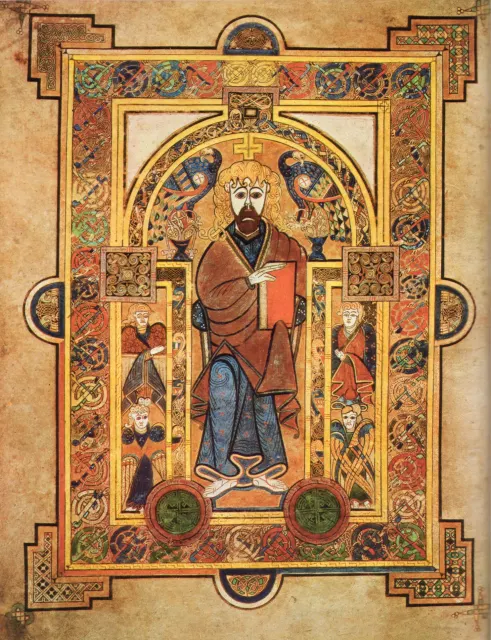
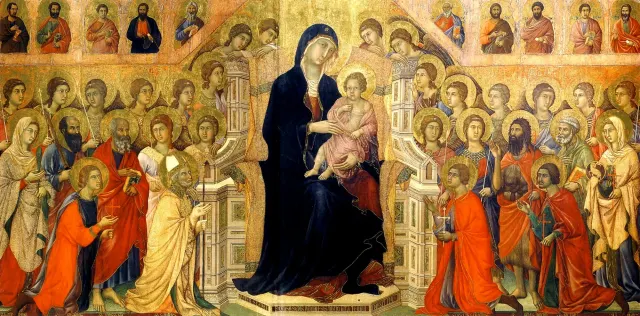
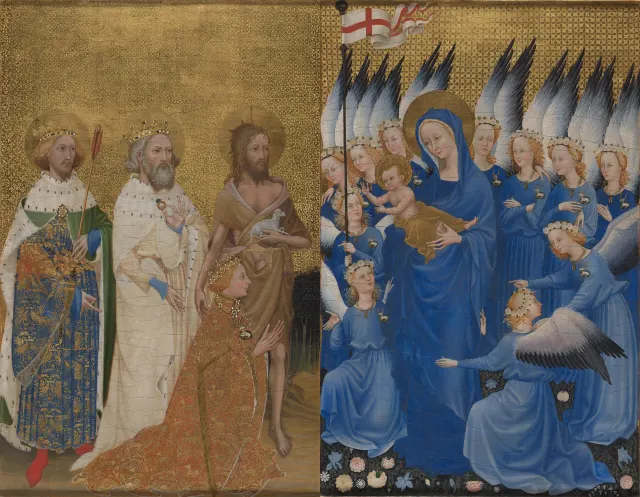
ローマ帝国がおとろえたあとの、およそ1000年を「中世」とよびます。この時代、ヨーロッパの美術の中心はキリスト教でした。字を読めない人も多かったので、教会の壁画やステンドグラスは、聖書の物語を目で伝える大切な役目をはたしました。背景には金がはられ、神さまの世界の光りかがやくようすが表されました。
The thousand years or so after the fall of the Roman Empire are called the Middle Ages. In this period, European art was centered on Christianity. Many people could not read, so church wall paintings and stained glass told Bible stories through pictures. Backgrounds were covered in gold to show the shining light of heaven.
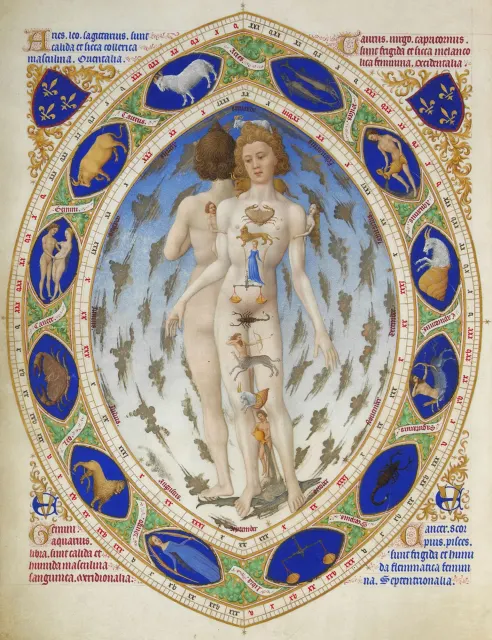
12世紀ごろから、フランスを中心に「ゴシック」とよばれる様式が広がります。空に向かってのびる高い大聖堂と、色とりどりの光を落とすステンドグラスがその代表です。本の世界でも、一文字ずつ手で書き、金や高価な青い絵の具で絵をそえた「写本」が作られました。『ベリー公のいとも豪華なる時祷書』は、その最高傑作のひとつです。
From around the 12th century, a style called Gothic spread from France. Its symbols are tall cathedrals reaching for the sky and stained glass windows that fill them with colored light. Books were written by hand, letter by letter, and decorated with gold and costly blue paint. The Très Riches Heures of the Duke of Berry is one of the finest of these manuscripts.
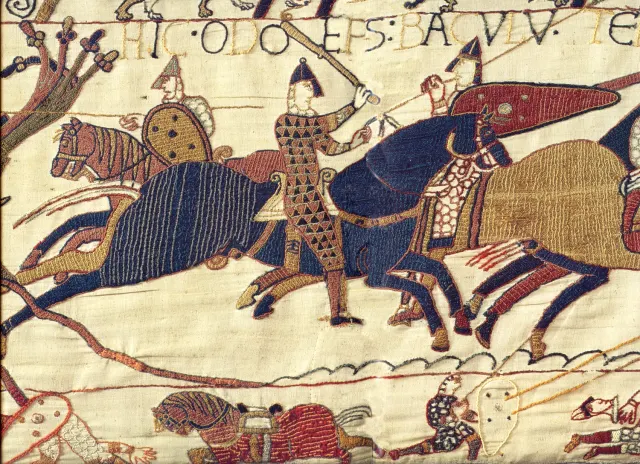
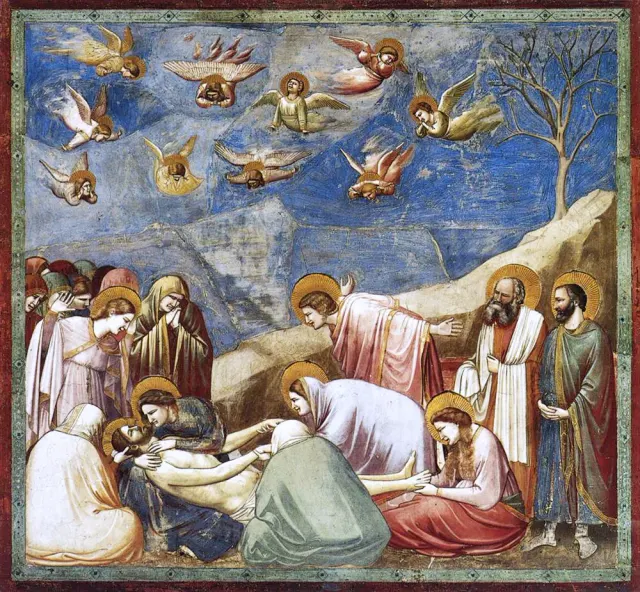
中世の終わりごろ、イタリアのジョットは、人物に重さや感情をあたえ、まるでそこに本当にいるような場面を描きました。悲しむ人々の表情が心に直接ひびく彼の絵は、のちのルネサンスへの扉を開いたといわれます。また、刺繍で歴史の事件を記録した『バイユーのタペストリー』のように、長いマンガのような作品も生まれました。
Near the end of the Middle Ages, the Italian painter Giotto gave his figures weight and feeling, as if they were really there. The grief on their faces speaks straight to our hearts, and his work is said to have opened the door to the Renaissance. There were also works like the Bayeux Tapestry, which records history in embroidery, almost like a very long comic strip.
