

 ワークシート
 ぬりえ
 迷路
町じゅうが鐘を鳴らしてお祝い!シエナの人々が行列で運んだ巨大な祭壇画。The whole city rang its bells! A giant altarpiece carried through Siena in a parade.
この作品のお話
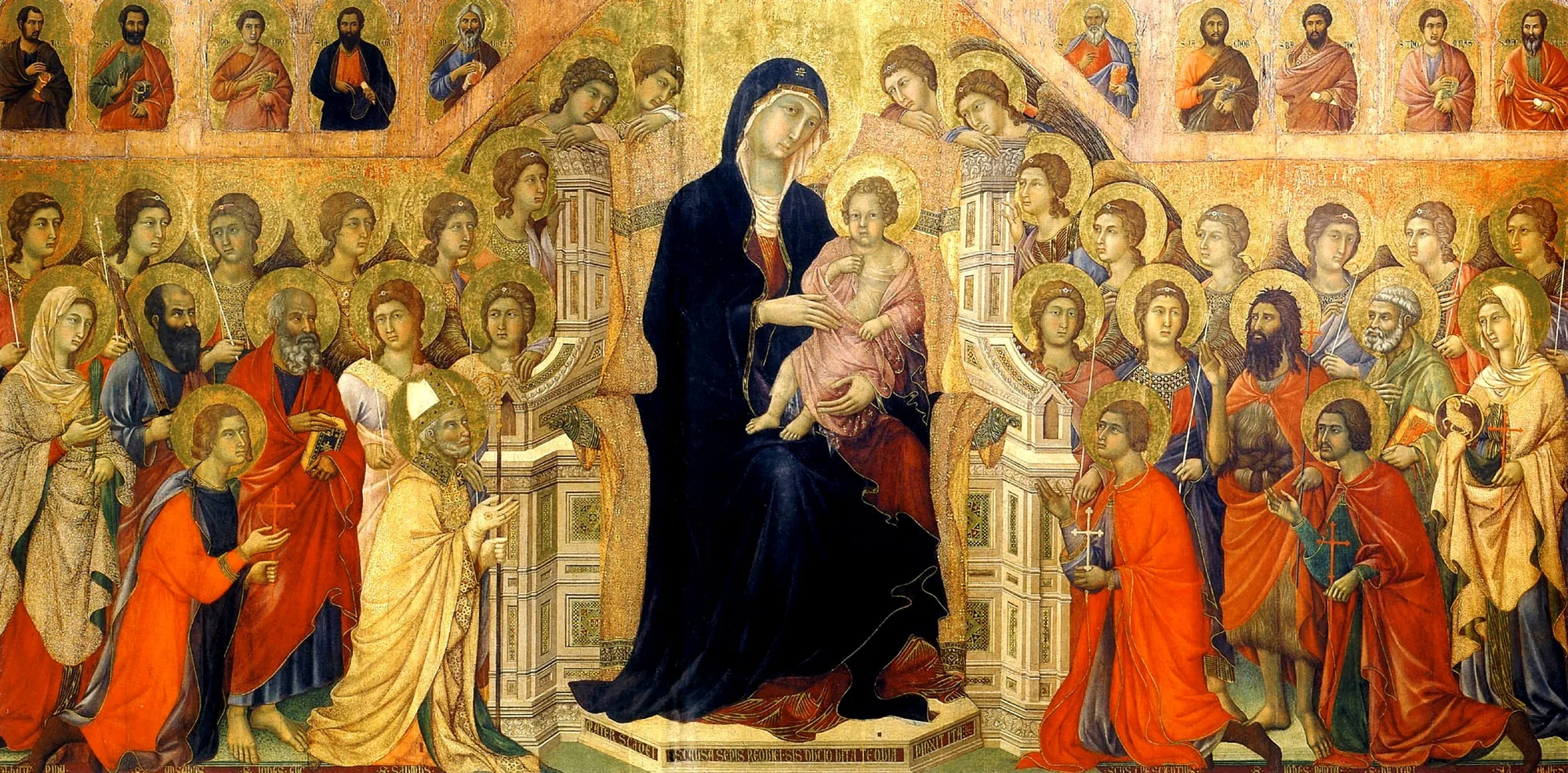
Story大理石の玉座にすわる聖母マリアと幼子イエス。そのまわりを天使と聖人がずらりと取り囲み、上の段には使徒たちが並びます。「マエスタ」はイタリア語で「威厳・荘厳」という意味。イタリアの町シエナの画家ドゥッチョが、シエナ大聖堂の主祭壇のために描いた、表と裏の両面に絵がある巨大な祭壇画の正面の中心部分です。
The Virgin Mary sits on a marble throne with the Christ Child. Angels and saints crowd around them, and apostles line up in the top row. 'Maestà' means 'majesty' in Italian. This is the central front panel of a huge two-sided altarpiece that Duccio of Siena painted for the high altar of Siena Cathedral.
1308年、シエナの大聖堂はドゥッチョと契約を結び、この大作を注文しました。完成した1311年6月9日、祭壇画は画家の工房から大聖堂まで、鐘の音が鳴りひびく中、町の人々の行列で運ばれたと年代記に記されています。裏側には、キリストの受難(十字架にかけられるまでの苦しみ)の物語が、小さな場面に分けてたくさん描かれていました。
In 1308, the cathedral signed a contract with Duccio for this great work. When it was finished, on 9 June 1311, a chronicle says the people of Siena carried it in a parade from his workshop to the cathedral while bells rang. On the back, many small scenes told the story of Christ's Passion.
ところが1771年、祭壇画はのこぎりで切り分けられ、表と裏もはなされてしまいます。小さな場面の一部はシエナの外へ流れ出し、今はロンドン、ワシントン、ニューヨーク、マドリードなどの美術館に散らばり、行方のわからないものもあります。中心の大きな板は、大聖堂のとなりの美術館で見ることができます。
But in 1771, the altarpiece was sawn into pieces, and the front and back were separated. Some small scenes left Siena and are now in museums in London, Washington, New York and Madrid, and some are lost. The large central panel can be seen in the museum next to the cathedral.
マリアが赤ちゃんのイエスと大きな玉座にすわっています。たくさんの天使と聖人がまわりに立っています。シエナの人々はこの絵の完成をお祝いしました。1311年、町の通りを運んだのです。町じゅうで鐘が鳴りました。
Mary sits on a big throne with baby Jesus. Many angels and saints stand around them. The people of Siena celebrated this painting. They carried it through the streets in 1311. Bells rang all over the city.
英語のレベルは上の「やさしい/ふつう」で切りかえられます。
えっ!?な裏ネタ
Secrets玉座の足もとの段には、ラテン語で「聖なる神の母よ、シエナに平和を、そしてあなたをこのように描いたドゥッチョに命を」という意味の言葉が書かれています。作品に自分の名前を祈りとして残したのです。
On the step of the throne, a Latin inscription says, 'Holy Mother of God, be the cause of peace for Siena, and life for Duccio, because he painted you thus.' Duccio put his name into the work as a prayer.
年代記によると、1311年6月9日、店は閉まり、鐘が鳴りひびく中、役人や聖職者、市民がろうそくを持って祭壇画のあとに続きました。1枚の絵が町じゅうの一大イベントになったのです。
According to a chronicle, on 9 June 1311, shops closed and bells rang. Officials, priests and citizens followed the altarpiece with candles. One painting became an event for the whole city.
1771年、祭壇画は表と裏の絵を別々の祭壇にかざるために解体されました。大きな板はのこぎりで切られ、表と裏も切りはなされました。いくつもの場面がのちに売られて外国へわたり、今も世界中の美術館にあります。
In 1771, the altarpiece was taken apart so that its front and back could be placed on two different altars. The panels were sawn apart, and the front and back were separated. Several scenes were later sold abroad and are still in museums around the world.
聖母の前でひざまずく4人は、シエナの守護聖人アンサヌス、サビヌス、クレスケンティウス、ウィクトル。町を守る聖人たちが、マリアにシエナのことをお願いしている場面なのです。
The four kneeling figures in front are Siena's patron saints: Ansanus, Savinus, Crescentius and Victor. They are asking Mary to protect their city.
ここを見て!
Look Closer1聖母マリアThe Virgin Mary
濃い青の衣の聖母。ほかの人物よりずっと大きく描かれ、いちばん大切な人だとわかります。
Mary wears a deep blue robe. She is much bigger than everyone else, which shows she is the most important.
2幼子イエスThe Christ Child
ピンクの衣を着て聖母のひざにすわる幼子。
The Child sits on Mary's lap in a pink robe.
3ひざまずく守護聖人Kneeling patron saint
シエナの守護聖人の1人。手前には左右に2人ずつ、4人の守護聖人がひざまずいています。
One of Siena's patron saints. Four of them kneel in front, two on each side.
4玉座の段の文字Words on the throne step
シエナの平和と、画家ドゥッチョの命を願う言葉が書かれています。
The words ask for peace for Siena and life for the painter Duccio.
英語で名画を語ろう
Talk about Art in EnglishAngels and saints stand on both sides of the throne.
天使と聖人が玉座の両側に立っています。
💡 左右対称の絵の説明に便利。on each side of もほぼ同じ意味です。
英語で説明すると… Describe it
これは金色の背景の大きな絵です。まん中で、マリアが赤ちゃんのイエスと玉座にすわっています。玉座の両側には、たくさんの天使と聖人がいます。いちばん上の列には、使徒たちが小さめに描かれています。
This is a large painting with a gold background. In the center, Mary is sitting on a throne with the baby Jesus. On both sides of the throne, there are many angels and saints. In the top row, there are smaller figures of the apostles.
考えてみよう Think & Talk
- なぜ町じゅうが、1枚の絵の完成をお祝いしたのだと思いますか?Why do you think the whole city celebrated one painting?
- ばらばらになった絵は、シエナにもどすべきだと思いますか?それはなぜ?Should the scattered pieces go back to Siena? Why or why not?
この作品の英単語
WordsMary sits on a marble throne.
マリアは大理石の玉座にすわっています。
This altarpiece was made for a cathedral.
この祭壇画は大聖堂のために作られました。
The whole city celebrated the new painting.
町じゅうが新しい絵を祝いました。
It was a huge, two-sided painting.
それは両面に絵がある巨大な作品でした。
ミニクイズ
QuizQ. 完成した祭壇画は、どうやって大聖堂まで運ばれた?How was the finished altarpiece taken to the cathedral?
鐘が鳴りひびく中、人々の行列で運ばれたと記録されています。
Records say people carried it in a parade while bells rang.
ウソ?ホント? この祭壇画は、裏側にも絵が描かれていた。This altarpiece also had paintings on the back.
裏側にはキリストの受難の物語がたくさんの場面で描かれていました。
The back showed the story of Christ's Passion in many scenes.
ウソ?ホント? この祭壇画は、作られたときの形のまま今も大聖堂の祭壇にある。The altarpiece is still on the cathedral altar in its original form.
1771年に切り分けられ、一部は世界中の美術館にちらばっています。
It was cut apart in 1771, and some parts are now in museums around the world.
 画像の出典とライセンス / Image credit
- PDDuccio maesta1021.jpg(Wikimedia Commons)
ライセンス:Public domain(パブリックドメイン)/作者・撮影者の表記:Duccio di Buoninsegna
この作品は、作者の死後長い年月がたち著作権の保護期間が終わった「パブリックドメイン」の作品です。画像は平面の作品を忠実に写したもので、新しい著作権は生じません(Wikimedia Commons の PD-Art の考え方)。 所蔵:シエナ大聖堂付属美術館(Museo dell'Opera del Duomo, Siena)。画像は表示のために縮小・WebP 形式に変換しています。
