

 宇宙・NASAホント
太陽系最強の風は海王星で時速2000km。日差しは地球の900分の1なのに、なぜ?
 2026.10.02
 English Corner(A2〜B2・4択クイズ)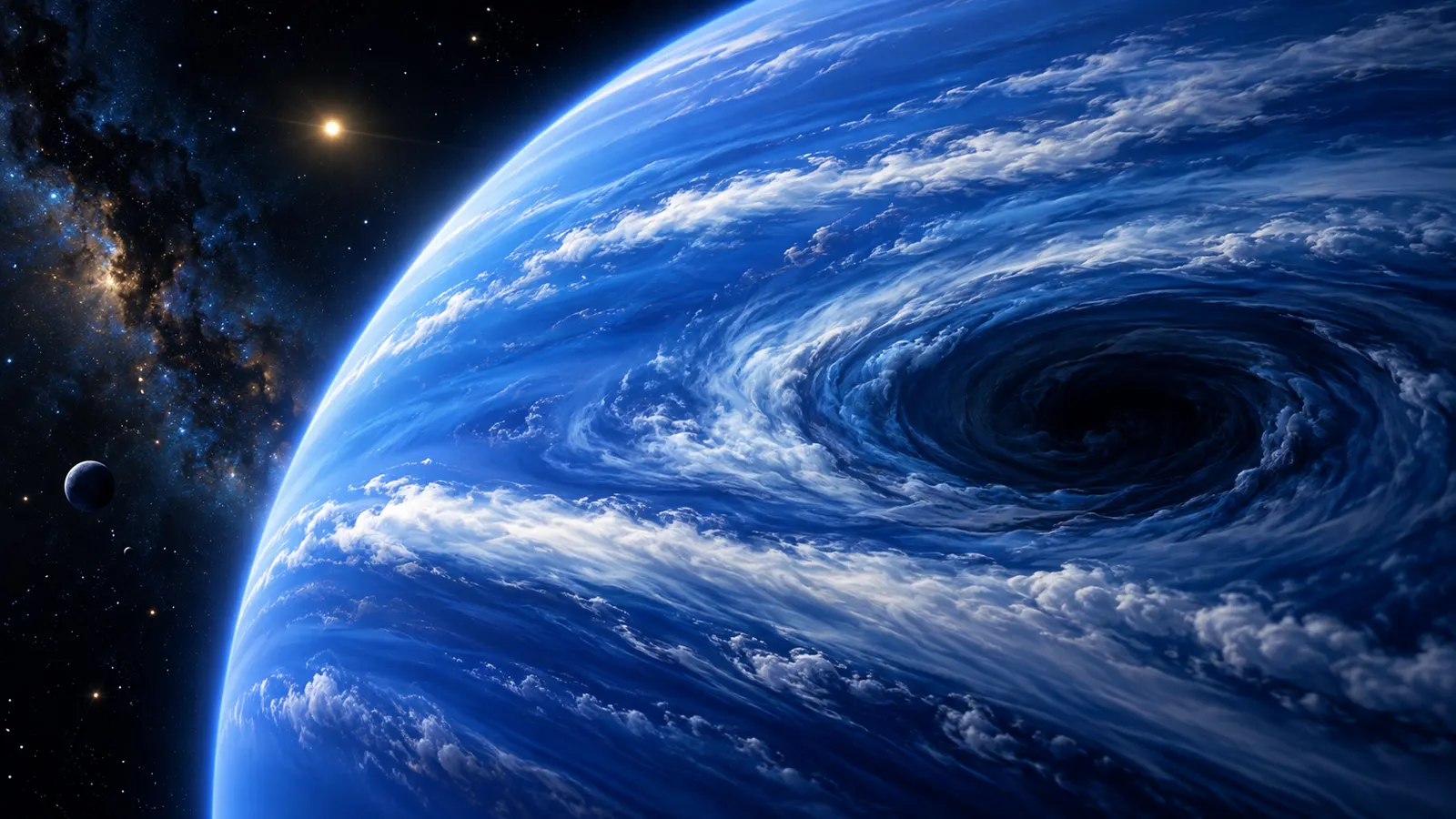
 読む前に予想してみよう!
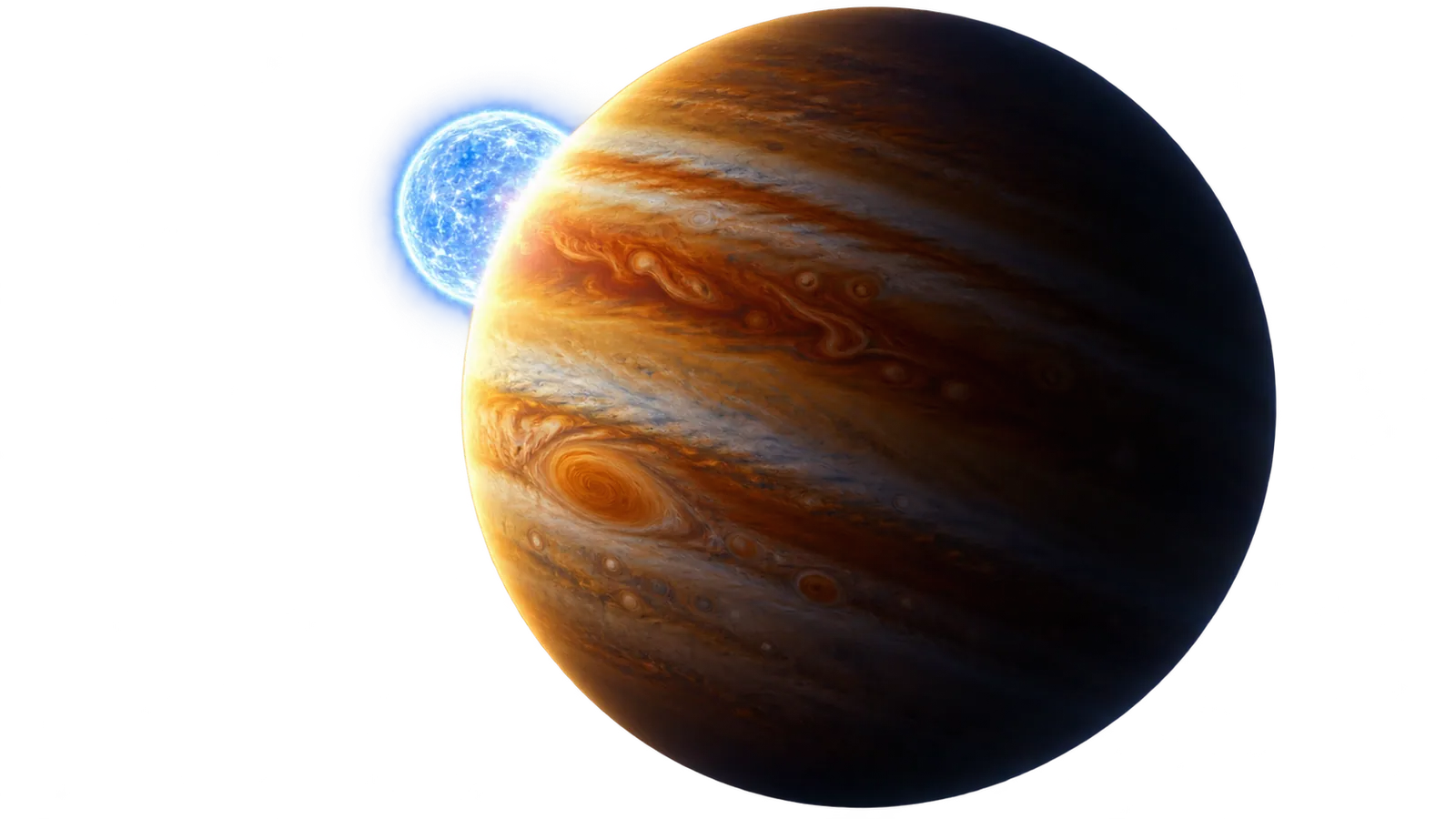
太陽系でいちばん強い風が吹くのは、太陽に近くて暑い金星である
最強は太陽から最も遠い海王星。時速2000kmを超える風が観測されている。
 研究カード(どんな研究?)
- 対象
- 海王星の大気
- 規模
- ボイジャー2号の接近観測+宇宙望遠鏡
- 研究の種類
- 観測研究+理論モデル
- 確かさ
- ★★★★☆
海王星では時速2000kmを超える風が吹く。日差しは地球の約900分の1なのになぜ速いのか。内部の熱と「ブレーキの少なさ」がカギらしい。
ひとことで言うと海王星には、ジェット機より速い風が吹いているよ。
太陽系で、いちばん風が強い惑星はどこでしょう?
熱い金星? 巨大な嵐をもつ木星?正解は、太陽からいちばん遠い惑星・海王星です。
NASAによると、海王星では時速2000km以上の風が雲を吹き飛ばしています。旅客機の巡航速度の2倍以上。地球の風の最大で約9倍にもなる、とNASAは紹介しています。
しかも海王星に届く太陽の光は、地球の約900分の1。ほとんど日が当たらない「寒くて暗い星」で、なぜこんな暴風が吹くのでしょうか。
01ボイジャー2号が見た「暴風の星」
海王星を間近で見た探査機は、1989年に通り過ぎたNASAのボイジャー2号だけです。
ボイジャー2号は、海王星の雲がどれだけ動いたかを、何枚もの写真で追いかけました。
風速の数字は、どの高さの雲を追うかや、基準にする惑星の自転の速さをどう見積もるかで変わります。NASAは、雲が時速2000kmを超える速さで流れることがある、と紹介しています。
02日差しが弱いのに、なぜ速い?
地球の風は、太陽の熱で空気が温められて生まれます。では、日差しの弱い海王星の風のエネルギーはどこから?
ひとつのカギは、内部の熱です。
もうひとつのカギは、ブレーキの少なさです。地球の風は、山や森、海面とこすれて弱まります。ところが海王星にはかたい地面がありません。さらに、冷たい大気の中では風の勢いをそぐ乱れが少ないのでは、という考えもあります。いったん吹きはじめた風が、止まりにくいのです。
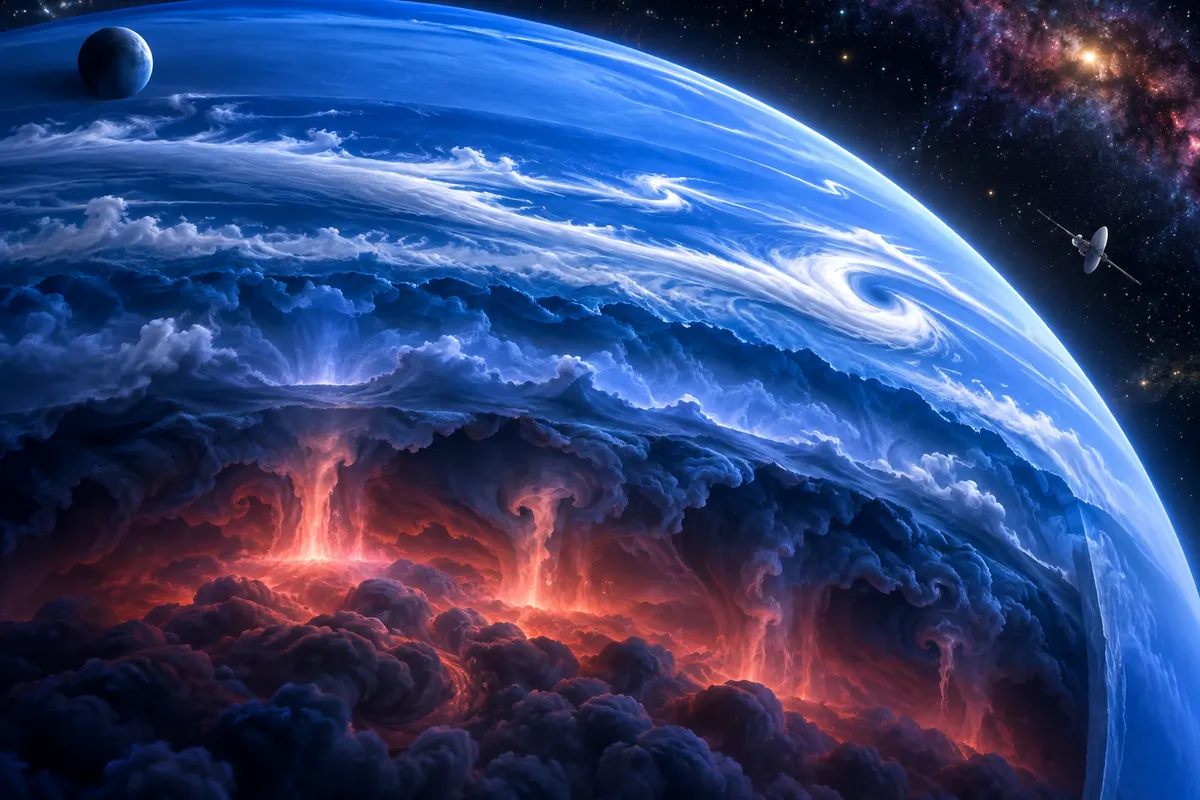
03暴風が吹くのは、表面の「皮1枚」だけ
これほどの暴風なら、星の奥深くまで吹いているのでしょうか?
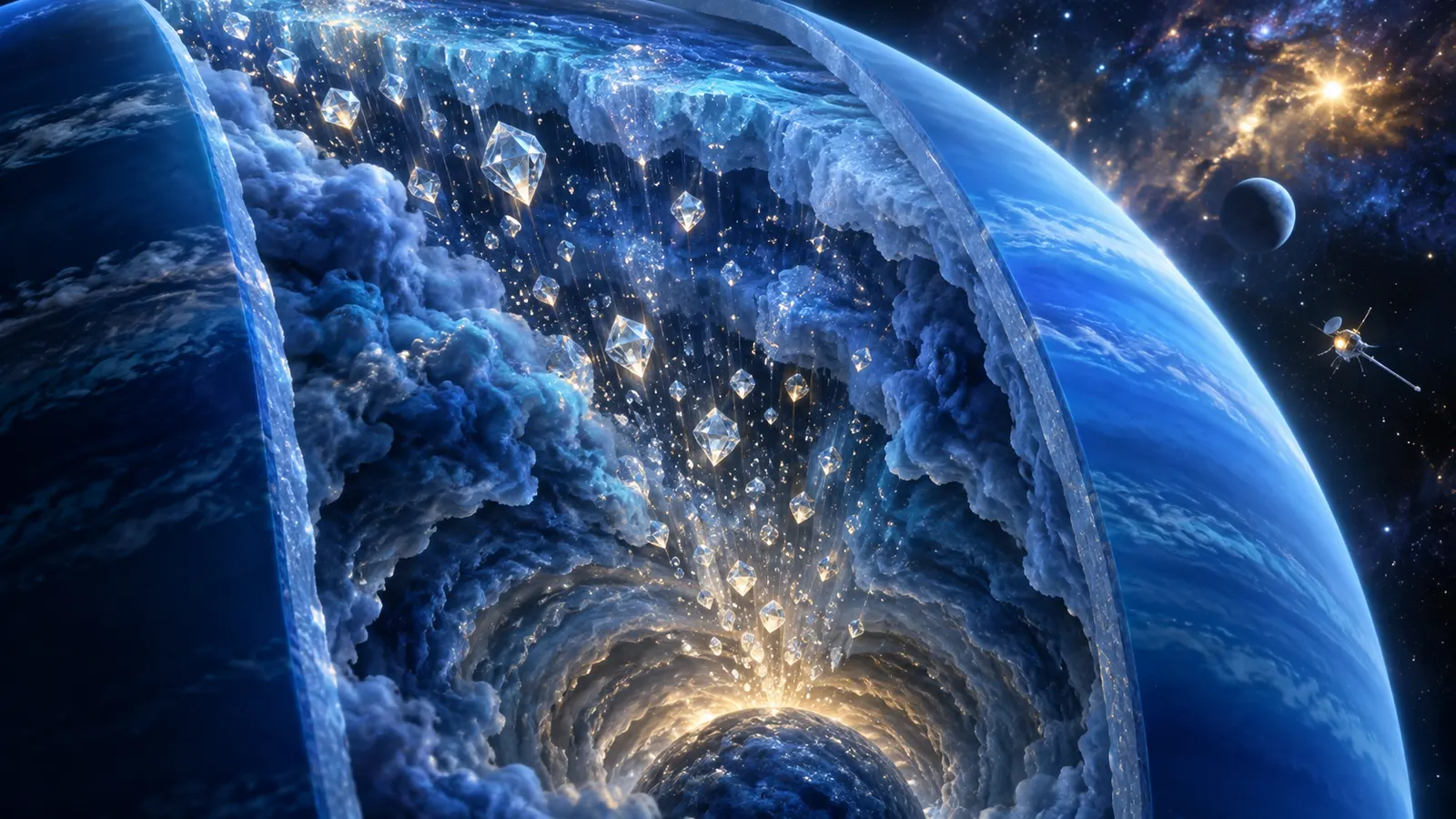
イスラエル・ワイツマン科学研究所のカスピらは2013年、海王星の重力のデータから、この強い風が吹いているのは表面近くのうすい層(深さ約1000km程度まで)だけだと見積もりました。海王星の半径は約2万5000km。暴風は、星全体から見れば皮1枚の出来事なのです。
04消えた「大暗斑」
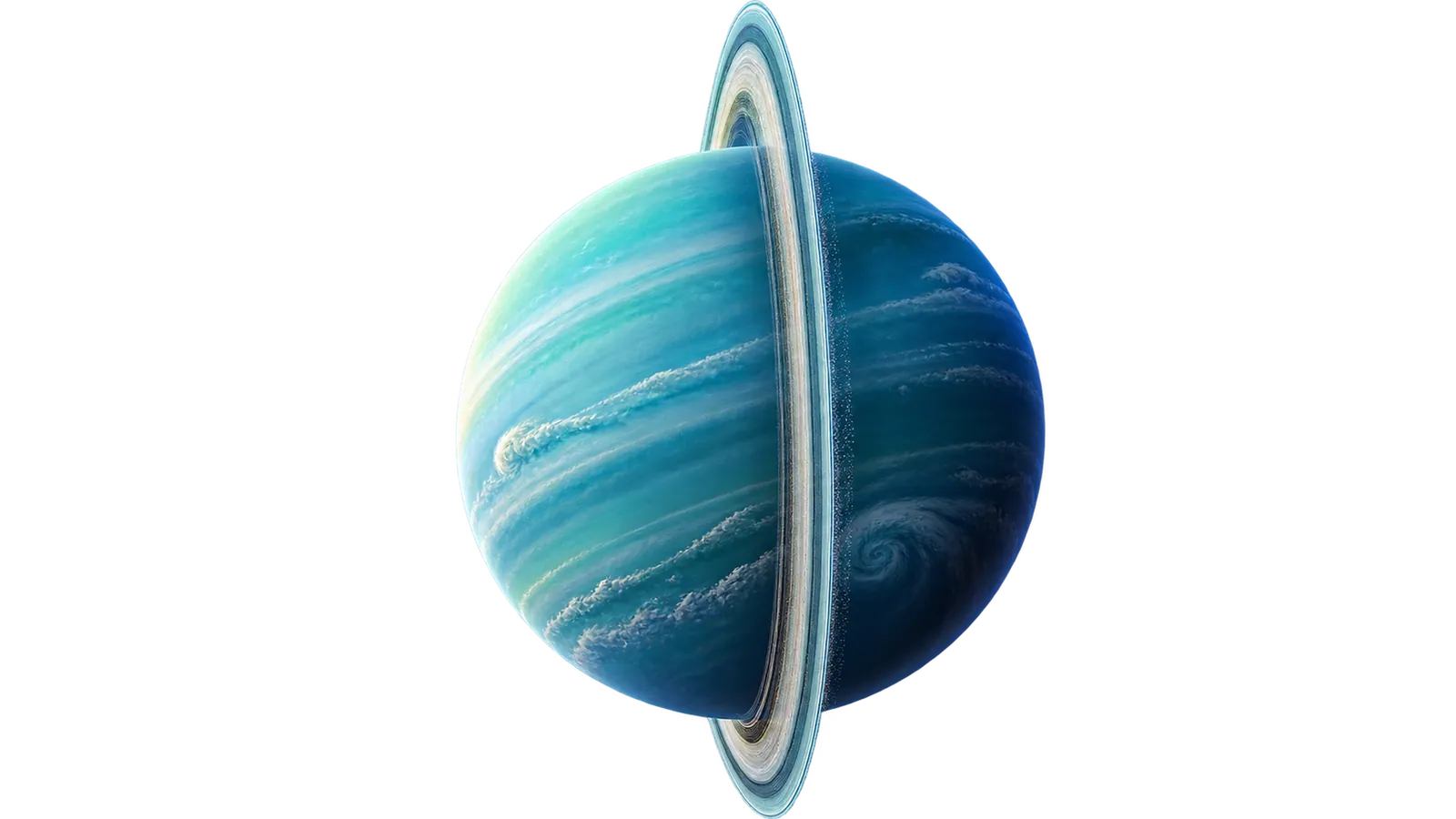
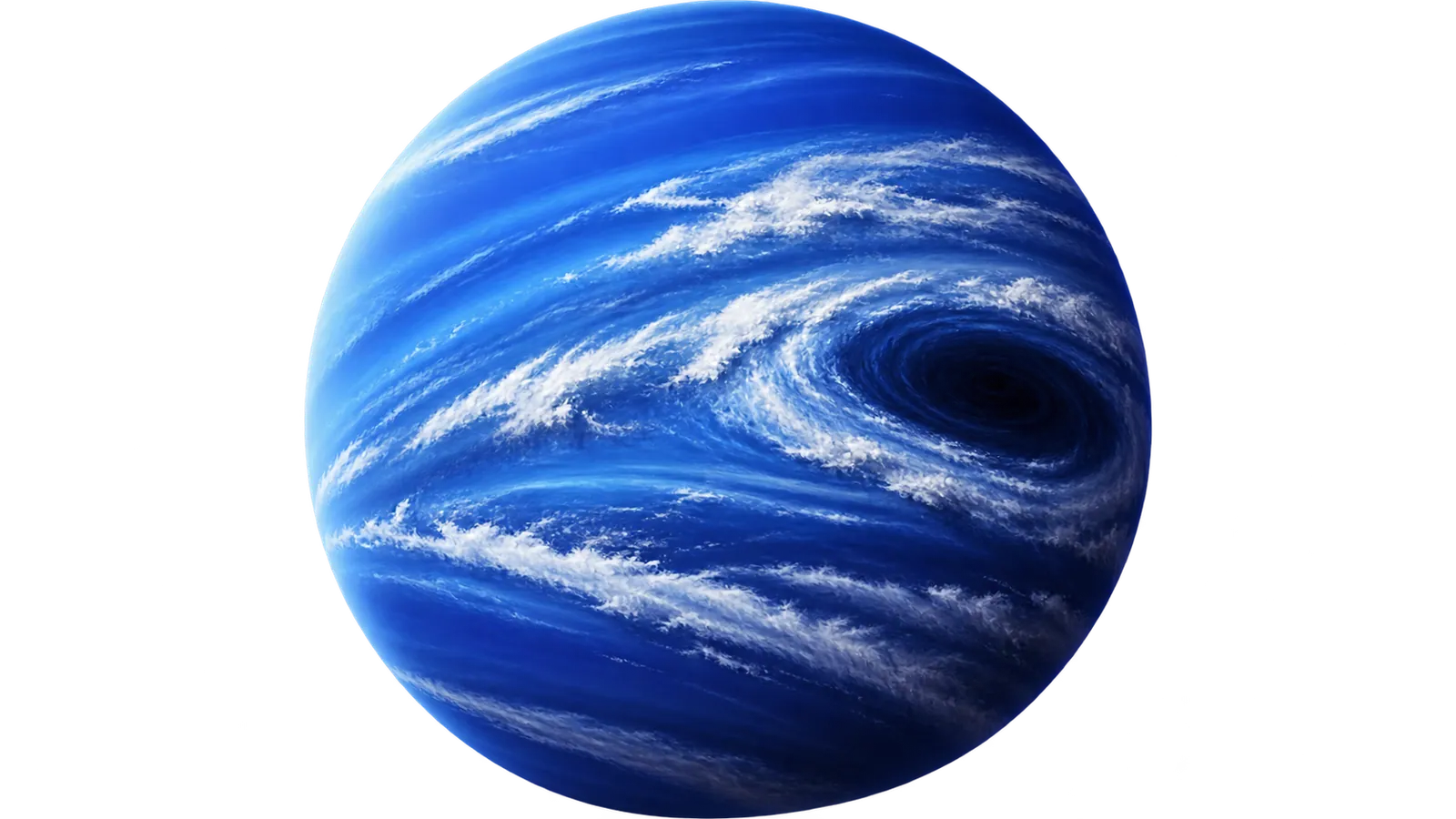
ボイジャー2号は、海王星の南半球に地球がすっぽり入るほど巨大な黒い渦を見つけ、「大暗斑」と名づけました。
ところが1994年、ハッブル宇宙望遠鏡が海王星を見ると、大暗斑は消えていました。代わりに、別の場所に新しい暗い渦が現れていたのです。木星の大赤斑が100年以上続くのとは対照的に、海王星の嵐は数年で生まれては消えることが多いとわかってきました。
05まとめ
- 太陽系最強の風は、いちばん遠い海王星。時速2000kmを超える
- 日差しは地球の約900分の1。エネルギー源は内部の熱、加えてブレーキが少ない
- 暴風は表面のうすい層だけ。巨大な渦も数年で消えることがある
寒くて暗い星ほど、静かだとは限らない。いちばん遠い惑星は、太陽系でいちばん騒がしい空をもっていました。
この研究を英語で読もう原田英語の English CornerNeptune is the planet farthest from the Sun and receives only about one nine-hundredth of the sunlight that… 音声
音声 4択クイズ9問A2・B1・B2タップして開く
原田英語の English Corner
この研究を英語で読もう
Neptune is the farthest planet from the Sun. It gets very little sunlight, but it has the fastest winds in the solar system. The winds can blow at more than 2,000 kilometers per hour. That is faster than a passenger plane!
Why are they so strong? Neptune has heat inside it. Also, it has no hard ground, so almost nothing slows the wind down.
64 words ・ CEFR A2
和訳を見る
海王星は、太陽からいちばん遠い惑星です。日光はほとんど届きませんが、太陽系でいちばん速い風が吹いています。風は時速2000キロメートル以上で吹くことがあります。旅客機よりも速いのです。
なぜそんなに強いのでしょうか。海王星は内部に熱をもっています。また、かたい地面がないので、風を遅くするものがほとんどないのです。
4択リーディングクイズ
Q1. What is the passage mainly about?
海王星に太陽系最速の風が吹くこととその理由を述べているので C。
Q2. How fast can Neptune's winds blow?
The winds can blow at more than 2,000 kilometers per hour. とあるので D。
Q3. In this passage, "slows ... down" means ...
slow down は「速度を落とす」。かたい地面がないので風を遅くするものが少ない、という意味なので A。
Neptune is the planet farthest from the Sun and receives only about one nine-hundredth of the sunlight that reaches Earth. Even so, it has the fastest winds in the solar system, sometimes blowing at more than 2,000 kilometers per hour. Much of what we know comes from Voyager 2, the only spacecraft to visit Neptune, in 1989.
By tracking clouds in its images, scientists measured the wind speeds. Data from the same mission showed that Neptune gives off about 2.6 times as much energy as it receives from the Sun, so heat from inside the planet helps power the winds. In addition, Neptune has no solid surface, so there are no mountains or forests to slow the winds down.
119 words ・ CEFR B1
和訳を見る
海王星は太陽から最も遠い惑星で、地球に届く日光のわずか約900分の1しか受けていません。それでも、太陽系で最も速い風が吹いており、ときには時速2000キロメートルを超えます。私たちが知っていることの多くは、1989年に海王星を訪れた唯一の探査機ボイジャー2号によるものです。その画像で雲の動きを追跡することで、科学者は風速を測りました。
同じミッションのデータから、海王星は太陽から受け取る約2.6倍ものエネルギーを放出していることが分かりました。つまり惑星内部からの熱が風を動かす助けになっているのです。さらに、海王星にはかたい地表がないため、風を弱める山や森がありません。
4択リーディングクイズ
Q1. What is the passage mainly about?
日光が少ないのに Even so, it has the fastest winds と述べ、その理由(内部の熱・地表がない)を説明しているので B。
Q2. How did scientists measure Neptune's wind speeds?
By tracking clouds in its images, scientists measured the wind speeds. とあるので A。海王星には地表がないので B は誤り。
Q3. What can we infer about winds on Earth?
海王星には no mountains or forests to slow the winds down とあることから、地球では山や森が風を弱めていると推測できるので D。
Although Neptune is the most distant planet and receives only about one nine-hundredth of the sunlight that Earth does, it hosts the fastest winds in the solar system. Cloud features have been seen moving at more than 2,000 kilometers per hour, though such figures depend on which cloud layer is tracked and on the rotation period used as a reference, which is itself somewhat uncertain.
Analyses of Voyager 2 images from its 1989 flyby showed a broad jet near the equator blowing westward, against the planet's rotation, and a narrow one near 70 degrees south reaching at least 300 meters per second. How can so little sunlight drive such violent weather? One factor is internal heat. Voyager data indicate that Neptune radiates about 2.6 times as much energy as it absorbs from the Sun.
Another is the lack of friction, since there is no solid surface and the cold atmosphere may contain little turbulence. Gravity data further suggest that these winds are confined to a thin outer layer roughly 1,000 kilometers deep. Neptune's storms are also short-lived: the huge Great Dark Spot seen by Voyager 2 had vanished when Hubble looked in 1994.
193 words ・ CEFR B2
和訳を見る
海王星は最も遠い惑星で、地球が受ける日光の約900分の1しか受け取っていませんが、太陽系で最も速い風が吹いています。雲の模様が時速2000キロメートルを超える速さで動くのが観測されていますが、こうした数値は、どの高さの雲の層を追跡するか、そして基準とする自転周期をどう取るかによって変わり、その自転周期自体にもいくらか不確かさがあります。
1989年に接近通過したボイジャー2号の画像の解析から、赤道付近には惑星の自転と逆の西向きに吹く幅広いジェット気流があり、南緯70度付近には秒速300メートル以上に達する狭いジェット気流があることが分かりました。これほどわずかな日光で、どうしてこんなに激しい気象が生まれるのでしょうか。1つの要因は内部の熱です。ボイジャーのデータは、海王星が太陽から吸収する約2.6倍のエネルギーを放射していることを示しています。もう1つは摩擦の少なさです。
かたい地表がなく、冷たい大気には乱れが少ないのかもしれません。さらに重力のデータからは、こうした風が深さ約1000キロメートルほどの薄い外側の層に限られていることがうかがえます。海王星の嵐は短命でもあります。ボイジャー2号が見た巨大な大暗斑は、1994年にハッブルが観測したときには消えていました。
4択リーディングクイズ
Q1. What is the main topic of the passage?
最速の風の観測、その原因(内部の熱・摩擦の少なさ)、風の層の薄さ、嵐の短さを述べているので D。
Q2. Why does the author say that wind-speed figures "depend on" certain choices?
depend on which cloud layer is tracked and on the rotation period used as a reference と明示されているので C。測定値の不確かさに触れた部分。
Q3. What does the example of the Great Dark Spot suggest?
Neptune's storms are also short-lived の具体例として、1989年に見えた大暗斑が1994年には消えていたと述べているので B。
重要単語
- wind speedB1名詞(句)風速Neptune's wind speed is incredibly high.
 high / low で表す(fast ではなく high wind speed)。天気予報では wind speeds of up to ~ の形が多い。
 - frictionB2名詞摩擦There is little friction to slow the winds. 物理の「摩擦」のほか、人間関係の「あつれき」も friction。friction between A and B。
- internal heatB2名詞(句)内部の熱Neptune gives off more internal heat than expected. internal(内部の)⇔ external(外部の)。internal organs「内臓」。
- vortexC1名詞渦A dark vortex appeared in the atmosphere. 複数形は vortices または vortexes。polar vortex「極渦(寒波のもと)」はニュース頻出。
- supersonicC1形容詞超音速のSome say the winds are almost supersonic. super-(超える)+sonic(音の)。supersonic jet「超音速ジェット機」。
- methaneB2名詞メタンMethane makes Neptune look blue. 発音は米 /ˈmɛθeɪn/(メセイン)、英 /ˈmiːθeɪn/(ミーセイン)。温室効果ガスとしても入試頻出。
- turbulenceC1名詞乱流、(気流の)乱れThe plane shook because of turbulence. 飛行機の「揺れ」のアナウンスでおなじみ。比喩的に「(社会の)混乱」の意味もある。
 入試に出る順の単語帳を印刷する →
 全5903語の「科学英単語カード」で復習する →
 公式・一次情報をチェック
- Neptune: Facts(NASA Science)science.nasa.gov
 4コマでわかる
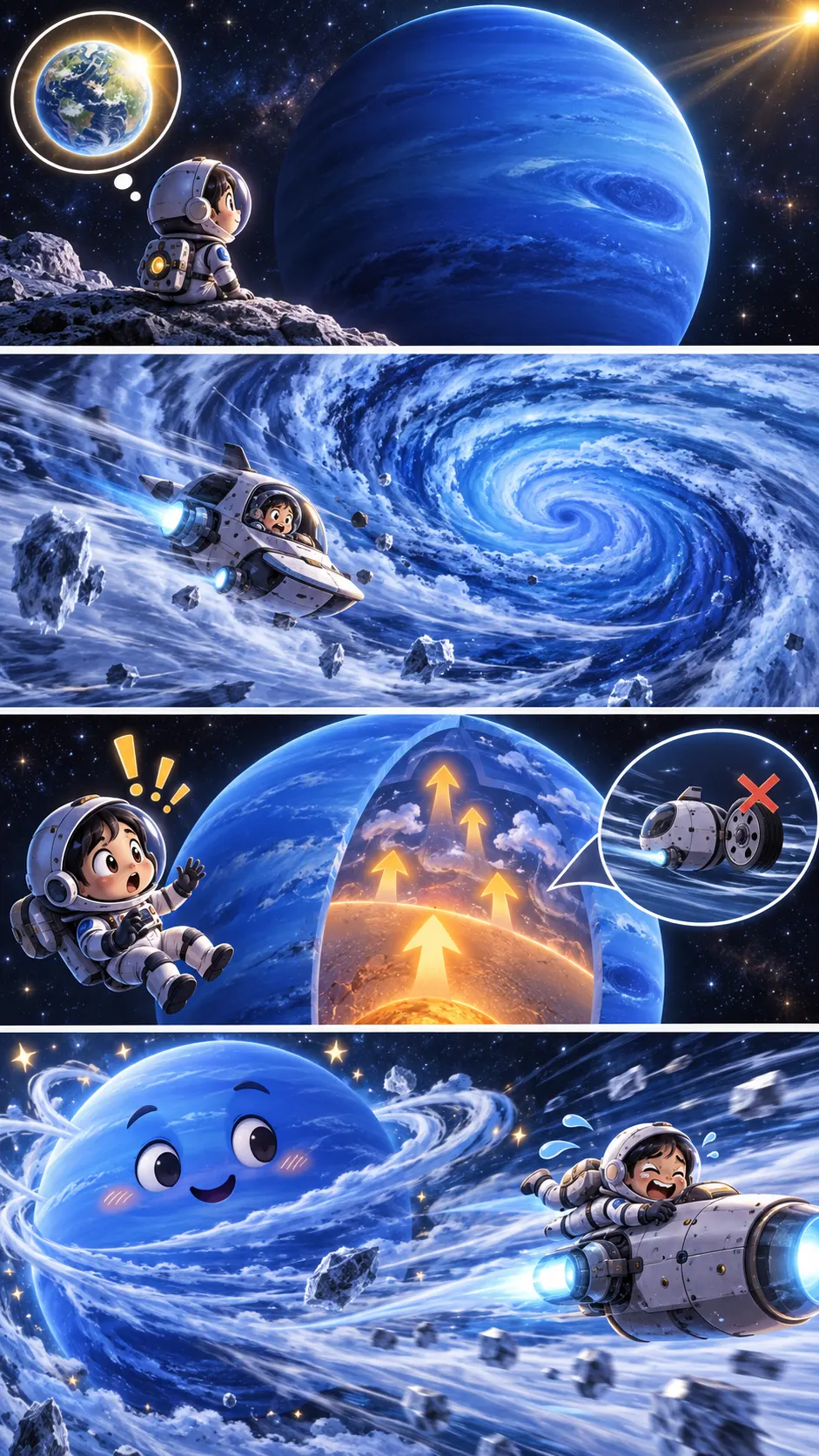
このネタ、誰かに教えたくなった?
太陽系でいちばん風が強いのは、いちばん遠い惑星・海王星。風速は時速2000km超で、NASAによれば地球の風の最大約9倍。太陽の光は地球の約900分の1しか届かないのに、なぜこんな暴風が吹くのかはいまも研究中らしい。
押すと「マジかリスト」に保存されます
 出典・参考文献(5件)タップで表示
- Limaye & Sromovsky (1991) Winds of Neptune: Voyager observations of cloud motions, Journal of Geophysical Researchdoi.org
- Pearl & Conrath (1991) The albedo, effective temperature, and energy balance of Neptune, as determined from Voyager data, Journal of Geophysical Researchdoi.org
- Kaspi et al. (2013) Atmospheric confinement of jet streams on Uranus and Neptune, Naturedoi.org
- Hammel et al. (1995) Hubble Space Telescope Imaging of Neptune's Cloud Structure in 1994, Sciencedoi.org
- NASA Science, Neptune: Factsscience.nasa.gov

※本記事は上記の研究・公開資料をもとに、原田英語が独自の言葉で解説したものです。引用は著作権法第32条の範囲で行い、出典を明記しています。画像はすべてオリジナルのイメージです。研究結果には限界や個人差があります。誤りのご指摘は原田英語のお問い合わせフォームから。