yuzen
resist-dyed pictorial kimono
友禅(ゆうぜん)
In one line
The shortest answer that works
Yuzen is a dyeing technique that uses rice paste to outline a design so colors can be painted inside it.
友禅とは、糊で輪郭を引いて色を止め、その内側に色を挿していく染めの技法です。
In 30 seconds
The standard explanation
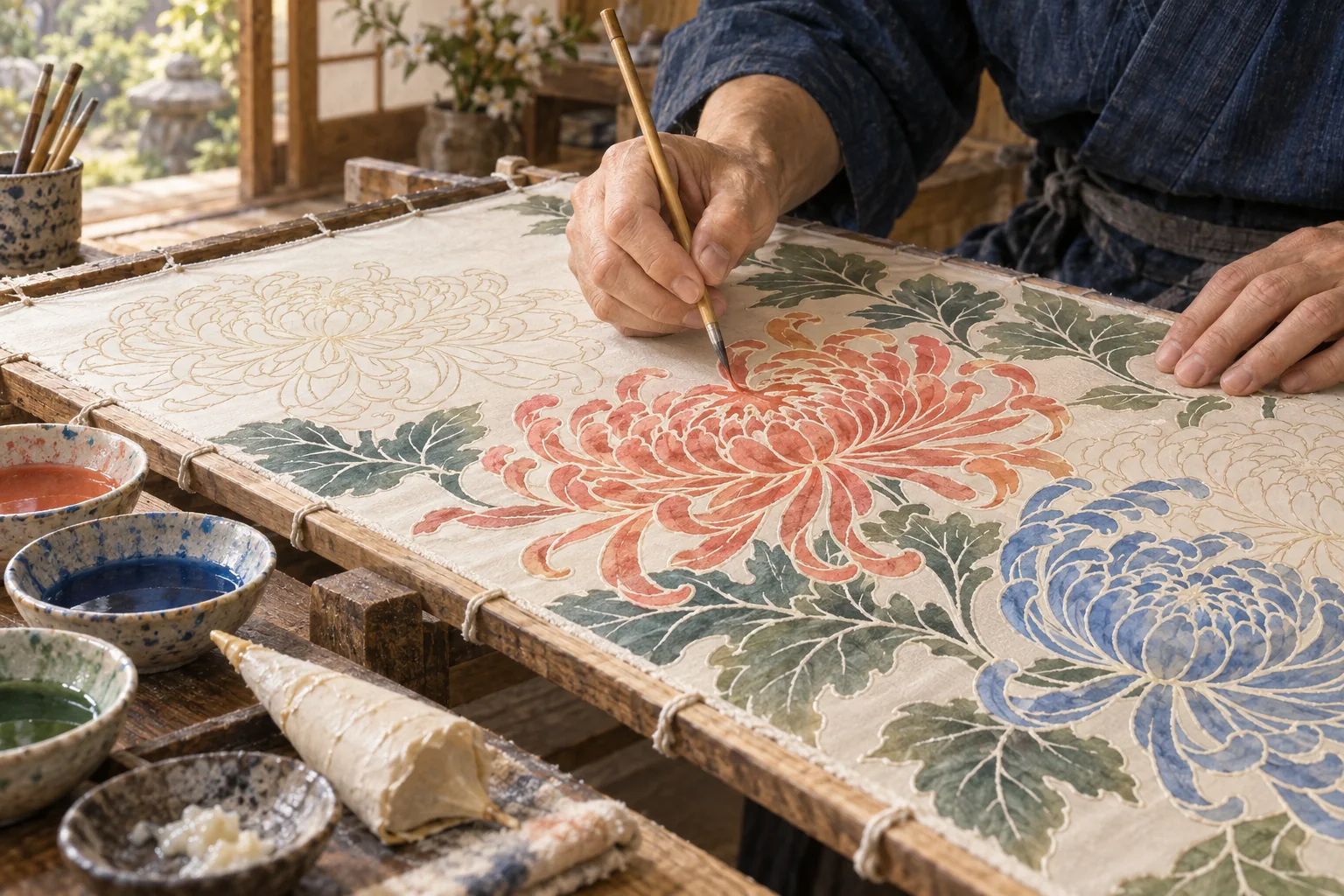
Yuzen is a resist dyeing technique for kimono. A design is outlined on the cloth with rice paste squeezed from a cone, and colors are then brushed inside each outlined area without bleeding across the lines. It allows pictorial designs of a complexity that weaving or stenciling cannot reach.
友禅は着物のための防染の技法です。筒から絞り出した糊で布の上に図案の輪郭を引き、その内側に筆で色を挿していくと、色が線を越えてにじみません。織りや型ではできない、絵画のように複雑な図案を可能にします。
As a short speech
A full paragraph you can read aloud
Yuzen is the dyeing technique that made pictorial kimono possible. The problem with dyeing a picture onto cloth is that colors spread. Yuzen solves it with rice paste: the design is drawn on the fabric in a fine line of paste squeezed from a cone, like piping icing, and that line stops dye from crossing it.
The dyer then brushes each color into its own enclosed area, builds shading inside it, steams the cloth to fix the dye, and finally washes the paste away, leaving a thin undyed line where it was. That white outline is the signature of the technique.
The process runs to well over a dozen stages, traditionally divided among specialists. Two regional styles are best known: the Kyoto version, which favors bright colors and often adds gold leaf and embroidery, and the Kanazawa version, which uses a more subdued palette and is known for painting insect-eaten leaves.
友禅は、絵のような着物を可能にした染めの技法です。布に絵を染める際の難しさは、色がにじむことです。友禅はそれを糊で解きます。図案は、絞り袋のように筒から押し出した細い糊の線で布に描かれ、その線が染料の越境を止めます。
染め手はそれから、囲われた区画ごとに筆で色を挿し、その中で濃淡をつけ、布を蒸して色を定着させ、最後に糊を洗い流します。すると、そこに染まっていない細い線が残ります。この白い輪郭こそ、この技法の署名です。
工程は十を超え、伝統的には専門の職人に分かれています。よく知られた地域の様式が二つあります。鮮やかな色を好み、金箔や刺繍を加えることの多い京都のものと、落ち着いた色を用い、虫の食った葉を描くことで知られる金沢のものです。
Questions people actually ask
And how to answer them.
What is the thin white line in the design?
It is where the rice paste was. The paste blocks dye, and when it is washed out at the end the cloth underneath is left undyed, giving a fine pale outline around each shape. It is the mark of hand-drawn yuzen.
糊が置かれていたところです。糊が染料を止め、最後に洗い流すと、その下の布は染まらずに残り、形ごとに細く淡い輪郭が生まれます。手描きの友禅であることの目印です。
How can I tell hand-drawn from printed?
Look for slight irregularity in the outline and for shading that varies within a single shape, both signs of brushwork. Printed cloth repeats exactly, and a repeating pattern across the width is a strong sign of stencil or machine printing.
輪郭のわずかな揺らぎと、ひとつの形の中で変化する濃淡を見てください。どちらも筆の跡です。印刷の布は寸分たがわず繰り返します。幅の中で柄が正確に繰り返していれば、型か機械による印刷の強い印です。
Phrases you can use
- The paste stops the dye from spreading.糊が染料のにじみを止めます。
- Colors are brushed in one area at a time.色は区画ごとに筆で挿します。
- The white line is where the paste was.白い線は糊があったところです。
- Kyoto and Kanazawa styles differ.京都と金沢で様式が違います。
Words you need
- resist dyeing防染
- rice paste糊
- to steam (to fix dye)蒸す
- shadingぼかし
Watch
From YouTubeBackground (Japanese)
友禅の名は、江戸時代の扇絵師、宮崎友禅斎に由来するとされます。糊で防染する技法そのものはそれ以前からありましたが、彼の図案が流行したことで名が結びついたと説明されます。京友禅は色数が多く金銀の加飾を伴うことが多く、加賀友禅は五彩と呼ばれる落ち着いた色使いと、葉に虫食いを描く表現で知られます。糊を洗い流す工程はかつて川で行われ、「友禅流し」と呼ばれる川の風景として知られました。現在は型を用いる型友禅や、機械による捺染も広く行われています。