Nishijin-ori
figured silk weaving from Kyoto
西陣織(にしじんおり)
In one line
The shortest answer that works
Nishijin-ori is figured silk weaving from Kyoto, where the threads are dyed before they are woven.
西陣織とは京都の紋織物で、糸を染めてから織り上げます。
In 30 seconds
The standard explanation
Nishijin-ori is the figured silk weaving of the Nishijin district of Kyoto, used above all for obi sashes. The threads are dyed first and the pattern is built by the weave itself rather than printed on afterwards, which is why the design shows on the reverse. Production is divided among many specialist workshops.
西陣織は京都の西陣という地区で織られる紋織物で、何よりも帯に使われます。先に糸を染め、模様は後から刷るのではなく織りそのものでつくるため、裏から見ても柄が現れます。工程は多くの専門の工房に分かれています。
As a short speech
A full paragraph you can read aloud
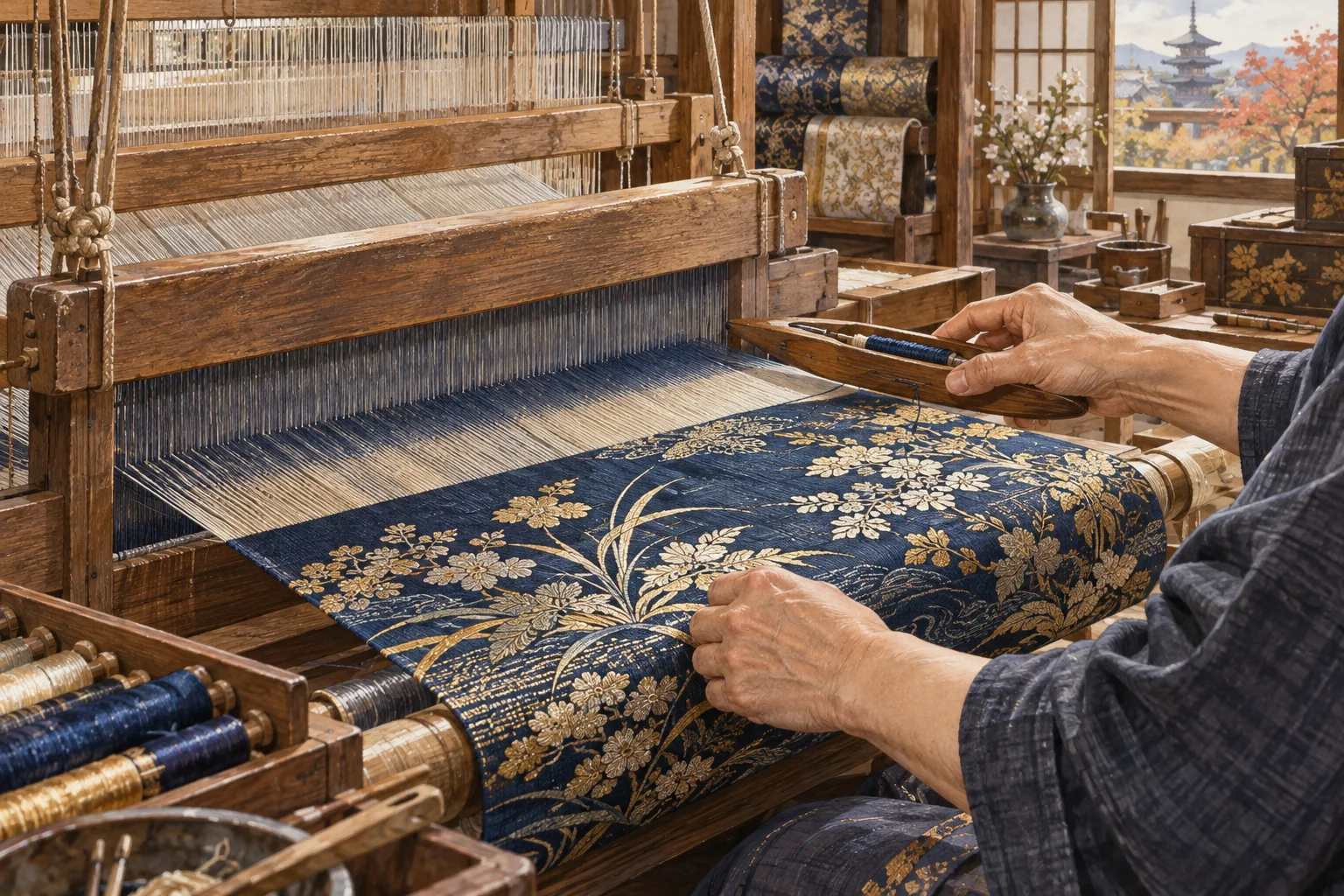
Nishijin-ori is the figured silk weaving of a district in Kyoto called Nishijin, and it is most famous for obi, the sashes worn with kimono. The defining technique is that the threads are dyed before weaving rather than the cloth being printed afterwards, so the pattern is constructed out of the interlacing of colored threads.
That is why a Nishijin obi shows its design on the back as well as the front, and why it has weight and depth that a printed cloth does not. The work is not done by one person. It is divided among more than a dozen specialist trades: designing, making the pattern cards, preparing the warp, dyeing, pasting gold leaf onto paper and turning it into thread, weaving.
A single elaborate obi can take weeks on the loom. The district is named after the western camp of a fifteenth-century war, and weavers who had scattered during that conflict returned to the area afterwards.
西陣織は、京都の西陣と呼ばれる地区で織られる紋織物で、何より着物に締める帯で知られています。決定的な技法は、布を後から刷るのではなく、織る前に糸を染めることです。だから模様は、色のついた糸の交わりそのものによって組み立てられます。
西陣の帯が裏にも柄を見せるのはそのためであり、刷った布にはない厚みと奥行きがあるのもそのためです。仕事は一人で行うものではありません。十を超える専門の職に分かれています。
図案を起こすこと、紋紙を作ること、経糸を用意すること、染めること、紙に金箔を貼って糸に撚ること、そして織ること。凝った帯は、機にかけてから何週間もかかります。地区の名は15世紀の戦の西軍の陣に由来し、その戦乱で散っていた織手たちが、のちにこの地に戻ってきました。
Questions people actually ask
And how to answer them.
How do I tell it from a printed obi?
Look at the back. In a woven figured cloth the pattern is visible on the reverse, formed by the threads, while a printed design stops at the surface. The edge of a motif also feels slightly raised rather than flat.
裏を見てください。紋織りの布は糸によって模様ができているので裏にも柄が現れますが、刷ったものは表で止まります。柄の縁も、平らではなくわずかに盛り上がって感じられます。
Can I see it being made?
Yes. There are workshops and a textile center in the Nishijin area of Kyoto that show weaving on a loom and run short demonstrations, and some offer hands-on sessions. Working ateliers may also accept visits by arrangement.
見られます。京都の西陣には機織りを見せる工房や織物の施設があり、短い実演を行っています。体験のできるところもあります。実際に稼働している工房でも、事前の手配で見学を受け入れていることがあります。
Phrases you can use
- The threads are dyed before weaving.糸を染めてから織ります。
- The pattern shows on the back too.裏にも柄が出ます。
- More than a dozen trades are involved.十以上の職が関わっています。
- One obi can take weeks on the loom.帯一本に何週間もかかります。
Words you need
- to weave織る
- loom織機
- warp and weft経糸と緯糸
- figured cloth紋織物
Watch
From YouTubeBackground (Japanese)
「西陣」の名は応仁の乱で西軍が陣を置いた場所に由来します。戦乱で各地へ避難していた織手が乱の後に戻り、この地に織物の町ができました。西陣織は国の伝統的工芸品に指定されており、綴、錦、緞子など十を超える織り方が含まれます。ジャカード織機が明治期に導入されると、複雑な紋様を効率よく織れるようになりました。着物の需要が減ったため、近年はネクタイ、鞄、インテリアの生地など、帯以外の製品も作られています。