aizome
indigo dyeing
藍染(あいぞめ)
In one line
The shortest answer that works
Aizome is Japanese indigo dyeing, done with a living fermentation vat rather than a chemical bath.
藍染とは日本の藍による染めで、薬品の液ではなく発酵した生きた甕を使います。
In 30 seconds
The standard explanation
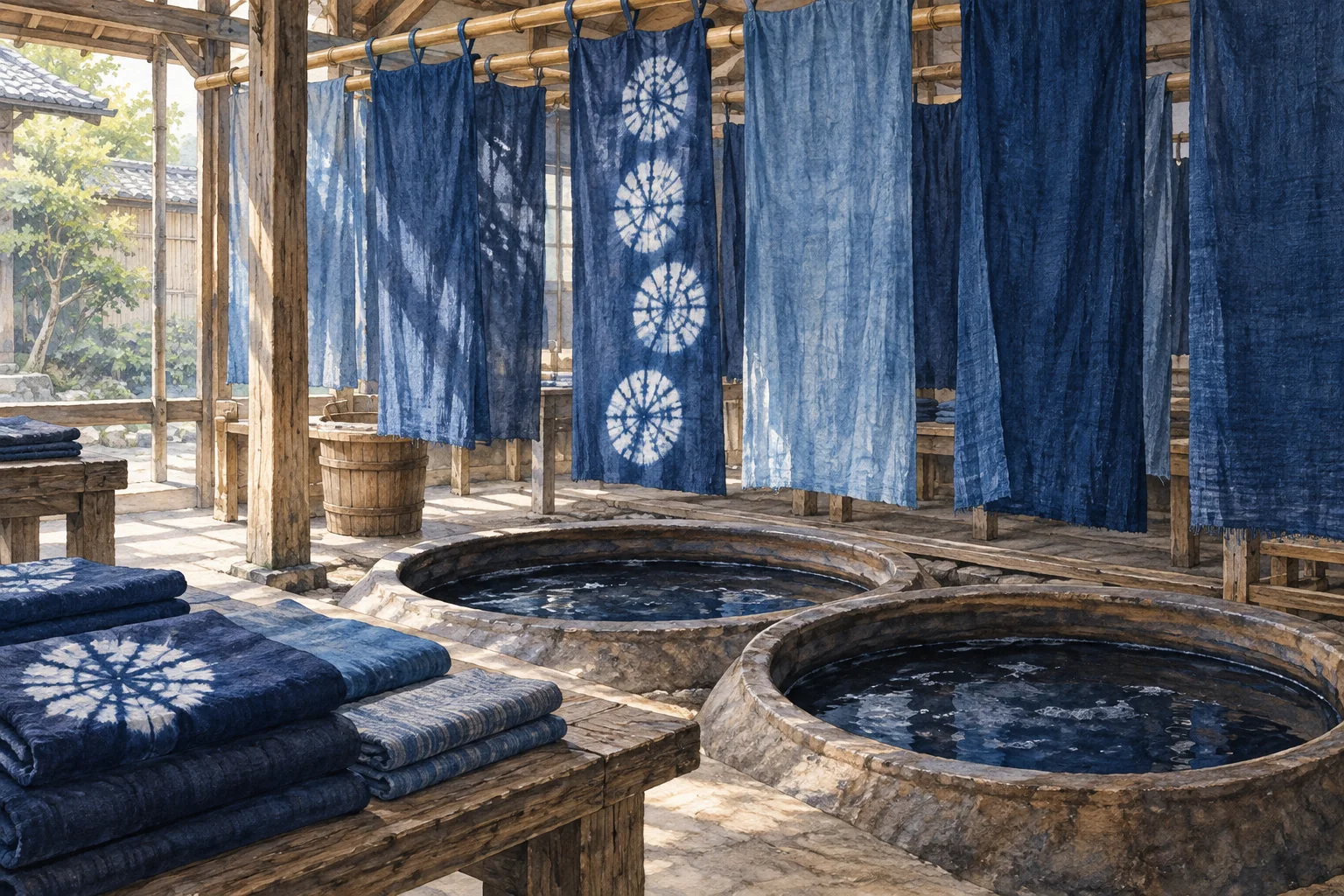
Aizome is indigo dyeing. Indigo does not dissolve in water, so the dye has to be brought to life by fermentation in a vat that the dyer feeds and keeps warm. Cloth comes out of the vat green and turns blue in the air. Japan used it for everyday work clothes for centuries, which is why early visitors from abroad remarked on how much blue they saw.
藍染は藍による染めです。藍は水に溶けないため、染め手が世話をし温めて発酵させた甕の中で、いったん生かしてやる必要があります。布は甕から緑色で上がり、空気に触れて青くなります。日本では何世紀も庶民の仕事着に使われてきました。昔の外国人訪問者が、日本には青が多いと書き残しているのはそのためです。
As a short speech
A full paragraph you can read aloud
Indigo dyeing in Japan is called aizome, and it is closer to cooking than to painting. Indigo will not dissolve in water, so the dyer builds a vat in which bacteria ferment composted indigo leaves, and that vat has to be fed, warmed and watched every day like a living thing.
When cloth is lifted out it is green, and it turns blue in front of you as the air works on it. You dip it again and again, and each dip is a shade darker.
Because indigo was cheap, strong and resisted insects, it was the color of everyday Japanese clothing for centuries, and a nineteenth-century visitor is said to have called the color Japan blue. Today you can dye a handkerchief in an afternoon workshop in several parts of the country.
日本の藍染は、絵を描くよりも料理に近い仕事です。藍は水に溶けないので、染め手は、藍の葉を発酵させて作った「すくも」を、さらに菌の力で発酵させる甕を仕立てます。
その甕は生き物と同じで、毎日えさをやり、温め、様子を見なければなりません。布を引き上げると緑色で、空気に触れるうちに目の前で青く変わっていきます。何度も浸し、そのたびに一段濃くなります。
藍は安く、丈夫で、虫にも強かったため、何世紀にもわたって日本の普段着の色でした。19世紀に来日した人物が、この色を「ジャパンブルー」と呼んだとされます。今では各地の工房で、半日でハンカチを染める体験ができます。
Questions people actually ask
And how to answer them.
Why does the cloth come out green?
Because in the vat the dye is in a soluble, reduced form that is yellow-green. When it meets oxygen in the air it changes back to insoluble blue indigo, now locked into the fiber. You can watch the color turn in about a minute.
甕の中では染料が水に溶ける還元された形になっていて、その色が黄緑だからです。空気の酸素に触れると、水に溶けない青い藍に戻り、そのとき繊維の中に固定されます。1分ほどで色が変わるのを見ることができます。
Is the vat really alive?
The fermentation is done by bacteria, so yes in that sense. Dyers talk about the vat being tired or in good condition, feed it with lye, bran or sake, and keep it at a steady temperature. A neglected vat dies and cannot be restarted.
発酵させているのは菌なので、その意味では生きています。染め手は甕が疲れているとか調子がよいという言い方をし、灰汁やふすま、酒を与え、温度を一定に保ちます。手をかけずにいると甕は死んでしまい、戻すことはできません。
Phrases you can use
- It comes out green and turns blue in the air.緑色で上がって、空気に触れて青くなります。
- Each dip makes it one shade darker.浸すたびに一段濃くなります。
- The vat has to be fed every day.甕には毎日えさをやります。
- This was the color of ordinary work clothes.これはふつうの仕事着の色でした。
Words you need
- to dye染める
- indigo藍
- fermentation発酵
- shade (of color)色の濃さ
Watch
From YouTubeBackground (Japanese)
藍の産地としては徳島の阿波藍が知られ、染料のもとになる「すくも」は藍の葉を発酵させて作ります。木綿が広まった江戸時代に藍染は庶民の色として定着し、防虫や生地を丈夫にする効果があるとされたため、野良着や作業着、のれん、藍の刺し子にも使われました。明治期に来日した外国人が街の青さに驚き、この色をジャパンブルーと呼んだと伝えられます。近年は化学染料が主流ですが、天然の藍で染めた布は色の深みが違うとされます。