Okinawa no beigun kichi
why most US military facilities in Japan are on one small island
沖縄の米軍基地(おきなわのべいぐんきち)
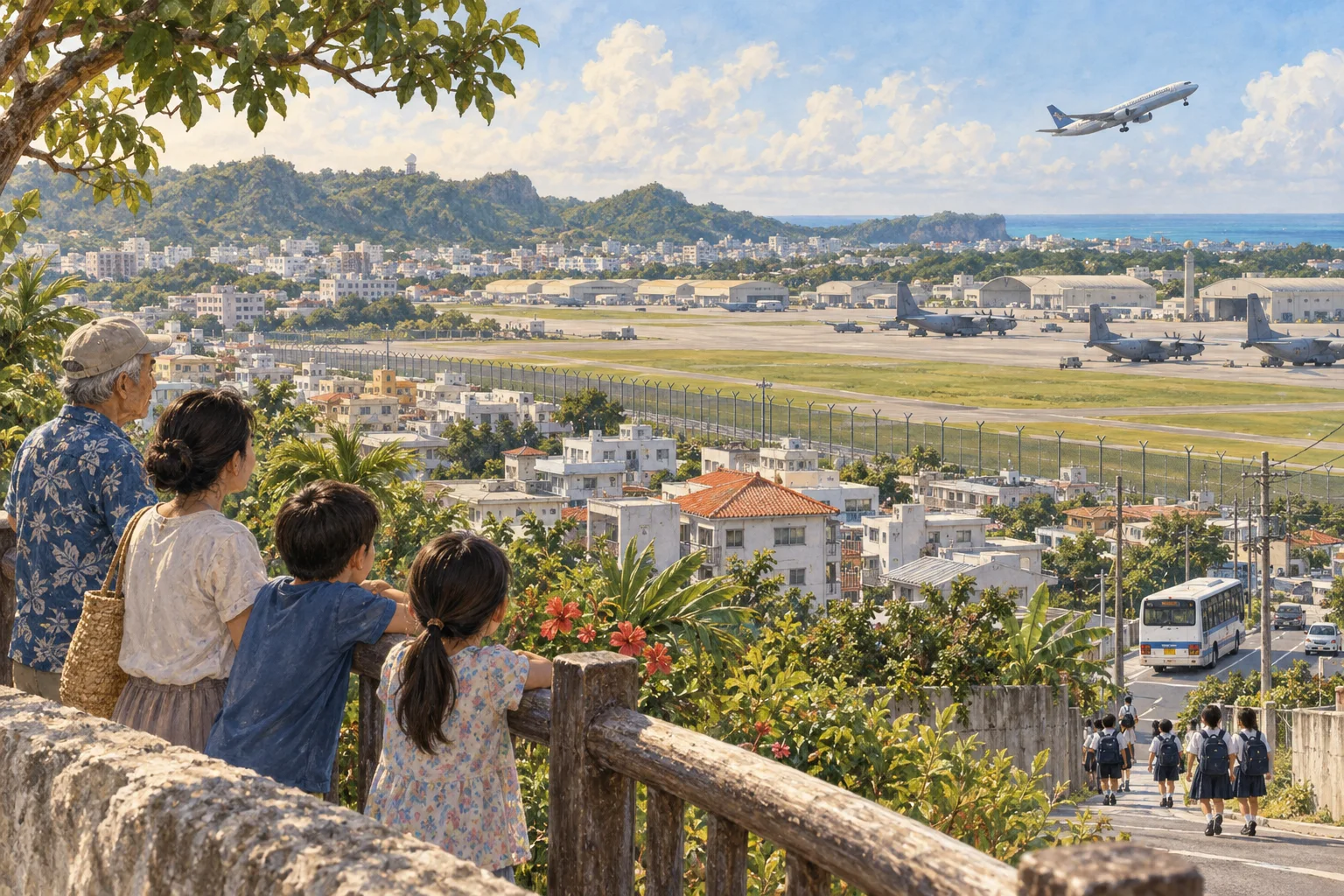
In one line
The shortest answer that works
About 70 percent of exclusive US military land in Japan is in Okinawa, under 1 percent of the country.
在日米軍専用施設の面積のおよそ7割が、国土の1パーセントに満たない沖縄にあります。
In 30 seconds
The standard explanation
Okinawa holds about 70 percent of the land used exclusively by US forces in Japan, on a prefecture that is about 0.6 percent of the country. Bases cover roughly eight percent of the prefecture's land. The concentration dates from the American occupation of Okinawa, which continued until 1972, twenty years after the rest of Japan regained sovereignty.
在日米軍が専用で使う土地のおよそ7割が沖縄にあります。沖縄県は国土のおよそ0.6パーセントです。基地は県土のおよそ8パーセントを占めます。この偏りは、アメリカによる沖縄の統治が1972年まで続いたことに由来します。日本の残りの地域が主権を回復してから、20年後のことでした。
As a short speech
A full paragraph you can read aloud
If someone asks why there is so much friction about Okinawa, the geography explains a lot. Okinawa is about 0.6 percent of Japan's land area, and roughly seventy percent of the land used exclusively by US forces in Japan is there. On the main island of Okinawa the bases take up about 15 percent of the land, sitting in the middle of towns. The reason is historical.
Okinawa was the scene of a fierce ground battle in 1945 that killed many civilians, and it then stayed under direct American administration until 1972, twenty years after the rest of the country regained sovereignty, and bases were built and expanded during that time. Since then the concentration has actually risen, because bases on the mainland were reduced faster.
The current focus is the plan to move the Futenma air station to Henoko. The national government says it is the realistic way to close Futenma, which sits in a crowded city, while Okinawa's governors since 2014 and a 2019 referendum have opposed it. Supporters point to regional security; opponents point to the burden on one prefecture.
沖縄をめぐる摩擦の理由を聞かれたら、地理がかなりの部分を説明します。沖縄県は日本の国土のおよそ0.6パーセントで、在日米軍が専用で使う土地のおよそ7割がそこにあります。沖縄本島では、基地が土地のおよそ15パーセントを占め、しかも町のまん中にあります。理由は歴史です。
沖縄は1945年、住民を巻き込んだ激しい地上戦の場となり、その後1972年までアメリカの直接統治下に置かれました。日本の残りの地域が主権を回復してから20年です。その間に基地は造られ、広げられました。以後、集中の度合いはむしろ高まりました。本土の基地のほうが速く減ったからです。
いまの焦点は普天間飛行場を辺野古へ移す計画です。国は、住宅地の中にある普天間を閉じるための現実的な方法だと説明し、2014年以降の県知事と2019年の県民投票は反対してきました。賛成する側は地域の安全保障を挙げ、反対する側は一つの県に負担が偏ることを問題にします。
Questions people actually ask
And how to answer them.
Why not move the bases to the mainland?
Many people in Okinawa ask exactly that. Proposals have been made, but no mainland prefecture has accepted a major base. The government says Okinawa's location matters for security in the region, while critics say that does not explain the scale of the concentration.
沖縄でも多くの人がそう問いかけています。案は出ましたが、本土のどの県も大きな基地を受け入れていません。政府は地域の安全保障にとって沖縄の位置が重要だと説明し、批判する側は、それでは集中の度合いを説明できないと言います。
Do Okinawans want the bases gone entirely?
Views differ. Surveys have long shown majority opposition to the Henoko plan, while the bases also employ local people and generate income. Reducing the burden is a widely shared position; abolishing the alliance is not.
見方は分かれます。辺野古の計画への反対が多数であることは調査で長く示されてきましたが、基地は地元の人を雇い、収入も生みます。負担を減らすべきだという立場は広く共有され、同盟をなくすべきだという立場はそうではありません。
Is this something tourists notice?
Yes, immediately. Driving north from Naha you pass fence lines for kilometers, and aircraft noise is frequent near Kadena and Futenma. Many visitors come for beaches and are surprised by how visible the bases are.
すぐ分かります。那覇から北へ車で走ると、何キロにもわたって金網が続きます。嘉手納や普天間の近くでは航空機の音がよく響きます。ビーチを目当てに来た人が、基地の見えやすさに驚きます。
A common misunderstanding
MYTHOkinawa has always been a part of Japan with the same history as the rest of the country.
FACTIt was the Ryukyu Kingdom until 1879, the site of a fierce ground battle in 1945, and under American administration until 1972. That sequence is why the base question is felt differently there.
Phrases you can use
- About 70 percent of the land used only by US forces in Japan is in Okinawa.在日米軍専用施設の面積のおよそ7割が沖縄にあります。
- Okinawa is less than one percent of Japan's land.沖縄は国土の1パーセントに満たない県です。
- It was under American administration until 1972.1972年までアメリカの統治下にありました。
- The Henoko plan is the current focus of the dispute.いまの焦点は辺野古の計画です。
- Opinion differs, but reducing the burden is widely shared.意見は分かれますが、負担を減らすべきだという点は広く共有されています。
Words you need
- military base基地
- to return land返還する
- relocation移設
- referendum県民投票
- noise pollution騒音
Watch
From YouTubeBackground (Japanese)
在日米軍が専用で使用する施設の面積のうち、沖縄県が占める割合はおよそ70パーセントである。本土復帰の1972年時点では約58.8パーセントで、その後、本土の施設の返還が進んだ結果、沖縄への集中はむしろ高まった。県土に占める米軍施設の割合はおよそ8パーセント。1945年4月からの沖縄戦ののち、沖縄は米軍の直接統治下に置かれ、日本への復帰は昭和47年(1972年)5月15日である。普天間飛行場の名護市辺野古への移設については、2019年の県民投票で埋め立てへの反対が多数を占めたが、工事は続いている。