Ainu
the indigenous people of northern Japan, recognized in law in 2019
アイヌ(あいぬ)
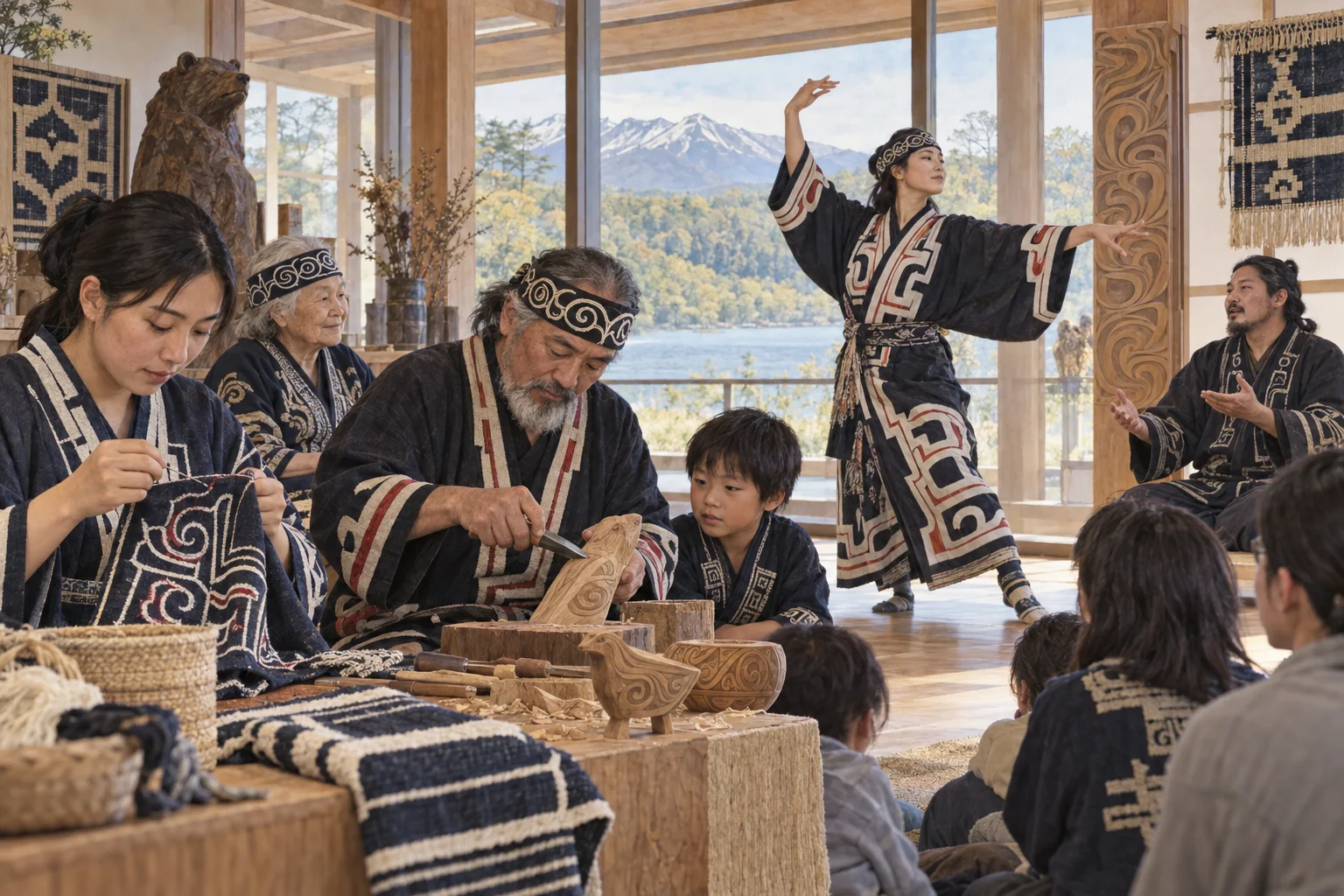
In one line
The shortest answer that works
The Ainu are the indigenous people of northern Japan, recognized as such in Japanese law only in 2019.
アイヌは日本の北の先住民族で、法律に「先住民族」と書かれたのは2019年のことです。
In 30 seconds
The standard explanation
The Ainu are indigenous to Hokkaido and the lands north of it, with their own language, beliefs and material culture. From the Meiji period, government policy promoted assimilation, and an 1899 law pushed Ainu families toward farming and Japanese-language schooling. That law stood until 1997. In 2008 the Diet passed a resolution calling for their recognition as an indigenous people, and a 2019 law wrote it into statute.
アイヌは北海道とその北の地域の先住民族で、独自の言葉、信仰、文化を持ちます。明治以降、政府は同化を進める政策をとり、1899年の法律はアイヌの人々を農業と日本語の学校教育へ向かわせました。この法律は1997年まで存続します。2008年に国会が先住民族として認めることを求める決議を採択し、2019年の法律で明記されました。
As a short speech
A full paragraph you can read aloud
Visitors are often surprised to learn that Japan has an indigenous people. The Ainu are indigenous to Hokkaido, and historically to Sakhalin and the Kurils, with a language unrelated to Japanese, beliefs centered on spirits in animals and objects, and distinctive textiles and carving.
After Hokkaido was incorporated in 1869, settlers arrived, hunting and fishing were restricted, and an 1899 law pushed the Ainu toward farming and Japanese-language schooling. That law stayed in force until 1997. In 2008 the Diet called for recognizing the Ainu as an indigenous people, and a 2019 law stated it for the first time.
Some Ainu and researchers say the law should go further, for example on land and fishing rights, while others welcomed it as a step forward. In 2020 a national museum and park called Upopoi opened in Shiraoi, Hokkaido.
日本に先住民族がいると聞いて驚く人は多くいます。アイヌは北海道の、歴史的には樺太と千島にも暮らした先住民族で、日本語とは系統の異なる言葉、動物や物に宿る霊を中心とした信仰、独特の織物と彫りを持ちます。
1869年に北海道が組み込まれると、移住者が入り、狩猟と漁が制限され、1899年の法律がアイヌの人々を農耕と日本語の学校教育へ向かわせました。この法律は1997年まで残ります。2008年に国会がアイヌを先住民族と認めるよう求め、2019年の法律で初めて明記されました。
この法律について、土地や漁の権利などでさらに踏み込むべきだという声がアイヌの人々や研究者の一部にある一方、前進として歓迎する声もあります。2020年には北海道白老町に国立の博物館と公園「ウポポイ」が開かれました。
Questions people actually ask
And how to answer them.
How many Ainu are there?
A 2023 Hokkaido government survey counted about 11,000 people, but the real number is hard to know. Some people have been reluctant to identify as Ainu because of past discrimination, and many descendants live outside Hokkaido.
2023年の北海道の調査では約1万1千人とされますが、実際の数はつかみにくいものです。過去の差別のために、アイヌだと名乗ることをためらってきた人もいますし、子孫の多くは道外に住んでいます。
Is the language still spoken?
Very few people speak it as a first language, and UNESCO classes it as critically endangered; estimates of fluent traditional speakers vary. Revival classes, radio programs and dictionaries exist, and a new generation is learning it as a second language.
母語として話す人はごくわずかで、ユネスコは消滅の危機がきわめて深刻な言語に分類しています。流暢な伝統的話者の数については推計が分かれます。学習の教室、ラジオ講座、辞典があり、第二言語として学ぶ世代が育っています。
What did the 2019 law actually give?
Recognition as an indigenous people, a ban on discrimination, funding for local projects, and easier permission for traditional salmon fishing and forest use. It did not include land rights or self-determination; some see that as a gap, while others welcomed the law as a step forward.
先住民族としての位置づけ、差別の禁止、地域の事業への交付金、サケ漁や森林の利用に関する手続きの緩和です。土地の権利や自決権は含まれておらず、そこが足りないという意見がある一方、前進として歓迎する意見もあります。
A common misunderstanding
MYTHJapan is one ethnic group with one language and always has been.
FACTThe Ainu in the north and the Ryukyuan peoples in the south have their own languages and histories. Japan has long included people of diverse origins.
Phrases you can use
- The Ainu are the indigenous people of northern Japan.アイヌは日本の北の先住民族です。
- The language is unrelated to Japanese.アイヌ語は日本語と系統が違います。
- A law recognized them as indigenous only in 2019.法律に先住民族と書かれたのは2019年です。
- Many Hokkaido place names come from Ainu words.北海道の地名の多くはアイヌ語に由来します。
- Upopoi is the national museum, opened in 2020.ウポポイは2020年に開いた国立の施設です。
Words you need
- indigenous people先住民族
- assimilation policy同化政策
- endangered language消滅の危機にある言語
- land rights土地の権利
- oral epic口承の叙事詩(ユカラ)
Watch
From YouTubeBackground (Japanese)
明治32年(1899年)の北海道旧土人保護法は、農地の下付と日本語教育を柱とする同化の法で、平成9年(1997年)にアイヌ文化振興法の制定とともに廃止された。平成20年(2008年)6月、国会はアイヌを先住民族とすることを求める決議を全会一致で採択した。令和元年(2019年)施行のアイヌ施策推進法は、アイヌを「北海道の先住民族」と法律に明記した初めての例である。アイヌ語は2009年にユネスコが「極めて深刻」な消滅の危機にある言語に分類した。令和2年(2020年)、白老町に民族共生象徴空間ウポポイが開業した。