shiohigari
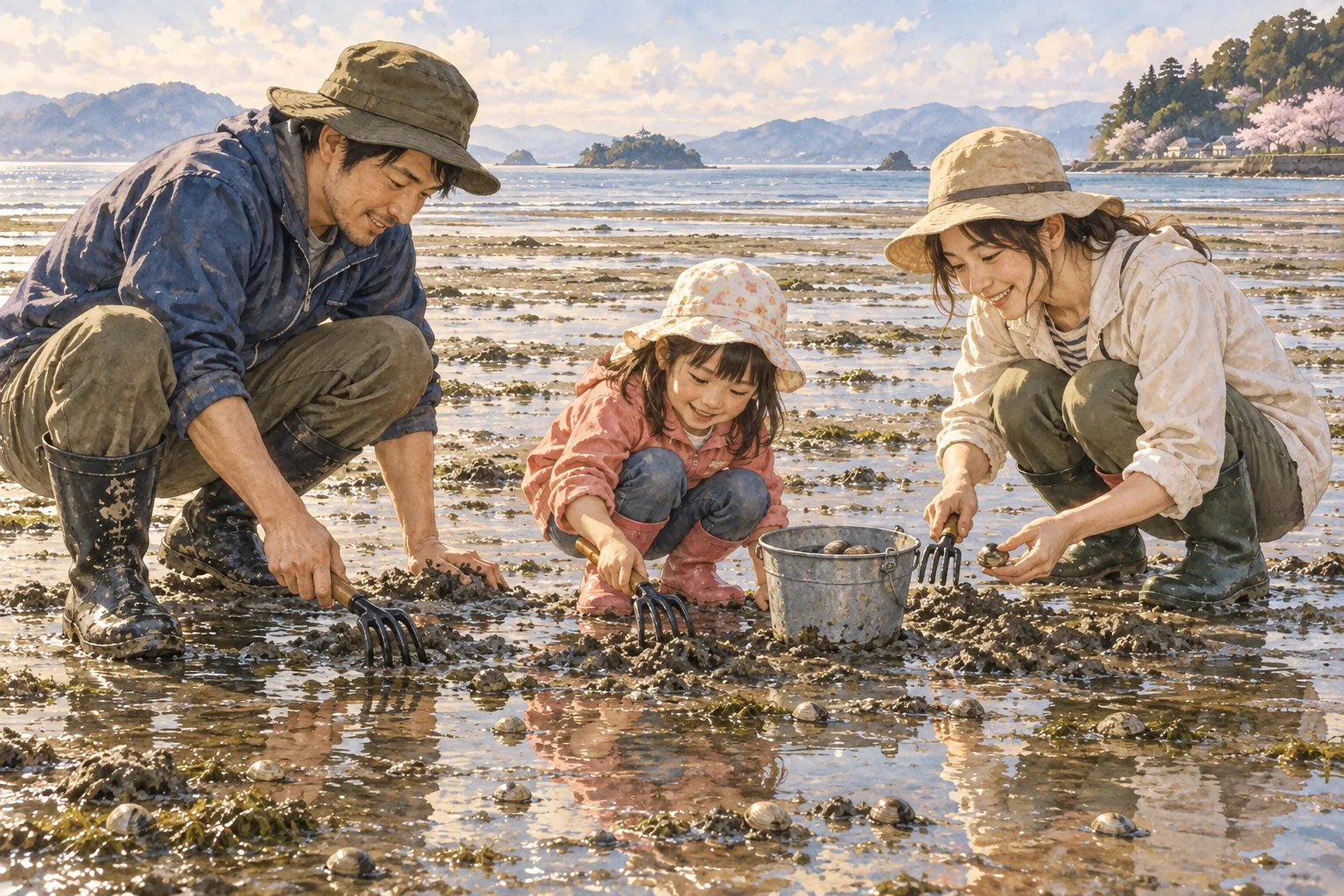
digging for clams at low tide
潮干狩り(しおひがり)
In one line
The shortest answer that works
In spring, families dig for clams on tidal flats at the year's lowest tides.
春には、一年で最も潮の引く日の干潟で、家族が貝を掘ります。
In 30 seconds
The standard explanation
Shiohigari is clam digging on tidal flats, done mainly in spring when daytime low tides are at their lowest. Families rake for asari clams with small tools. Most sites are managed and charge a fee, because shellfish beds are covered by fishing rights and digging freely is not allowed everywhere.
潮干狩りは干潟で貝を掘ることで、昼の干潮が最も大きくなる春に盛んに行われます。家族連れが熊手でアサリを探します。多くの場所は管理された有料の潮干狩り場です。貝の漁場には漁業権が設定されており、どこでも自由に掘れるわけではありません。
As a short speech
A full paragraph you can read aloud
Shiohigari is a spring outing that Japanese families have been making for centuries: going out onto a tidal flat at low water and digging up clams. The season is driven by the tides.
In spring the daytime low tides are the lowest of the year, exposing wide flats in the middle of the day, which is why April and May are the months. The main target is asari, a small ridged clam, dug with a short rake in a few centimeters of sand. What visitors need to know is that this is rarely a free-for-all.
Shellfish beds are covered by fishing rights held by local cooperatives, so most places operate as managed sites with an entrance fee, a weight allowance and a set season, and digging on an unmanaged beach can be an offense. Managed sites often seed the flat with clams. Take a rake, a net bag, boots, sun protection, and a bucket of seawater to let the clams spit out sand before you cook them.
潮干狩りは、日本の家族が何百年も続けてきた春の行楽です。潮の引いた干潟に出て、貝を掘ります。時季を決めるのは潮です。春には昼間の干潮が一年でいちばん大きくなり、日中に広い干潟が現れます。四月と五月が盛りなのはそのためです。主な目当てはアサリで、短い熊手で砂を数センチ掘って探します。
訪日客が知っておくべきなのは、これがどこでも自由にできるものではないということです。貝の漁場には地元の漁業協同組合が持つ漁業権が設定されているため、多くの場所は入場料を取り、持ち帰れる量と期間を定めた管理された潮干狩り場として運営されています。
管理されていない浜で掘ると違反になることがあります。管理された場所では、干潟にアサリをまいていることもあります。熊手、網の袋、長靴、日よけ、そして砂を吐かせるための海水を入れた容器を持っていってください。
Questions people actually ask
And how to answer them.
Can I dig on any beach?
No. Shellfish beds are usually covered by fishing rights, and taking clams without permission can be treated as an offense. Use a managed site, which will be signposted and staffed.
できません。貝の漁場にはたいてい漁業権が設定されており、無断で採ると違反として扱われることがあります。案内が出ていて係の人がいる、管理された潮干狩り場を使ってください。
How do I get the sand out of the clams?
Soak them in salt water of about three percent, in a dark, shallow tray for several hours, then rinse. Cover the tray, because they squirt water as they clean themselves.
三パーセントほどの塩水に、暗くして浅く浸け、数時間おいてから洗います。容器には覆いをしてください。砂を吐くときに水を吹くからです。
When is the best time of day?
Arrive an hour or two before the forecast low tide and work as the water retreats. Tide tables are published online and by the sites themselves, and the biggest flats appear around the new and full moon.
予報の干潮の一、二時間前に着き、潮が引いていくのに合わせて掘ります。潮見表はネットでも潮干狩り場でも公開されており、干潟が最も広がるのは新月と満月のころです。
Phrases you can use
- The tide is lowest at one o'clock.干潮は一時です。
- How much can we take?持ち帰りはどれくらいまでですか。
- You'll need a rake.熊手が必要です。
- Soak them in salt water for a few hours.数時間、塩水につけておきます。
- Watch the tide coming back in.潮が満ちてくるのに気をつけてください。
Words you need
- tidal flat干潟
- low tide干潮
- clamアサリ
- rake熊手
- fishing rights漁業権
Watch
From YouTubeBackground (Japanese)
潮干狩りは春の大潮の時季に盛んで、昼間の干潮が大きくなる四月から五月が中心です。貝類には漁業権が設定されていることが多く、無断で採ると漁業権の侵害となる場合があります。有料の潮干狩り場では、入場料に持ち帰れる量が含まれ、超えた分は量り売りになることがあります。アサリの漁獲量は長期的に大きく減っており、干潟の減少や環境の変化が要因として指摘されています。採った貝は塩水につけて砂を吐かせてから調理します。