senshitsu
types of hot spring water
泉質(せんしつ)
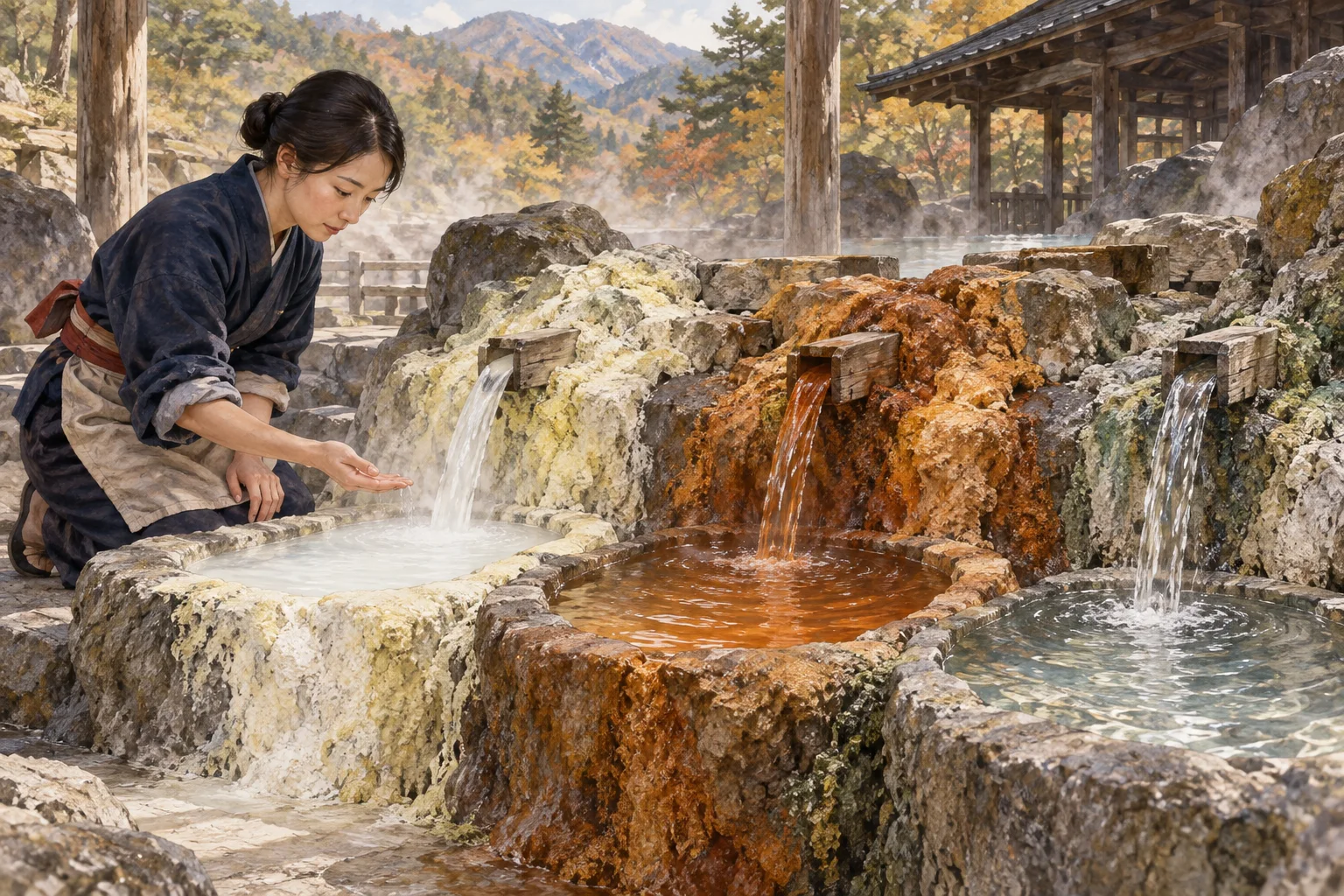
In one line
The shortest answer that works
Senshitsu means the mineral type of a hot spring, and every bath has to display it by law.
泉質とは温泉の成分による種類のことで、どの浴場も法律により掲示する義務があります。
In 30 seconds
The standard explanation
Senshitsu is the classification of a hot spring by what is dissolved in it. Japanese law defines a hot spring by temperature or mineral content, and springs that meet a further standard are called therapeutic springs, sorted into ten types such as simple, chloride, sulfur and acidic. The notice board in the changing room giving the type and its properties is a legal requirement.
泉質とは、溶けている成分による温泉の分類です。日本の法律は温度か成分によって温泉を定義し、さらに基準を満たすものを療養泉と呼んで、単純温泉、塩化物泉、硫黄泉、酸性泉など10種類に分けます。脱衣所にある泉質や成分の掲示は、法律で義務づけられたものです。
As a short speech
A full paragraph you can read aloud
Every hot spring bath in Japan has a notice in the changing room giving the name of the source, the temperature, what is dissolved in it and what conditions it is said to suit. That notice is not marketing. It is required by law, and the analysis behind it is done to a national standard.
Under the Hot Spring Act, water counts as a hot spring if it comes out at twenty-five degrees or more, or if it contains specified substances above set amounts. Springs that meet a stricter standard are called therapeutic springs and are sorted into ten types: simple springs, chloride, bicarbonate, sulfate, carbon dioxide, iron, acidic, iodine, sulfur and radioactive springs.
Each has a different feel. Sulfur springs smell of eggs and turn silver black. Chloride springs leave salt on the skin and hold heat. Simple springs have the least dissolved and are the gentlest, which is why they are often recommended for the elderly.
日本の温泉の浴場には必ず、脱衣所に源泉名、温度、溶けている成分、適するとされる症状を記した掲示があります。あれは宣伝ではありません。法律で義務づけられたもので、その裏づけとなる分析は国の基準に従って行われます。
温泉法では、湧出時の温度が25度以上であるか、定められた物質を一定量以上含む水を温泉とします。さらに厳しい基準を満たすものを療養泉と呼び、単純温泉、塩化物泉、炭酸水素塩泉、硫酸塩泉、二酸化炭素泉、含鉄泉、酸性泉、含よう素泉、硫黄泉、放射能泉の10種類に分けます。
それぞれ感じが違います。硫黄泉は卵の匂いがして銀を黒くします。塩化物泉は肌に塩を残し、熱を保ちます。単純温泉は溶けているものが最も少なく穏やかで、だから高齢者に勧められることが多いのです。
Questions people actually ask
And how to answer them.
Why does the water smell of rotten eggs?
That is hydrogen sulfide in a sulfur spring. It is characteristic, not a sign of dirty water, but it will tarnish silver jewelry and can stain light-colored towels, so take rings off before you get in.
硫黄泉の硫化水素の匂いです。特徴であって、汚れているしるしではありません。ただし銀の装身具は黒ずみ、淡い色のタオルは変色することがあるので、指輪は外して入ってください。
What do the terms on the sign about circulation mean?
They say how the water is handled. Free-flowing means fresh spring water runs through and out. Circulated means it is filtered and reused, often with added heat or chlorine. Both are legal and must be stated, and many baths are a mixture.
湯の扱い方を示しています。源泉かけ流しは新しい湯が流れ込んで流れ出る方式、循環は濾過して再利用する方式で、加温や塩素の添加を伴うことが多いものです。どちらも合法で、表示の義務があります。両方を併用する浴場も多くあります。
A common misunderstanding
MYTHThe list of conditions on the wall is the bathhouse advertising itself.
FACTIt is a legally required notice based on a standardized analysis of the source, which is why the wording is so similar from one bath to another.
Phrases you can use
- The sign tells you what's in the water.掲示に成分が書いてあります。
- This one's a sulfur spring, so it smells.ここは硫黄泉なので匂いがします。
- Take off silver rings before you get in.銀の指輪は外してから入ってください。
- A simple spring is the gentlest kind.単純温泉がいちばん穏やかです。
Words you need
- mineral content成分
- source / spring head源泉
- free-flowingかけ流し
- to be classified as分類される
Watch
From YouTubeBackground (Japanese)
温泉法の定義では、源泉の温度が25度以上であるか、または指定された成分を規定量以上含むものが温泉です。そのため、冷たくても温泉と呼べる湧水があります。療養泉の分類は環境省の指針によるもので、現在は10種類です。「美人の湯」といった呼び方は法律上の分類ではなく、炭酸水素塩泉などで肌がなめらかに感じられることから生まれた通称です。掲示には加温、加水、循環、塩素消毒の有無も書かれます。