rejibukuro no yuryoka
paying for shopping bags
レジ袋の有料化(レジぶくろのゆうりょうか)
In one line
The shortest answer that works
Since July 2020, shops across Japan have charged for plastic bags, so you will usually be asked.
2020年7月から全国の店でレジ袋が有料になり、たいてい袋の要否を聞かれます。
In 30 seconds
The standard explanation
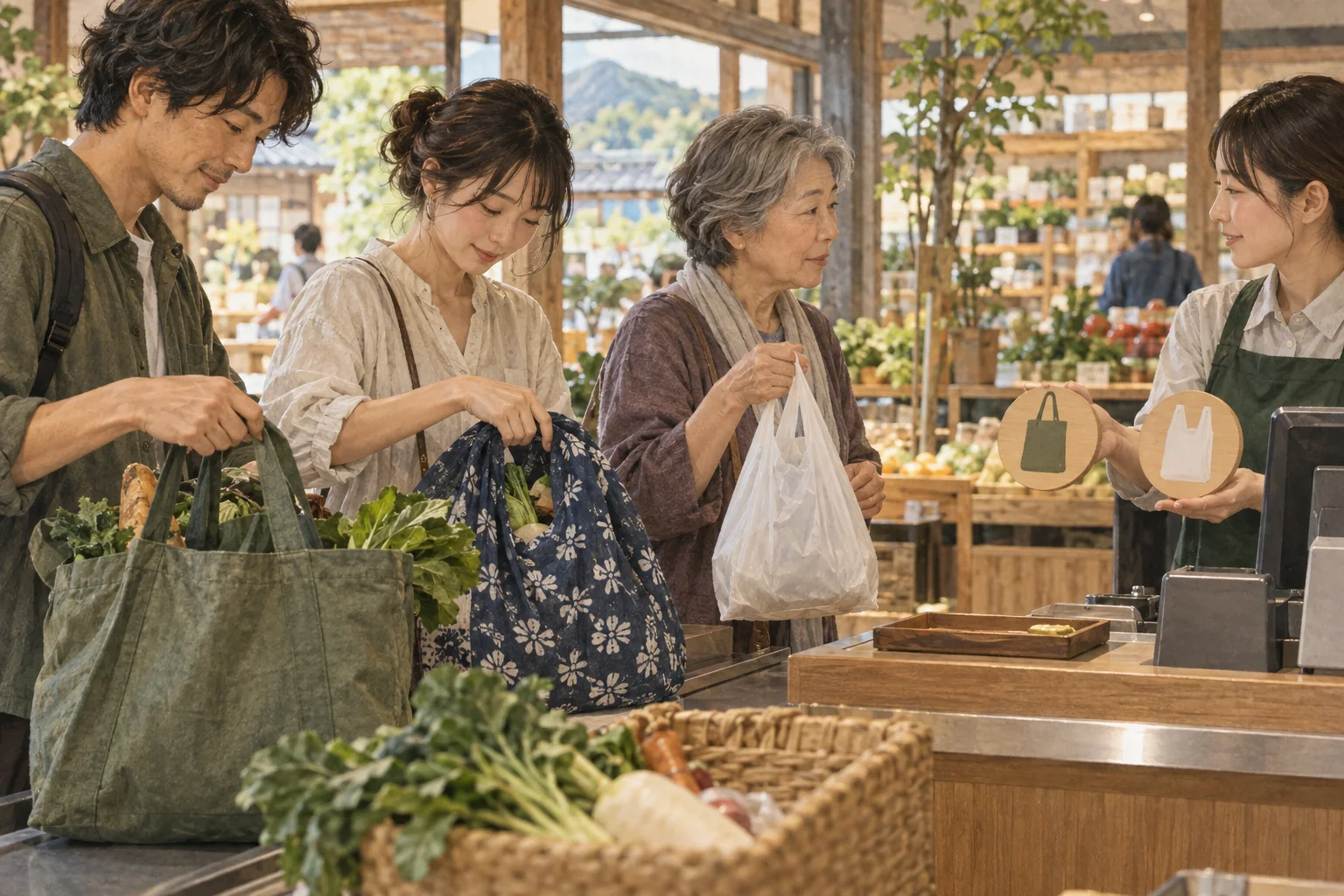
A nationwide rule from July 2020 requires retailers to charge for plastic shopping bags, usually three to five yen. Staff ask whether you need one at every purchase. Reusable bags are normal, and convenience stores will tape a receipt to a single item if you decline a bag.
2020年7月から、全国の小売店にプラスチック製のレジ袋を有料で渡すことが義務づけられました。値段はふつう三円から五円です。会計のたびに袋が必要かを尋ねられます。買い物袋を持ち歩くのがふつうになり、コンビニでは袋を断ると、品物にテープを貼って渡してくれます。
As a short speech
A full paragraph you can read aloud
Since July 2020, shops in Japan have been required to charge for plastic shopping bags. The price is small, usually three to five yen, but the effect on habits was large: carrying a folded reusable bag became normal within a year. You will be asked at every till, and the question is worth learning: fukuro wa irimasu ka, do you need a bag.
Saying no is entirely ordinary, and at a convenience store the staff will put a piece of tape on a single item or hand you a receipt as proof of purchase. Some points that surprise visitors. Paper bags, and certain plastic bags meeting specified criteria, are exempt from the rule, so a department store may still give you one free.
Bags for raw fish and meat at a supermarket are free and separate. And the rule sits alongside Japan's very heavy use of packaging inside the shop, which remains a live criticism: the bag changed, the wrapping around each biscuit did not.
2020年7月から、日本の店はプラスチック製のレジ袋を有料で渡すことが義務づけられました。値段は小さく、ふつう三円から五円ですが、習慣への影響は大きなものでした。折りたたんだ買い物袋を持ち歩くことが、一年のうちにふつうになったのです。
どのレジでも尋ねられます。その言い方は覚えておく値打ちがあります。袋はいりますか、です。いりませんと答えるのはまったくふつうのことで、コンビニでは品物にテープを貼るか、買ったことの証しとしてレシートを渡してくれます。訪日客が驚く点もあります。
紙の袋や、一定の条件を満たすプラスチックの袋は対象外なので、百貨店では無料でもらえることがあります。スーパーで生の魚や肉を包む小さな袋は別で、無料です。そしてこの決まりは、店の中での包装の多さと並んで存在しており、そこは今も批判の的です。袋は変わりましたが、菓子一枚ずつの包みは変わっていません。
Questions people actually ask
And how to answer them.
How do I say I don't need a bag?
Fukuro wa kekko desu, or just shaking your head with a slight bow works. Some shops also have a card on the counter you can place face up to signal that you brought your own.
袋は結構です、と言えば通じますし、首を振って軽く会釈するだけでも伝わります。マイバッグを持っていることを示すカードをレジに置いている店もあります。
Are all bags charged for?
No. Paper bags are outside the rule, as are plastic bags meeting set conditions such as a minimum thickness or a share of plant-based material. Thin bags for wet food are free.
すべてではありません。紙袋は対象外で、一定の厚さや植物由来の素材の割合など、条件を満たすプラスチックの袋も対象外です。生ものを包む薄い袋は無料です。
Did it actually reduce plastic?
Bag use fell sharply, which surveys confirmed, though bags were always a small share of plastic waste. The policy is generally described here as changing awareness as much as volume.
袋の使用は大きく減り、調査でも確かめられています。ただしレジ袋はもともとプラスチックごみの一部にすぎません。この施策は、量の削減と同じくらい、意識を変えたものとして語られています。
Phrases you can use
- Do you need a bag?袋はご入用ですか。
- No bag, thank you.袋は結構です。
- How much is a bag?袋はいくらですか。
- I brought my own.持参しました。
- Could I have a larger one?大きいサイズをもらえますか。
Words you need
- shopping bagレジ袋
- reusable bagマイバッグ
- charged, not free有料
- checkoutレジ
- plastic wasteプラスチックごみ
Watch
From YouTubeBackground (Japanese)
レジ袋の有料化は、容器包装リサイクル法にもとづく省令の改正により、2020年7月1日から全国で義務づけられました。対象はプラスチック製の買い物袋で、厚さが五十マイクロメートル以上のもの、海洋生分解性プラスチックが百パーセントのもの、バイオマス素材の配合率が二十五パーセント以上のものは対象外とされています。紙袋や布の袋も対象外です。有料化の前後で辞退率が大きく上がったことが、経済産業省などの調査で報告されています。