oicho
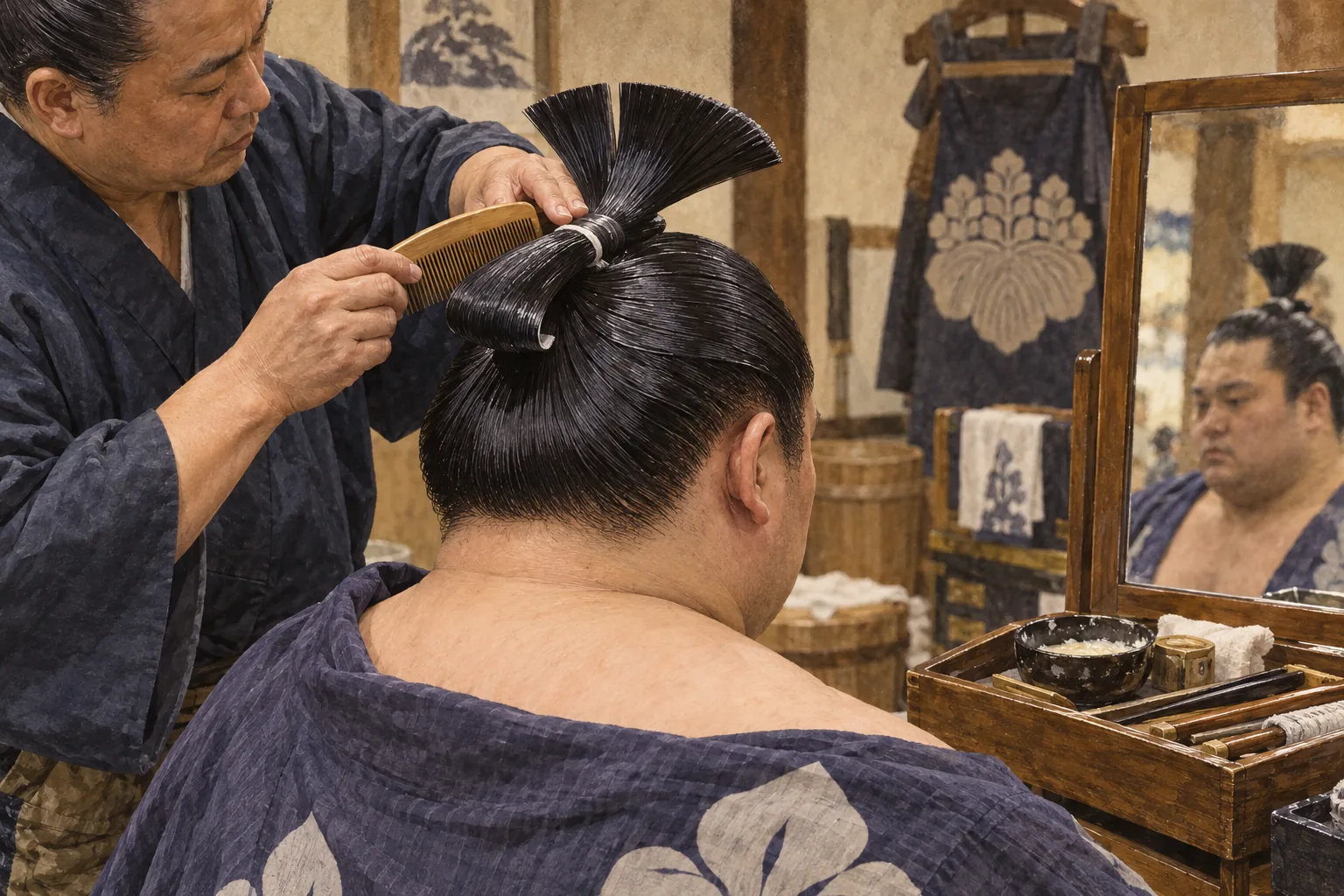
the ginkgo-leaf-shaped topknot only sumo wrestlers ranked juryo and above are allowed to wear
大銀杏(おおいちょう)
In one line
The shortest answer that works
Oicho-mage is the fan-shaped topknot that only sumo wrestlers ranked juryo or higher are permitted to wear.
大銀杏とは、十両以上に昇進した力士だけが結うことを許される、扇形に広がった髷です。
In 30 seconds
The standard explanation
Oicho-mage is a sumo wrestler's topknot styled so its folded end fans out like a ginkgo leaf, which is where the name comes from. Only wrestlers who have reached juryo, the second-highest of sumo's six divisions, are allowed to wear it; everyone below that rank wears a plainer, tighter topknot called chonmage instead. Tying it properly takes a specialist hairdresser called a tokoyama years of training to master, and a single sitting can take twenty to thirty minutes even for an expert.
大銀杏とは、髷の先を折り曲げた部分が銀杏の葉のように扇形に広がる、力士の髪型です。これが名前の由来になっています。相撲の六段階の番付のうち上から二番目にあたる十両以上に昇進した力士だけがこの髷を結うことを許され、それより下の力士は、もっと平たく引き締まったちょんまげと呼ばれる髷を結います。この髷をきちんと結い上げるには、床山と呼ばれる専門の職人が何年もかけて技術を磨く必要があり、熟練の床山でも一人分を結うのに20〜30分かかります。
As a short speech
A full paragraph you can read aloud
Watch sumo wrestlers walk to the ring and the fan-shaped topknot fanning out at the back of the head belongs only to a select group: wrestlers ranked juryo or higher, roughly the top seventy out of about six hundred professional wrestlers. Below that rank, wrestlers wear a plainer, tighter topknot called chonmage, so the topknot itself works as a visible marker of rank before a single match has started.
Oicho-mage takes its name from its resemblance to a ginkgo leaf, and getting it right is a specialized craft: a hairdresser called a tokoyama trains for years, often said to be about a decade, before being trusted to style it, and even an expert needs twenty to thirty minutes per wrestler. When the Meiji government began encouraging men to cut off their topknots in the 1870s, sumo wrestlers kept theirs, a rare exception that let the tradition survive into the present.
力士たちが土俵に向かって歩く姿を見ると、後頭部で扇形に広がる大銀杏を結っているのは、ごく限られた力士だけだとわかります。十両以上、およそ600人いる力士のうち上位70人ほどだけがこの髷を結うことを許されています。
それより下の力士は、もっと平たく引き締まったちょんまげという髷を結うため、髷そのものが、取組が始まる前から番付を示す目印として機能しているのです。大銀杏という名前は、その形が銀杏の葉に似ていることに由来し、きちんと結い上げるには専門の技術が必要です。
床山と呼ばれる髪結い師は、これを任されるまでに長い修業を積み(およそ10年とも言われます)、熟練の床山でも力士一人につき20〜30分かかります。1870年代、明治政府が男性に髷を落とすよう促すなかで、力士は髷を残しました。この珍しい例外によって、この伝統は今日まで生き延びました。
Questions people actually ask
And how to answer them.
Why can't lower-ranked wrestlers wear this hairstyle?
It functions as a visible rank marker reserved for sekitori, the sumo association's term for wrestlers at juryo or above, so wrestlers below that division wear the simpler chonmage instead, no matter how skilled they are.
これは関取、つまり十両以上の力士を示す目に見える身分の印として位置づけられているためで、それより下の力士は、どれほど強くてもよりシンプルなちょんまげを結います。
Do wrestlers style their own hair?
No, it's done by a professional called a tokoyama, employed by the sumo association specifically for this skill, and becoming one qualified to tie oicho-mage takes roughly a decade of apprenticeship.
いいえ、相撲協会に所属する床山という専門の職人が結います。大銀杏を結えるようになるまでには、およそ10年の見習い期間が必要です。
What happens to the topknot if a wrestler gets injured or loses matches badly?
The hairstyle itself doesn't change with a bad tournament, but if a wrestler drops out of the juryo and makuuchi divisions entirely, he loses the right to wear oicho-mage until he climbs back, and retirement is marked by cutting the topknot off completely in a public ceremony called danpatsu-shiki.
一場所の成績が悪いだけでは髷の形は変わりませんが、十両・幕内からともに陥落してしまうと、番付を戻すまで大銀杏を結う資格を失います。そして引退の際には、断髪式という公開の儀式で髷を完全に切り落とします。
Phrases you can use
- Only sekitori can wear the oicho-mage.大銀杏を結えるのは関取だけです。
- The tokoyama took about thirty minutes to finish.床山が結い終えるのに30分ほどかかりました。
- His topknot will be cut off at retirement.引退のときに髷が切り落とされます。
- Lower-ranked wrestlers wear a plainer chonmage.下位の力士はもっとシンプルなちょんまげを結います。
- It's shaped like a ginkgo leaf.銀杏の葉のような形をしています。
Words you need
- topknot髷
- sumo hairdresser床山
- sekitori, top-division wrestler関取
- topknot-cutting retirement ceremony断髪式
- ginkgo leaf銀杏の葉
Watch
From YouTubeBackground (Japanese)
大銀杏を結えるのは、十両以上、全国でおよそ70人しかいない関取だけで、それより下の力士は平たいちょんまげを結う。1871年(明治4年)の散髪脱刀令をきっかけに髷を落とす人が増えるなかでも、相撲界は髷を残した。好角家の政府高官の後押しがあったとも伝えられ、この髷文化が今日まで続いている。大銀杏を結う技術を持つ床山になるには10年以上の修業が必要とされ、力士が引退するときには「断髪式」という公開の儀式で髷を切り落とす。