mikoshi
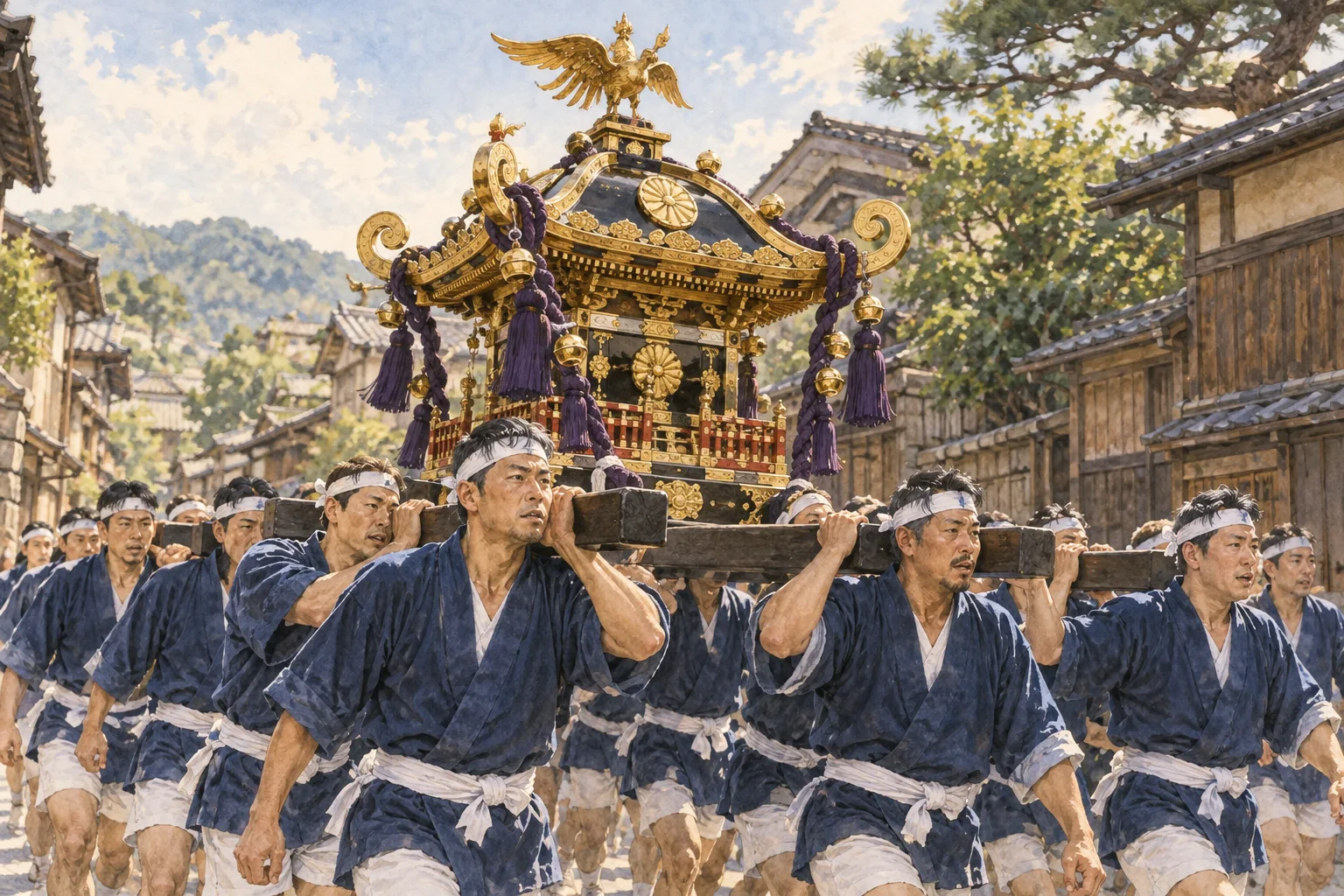
the portable shrine carried through the streets at a festival
神輿(みこし)
In one line
The shortest answer that works
A mikoshi is a portable shrine that carries the local deity through the neighborhood at festival time.
神輿とは、祭りのときに土地の神様を乗せて町内を回る、担ぎ式の社のことです。
In 30 seconds
The standard explanation
At a Japanese festival you will see a heavy gilded box on poles, carried on the shoulders of dozens of people who are shouting in rhythm. It is a mikoshi, a portable shrine. For the day of the festival the local deity is believed to move from the shrine into it, and the carriers take the deity around the streets of the neighborhood. The shaking is deliberate, not carelessness.
日本の祭りでは、金色の重い箱を棒に通し、何十人もが肩で担いで掛け声をかけながら進む光景を見ます。これが神輿です。祭りの日には、土地の神様が社から神輿へ移るとされ、担ぎ手が町内を回ります。揺らしているのはわざとで、乱暴にしているのではありません。
As a short speech
A full paragraph you can read aloud
The loudest part of a Japanese summer festival is usually the mikoshi. It is a portable shrine, a lacquered and gilded miniature building on two long poles, and large ones can weigh close to a ton.
The belief is that on the festival day the deity of the local shrine moves into the mikoshi, and the carriers take the deity out to visit the neighborhood it protects. That is why the route matters and why it stops in front of certain houses and shops. Visitors often think the violent shaking means the carriers are drunk or out of control.
In many traditions the shaking is the point: rocking the mikoshi is said to rouse the deity and increase its power, so a quiet mikoshi would be a failure. Details differ by region, and some festivals pull a wheeled float instead. If you are invited to help carry one, say yes. You will be sore for three days.
日本の夏祭りでいちばんにぎやかなのは、たいてい神輿です。漆と金で飾った小さな社を二本の長い棒に通したもので、大きなものは一トン近くになります。祭りの日には土地の神社の神様が神輿に移り、担ぎ手がその神様を、守っている町内へ連れて回るとされます。
だから道順に意味があり、決まった家や店の前で止まります。外国の方は、激しく揺らすのを、担ぎ手が酔っているか制御できていないからだと思いがちです。多くの伝統では、揺らすことこそが目的です。
神輿を揺らすと神様が高ぶり、力が増すとされるので、静かな神輿は失敗なのです。やり方は地域によって違い、車のついた山車を引く祭りもあります。担いでみないかと誘われたら、ぜひどうぞ。三日は体が痛みます。
Questions people actually ask
And how to answer them.
Can a foreigner join in and carry it?
Often yes, and many neighborhoods are short of carriers. Ask the festival office or the people in matching happi coats. You will usually be lent a coat and told where to stand.
多くの場合できますし、担ぎ手が足りない町内はたくさんあります。祭りの本部か、おそろいの法被を着ている人に聞いてください。たいてい法被を貸してもらえ、立つ位置を教えてもらえます。
What are they shouting?
It depends on the area. Wasshoi is the best-known, and some festivals use seiya or soiya. The words carry no dictionary meaning; they keep everyone stepping together under the weight.
地域によります。わっしょいがよく知られ、せいや、そいやを使う祭りもあります。言葉そのものに意味はなく、重さの下で足をそろえるためのものです。
Is a float the same thing?
No. A mikoshi is carried on shoulders and holds the deity. A dashi or yamaboko is pulled on wheels and is usually a display stage with figures, music or lanterns. Many festivals have both.
違います。神輿は肩で担ぎ、神様が乗ります。山車や山鉾は車で引くもので、人形や囃子、提灯を飾る舞台であることが多いです。両方ある祭りもあります。
A common misunderstanding
MYTHThe carriers shake the mikoshi because they are drunk.
FACTThe shaking is intentional in many traditions — it is said to rouse the deity and raise its power. Drinking does happen, but the movement is part of the rite.
Phrases you can use
- That's a portable shrine — the local deity rides in it.あれは神輿です。土地の神様が乗っています。
- The shaking is on purpose, not an accident.揺らしているのはわざとで、事故ではありません。
- It can weigh close to a ton.一トン近くになることもあります。
- They're taking the deity around the neighborhood.神様を町内に連れて回っているところです。
- You can usually join in if you ask.頼めば、たいてい参加させてもらえます。
Words you need
- portable shrine神輿
- carrier, bearer担ぎ手
- deity神様
- float (on wheels)山車
- festival coat法被
Watch
From YouTubeBackground (Japanese)
神輿は屋根、柱、扉を備えた小さな社の形をしており、屋根の上には鳳凰や葱花の飾りが載る。祭りの日に神霊を神社の本殿から神輿へ移す儀式を「御霊遷し」と呼び、神輿が町内を巡ることを「渡御」「神幸」などと呼ぶ。町内を回ることには、守っている土地を神様に見てもらうという意味づけがなされる。揺らす所作は地域で呼び方が違い、江戸の祭りでは「もみ」「さし」と呼ばれる形がある。近年は担ぎ手の高齢化と人手不足が各地で課題になり、町内の外から担ぎ手を募る祭りや、台車を使う祭りも出ている。