majan
the four-player tile game, and where it sits legally
麻雀(まーじゃん)
In one line
The shortest answer that works
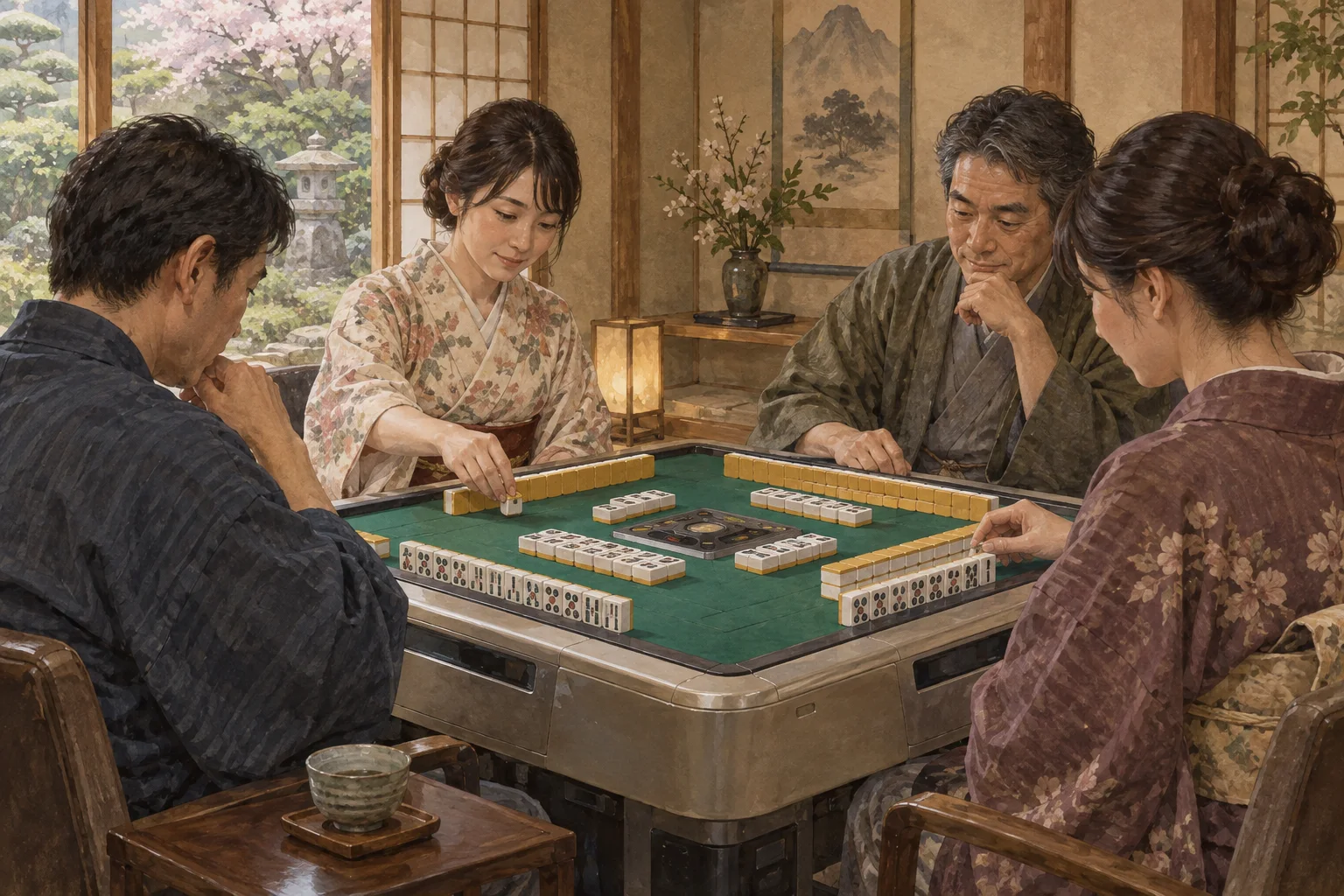
Majan, or mahjong, is a four-player tile game brought from China in the 1920s, played in parlors, homes and online.
麻雀とは、1920年代に中国から入った四人で打つ牌の遊びで、雀荘や家、そして画面の上で遊ばれているものです。
In 30 seconds
The standard explanation
Mahjong reached Japan from China around the 1920s and developed its own rules, scoring and etiquette, distinct from the Chinese and Western versions. It is played in parlors called jansou, at home, and heavily online. Betting money on it is illegal under the gambling provisions of the criminal code, which is why no-stakes clubs, marketed as healthy mahjong and popular with older players, have grown.
麻雀は1920年代ごろに中国から日本へ入り、独自の規則と点数と作法を育てました。中国式とも欧米式とも異なります。雀荘と呼ばれる店、家庭、そして多くはインターネットで遊ばれます。金を賭けることは刑法の賭博の規定で違法であり、だからこそ賭けない場、いわゆる健康麻雀が、高齢の人を中心に広がっています。
As a short speech
A full paragraph you can read aloud
Mahjong in Japan is a different game from the one most foreigners have met, in two senses. First, the rules. The tiles are the same, but Japanese mahjong added its own elements — a declaration called riichi, bonus tiles, a complex scoring table — so a Chinese or American player cannot simply sit down and play. Second, the social position.
Betting money on mahjong is gambling, and gambling is prohibited under the criminal code, so the game sits in an awkward place: parlors exist in every city, and what happens at the tables is widely understood, but prosecutions do happen and a few public figures have lost their positions over it. That tension produced an interesting development.
Clubs advertising themselves as no money, no smoking, no drinking, marketed as healthy mahjong, have spread among people in their seventies and eighties, on the argument that the game is good for the memory and gets people out of the house. Meanwhile a professional league with broadcast matches has grown, and the largest player base of all is online, where the game is free and the opponents are strangers.
日本の麻雀は、外国の人が知っている麻雀とは別の遊びです。二つの意味で違います。一つは規則。牌は同じですが、日本の麻雀は独自のものを加えました。立直という宣言、ドラ、かなり複雑な点数の表。ですから中国や欧米の打ち手が、そのまま座って打つことはできません。もう一つは、社会での位置です。
麻雀に金を賭けるのは賭博であり、賭博は刑法で禁じられています。ですからこの遊びは、落ち着きの悪い場所にあります。雀荘はどの街にもあり、卓で何が行われているかは広く理解されていますが、実際に摘発されることはあり、公職を失った人もいます。この緊張から、面白い動きが生まれました。
賭けない、吸わない、飲まないことを掲げる「健康麻雀」の教室が、七十代八十代の人のあいだに広がったのです。記憶によく、家から出るきっかけになる、という理屈です。一方で対局を放送する職業のリーグも育ち、最も打ち手が多いのはインターネットです。無料で、相手は見知らぬ人です。
Questions people actually ask
And how to answer them.
Is playing mahjong illegal in Japan?
The game is not. Betting money on it is, under the criminal code's gambling provisions. No-stakes play, online play and professional matches are all legal.
遊ぶこと自体は違法ではありません。金を賭けることが、刑法の賭博の規定に触れます。賭けない麻雀、インターネット、職業の対局はいずれも合法です。
Can I play if I only know Chinese rules?
Not easily. The scoring and several key rules differ. The usual route for a beginner is a phone app or an online client with tutorials in English.
そのままでは難しいです。点数も主な規則も違います。はじめは、英語の手ほどきがあるアプリや対局サイトから入るのがふつうです。
Why are there so many parlors?
It was a standard adult pastime through the postwar decades, especially among students and office workers. Numbers have fallen a long way as play moved online.
戦後の数十年、学生や勤め人にとってふつうの遊びだったからです。対局がインターネットに移り、店の数は大きく減りました。
A common misunderstanding
MYTHMahjong is the same game everywhere.
FACTJapanese rules include elements the Chinese game does not, and the scoring is different enough that players of one cannot simply play the other.
Phrases you can use
- It's a four-player tile game.四人で打つ牌の遊びです。
- The Japanese rules are different from the Chinese ones.日本の規則は中国式と違います。
- Betting money on it is illegal.金を賭けるのは違法です。
- No-stakes clubs are popular with older people.賭けない教室が高齢の人に人気です。
- Most people now play online.いまは多くがインターネットで打ちます。
Words you need
- tile牌
- mahjong parlor雀荘
- scoring点数計算
- no-stakes mahjong健康麻雀
- gambling賭博
Watch
From YouTubeBackground (Japanese)
麻雀は大正時代に中国から日本へ伝わり、昭和のあいだに独自の規則が整えられた。立直やドラは日本で加えられた要素とされる。刑法第185条は賭博を禁じており、金銭を賭けた麻雀はこれに当たる。近年は賭けない「健康麻雀」の教室が高齢者向けに各地で開かれているほか、プロのリーグ戦が配信されるようになった。