kenketsu
giving blood in Japan
献血(けんけつ)
In one line
The shortest answer that works
Kenketsu, or blood donation, is entirely unpaid in Japan and happens at street-corner donation rooms and mobile buses.
献血とは、街角の献血ルームや移動採血車で行われる、報酬の一切ない血液の提供です。
In 30 seconds
The standard explanation
Japan collects blood through the Red Cross at permanent donation rooms in shopping districts and at buses parked outside stations. Donation is unpaid, and donors get drinks, snacks and a small gift. Whole blood donation starts at sixteen, and people who have spent long periods in certain countries may be deferred.
日本の献血は日本赤十字社が担い、繁華街の常設の献血ルームや、駅前に停まる移動採血車で行われます。報酬はなく、飲みものや菓子、ささやかな記念品が用意されています。全血献血は十六歳から可能で、特定の国に長く滞在した人は献血を控えることを求められる場合があります。
As a short speech
A full paragraph you can read aloud
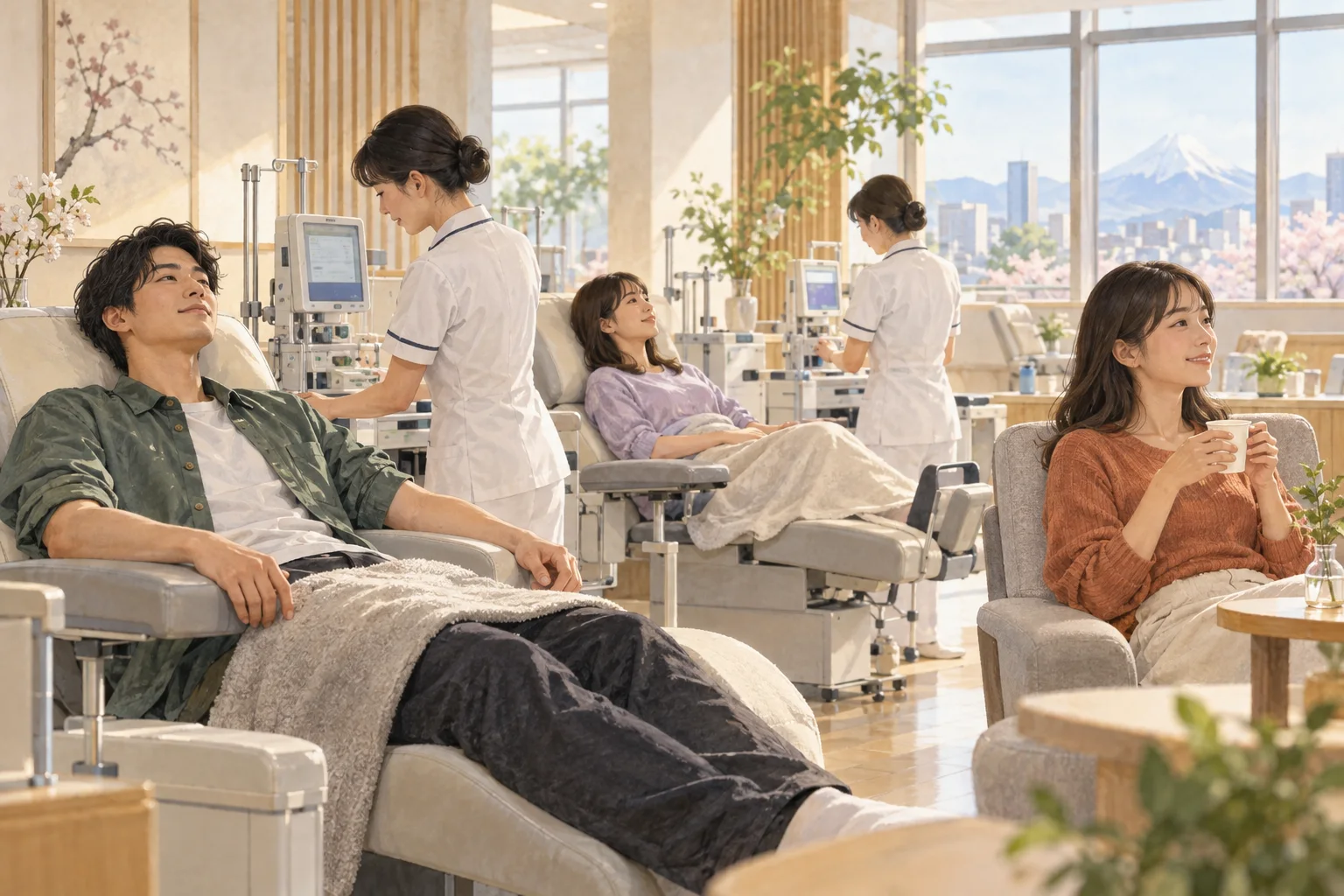
Blood donation in Japan is run by the Red Cross, and the visible face of it is the kenketsu room: a permanent center on an upper floor in a shopping district, often with free drinks, magazines, ice cream and a quiet waiting area, plus the buses that park outside stations and universities. Donation is entirely unpaid, and the small gifts, tissues, snacks or a hand towel, are a thank-you rather than a payment.
There are two kinds: whole blood, which takes about fifteen minutes of actual collection, and component donation, where platelets or plasma are separated and the rest returned, which takes around an hour and can be repeated more often because the required gap between donations is shorter. Age limits start at sixteen for the smaller whole blood donation. Foreign residents are welcome, but there are deferral rules based on time spent in certain countries and on recent travel, and the health questionnaire is in Japanese, so some centers ask that you be able to answer it.
日本の献血は日本赤十字社が運営しており、その目に見える顔が献血ルームです。繁華街の上の階にある常設の施設で、飲みものや雑誌、アイスクリーム、静かな待合が用意されていることが多く、駅前や大学に停まる移動採血車もあります。報酬は一切ありません。
ティッシュや菓子、タオルといったささやかな品は、支払いではなく礼の気持ちです。種類は二つあります。全血献血は、実際に採る時間が十五分ほどです。成分献血は血小板や血漿を分けて残りを体に戻すもので、一時間以上かかりますが、次の献血までの間隔が短いため、回数を重ねられます。
全血献血の少ない量なら十六歳から可能です。在住の外国人も歓迎されますが、特定の国での滞在歴や最近の渡航によって献血を控えるよう求められる決まりがあり、問診票は日本語なので、答えられることを条件にしている会場もあります。
Questions people actually ask
And how to answer them.
Is it paid?
No. Japan moved to a voluntary, unpaid system from the 1960s after problems with paid donation, and the snacks and gifts are a courtesy, not compensation.
報酬はありません。売血にともなう問題を経て、1960年代から無償の献血へ移行しました。菓子や記念品は謝意であって、対価ではありません。
Can a foreign resident donate?
Often yes, but there are deferral rules tied to how long you lived in certain countries and to recent travel, and you need to complete a Japanese health questionnaire. Call the center in advance to check.
できることが多いのですが、特定の国での居住歴や最近の渡航歴による制限があり、日本語の問診票に答える必要があります。事前に会場へ問い合わせてください。
Why are there appeals in winter?
Donation drops in cold months and over the New Year while demand continues, so the Red Cross campaigns then. Supply of certain blood types is reported publicly on their website.
寒い時期と年末年始は献血する人が減る一方で、必要な量は変わらないため、その時季に呼びかけが行われます。血液型ごとの在庫の状況は日本赤十字社が公表しています。
Phrases you can use
- I'd like to donate blood.献血をしたいのですが。
- Is this your first time?初めてですか。
- Please drink plenty of water first.先に水分をとってください。
- Rest here for fifteen minutes.十五分ほど休んでいってください。
- How often can I donate?どのくらいの間隔で献血できますか。
Words you need
- blood donation献血
- donation center献血ルーム
- mobile collection bus移動採血車
- whole blood donation全血献血
- health questionnaire問診票
Watch
From YouTubeBackground (Japanese)
日本の献血は日本赤十字社が行い、全血献血と成分献血があります。全血献血は二百ミリリットルと四百ミリリットルがあり、年齢や体重の条件が定められています。かつては売血が行われていましたが、輸血後の肝炎の問題などを受けて、1960年代に無償の献血を基本とする体制へ移行しました。献血ルームは繁華街の商業ビルに設けられ、飲みものや菓子を用意し、待ち時間を過ごしやすくしています。血液の在庫状況は地域ごとに公表されています。