karuta
the card game where you race to grab the right card
かるた(かるた)
In one line
The shortest answer that works
Karuta is a game where a reader calls out a text and players race to snatch the matching card.
かるたは、読み手が読み上げる文句に合う札を、参加者が競って取る遊びです。
In 30 seconds
The standard explanation
In karuta, cards are spread face up on the floor, a reader reads out a line, and players race to take the card that completes it. Children's sets use proverbs and the syllabary; the classical set uses the hundred poems of the Hyakunin Isshu. It is a New Year game at home and, at the top level, a fast and physical competitive sport.
かるたでは、札を畳の上に表を向けて並べ、読み手が上の句を読み、続きにあたる札を取り合います。子ども向けはことわざと五十音、古典のものは百人一首の百首を使います。家では正月の遊びですが、頂点では速く、体を使う競技でもあります。
As a short speech
A full paragraph you can read aloud
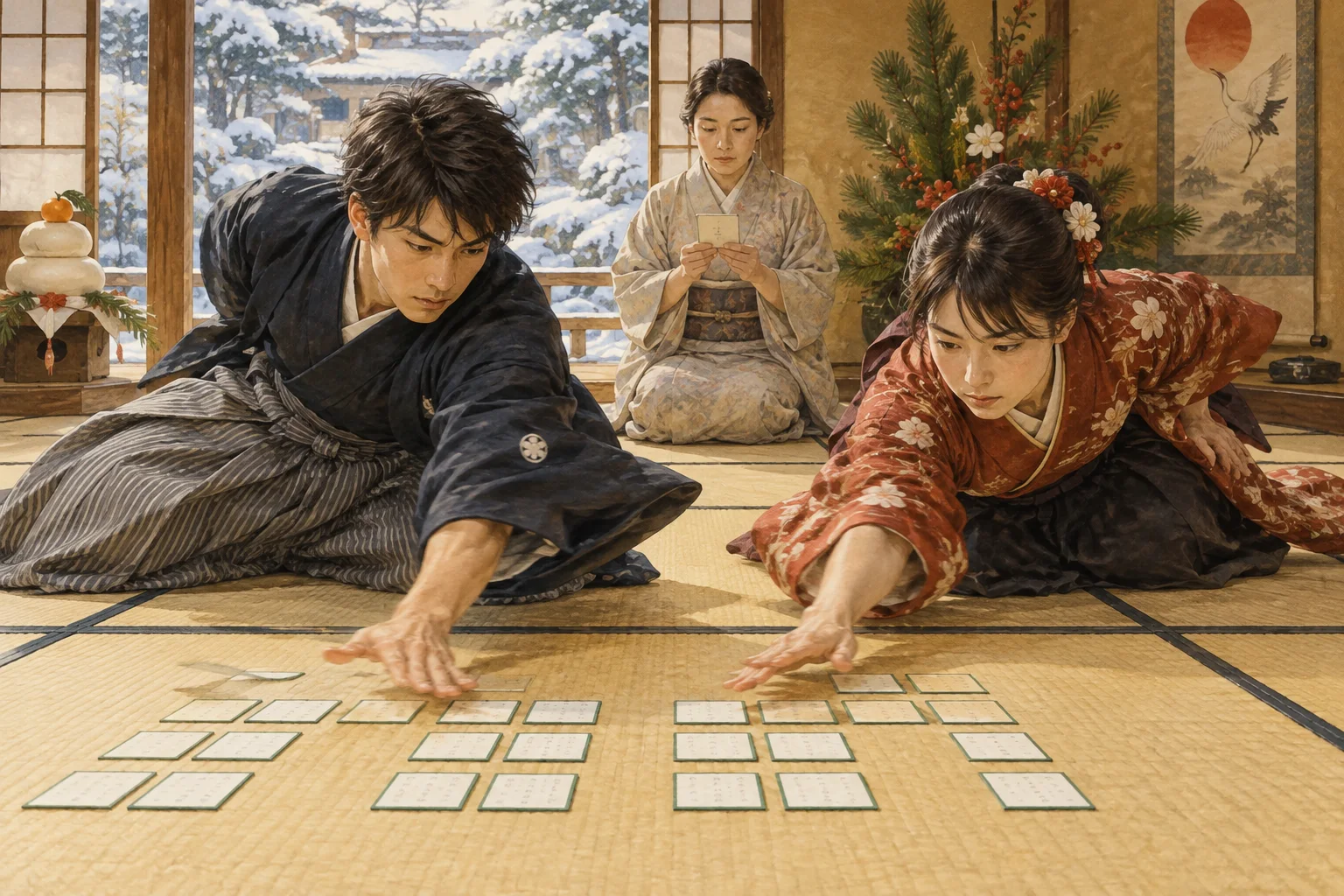
Karuta is two very different things wearing the same name. At home at New Year it is a children's game: cards with proverbs or pictures are spread out, someone reads, and the children lunge. At the other end is competitive karuta, played with the hundred classical poems, and it is a sport.
Players memorize all hundred poems and the exact arrangement of fifty cards, and because each poem can be identified from the first syllables, the best players move before the reader has finished a word. Matches are physical enough that cards fly across the mat and players wear out their fingers.
National titles are decided every January at a shrine in Shiga, and the winners hold the titles of master and queen. A manga and anime series about a high school karuta club brought a wave of new players to the sport in the 2010s, including from abroad.
かるたは、同じ名前で呼ばれる二つのまったく違うものです。正月の家では子どもの遊びです。ことわざや絵の札を並べ、誰かが読み、子どもが飛びつきます。もう一方の端にあるのが競技かるたで、百人一首を使うれっきとした競技です。
選手は百首すべてと、並べられた五十枚の位置を覚えます。歌は最初の数音で特定できるので、上位の選手は読み手が一語を言い終える前に動いています。試合は激しく、札は畳の外まで飛び、指は傷みます。
全国の頂点は毎年一月に滋賀の神社で決まり、勝者は名人、クイーンと呼ばれます。高校のかるた部を描いた漫画とアニメが2010年代に新しい競技人口を呼び込み、海外からの参加者も増えました。
Questions people actually ask
And how to answer them.
Do I need to know classical Japanese?
Not for the children's sets, which use plain modern language. Competitive karuta does not actually require understanding the poems either; players memorize sounds and positions, though most come to know the meanings anyway.
子ども向けの札なら要りません。現代の言葉で書かれています。競技かるたも、歌の意味がわからなければできないわけではありません。覚えるのは音と位置です。もっとも、続けるうちに意味も覚えていきます。
Why is it a New Year game?
Because it is an indoor game for a group of mixed ages at a time when families are together with nothing to do. The association is strong enough that shops stock karuta mostly in December and January.
家族が集まり、することのない時期に、年齢の違う人たちが室内でできる遊びだからです。結びつきは強く、かるたが店に多く並ぶのは主に十二月から一月です。
Where does the word come from?
From Portuguese carta, brought in by sixteenth-century traders along with the cards themselves. Hanafuda grew out of the same imported cards, by a different path.
ポルトガル語のカルタで、十六世紀の商人が札とともに持ち込みました。花札も同じ舶来の札から、別の道筋で生まれたものです。
Phrases you can use
- The reader reads, and we grab.読み手が読んで、取り合います。
- Whoever takes the most cards wins.たくさん取った人が勝ちです。
- It uses a hundred classical poems.百人一首の百首を使います。
- We play this at New Year.正月にこれをします。
- The top players move incredibly fast.上位の選手は驚くほど速く動きます。
Words you need
- reader読み手
- card to be taken取り札
- first half of a poem上の句
- competitive karuta競技かるた
- proverbことわざ
Watch
From YouTubeBackground (Japanese)
かるたという語は、十六世紀にポルトガルから伝わったカルタに由来します。子ども向けのいろはかるたはことわざを読み、絵札を取る形で、江戸と上方で収める文句が違います。古典のかるたは百人一首を使い、読み手が上の句を読み、下の句が書かれた取り札を取ります。競技かるたは五十枚を場に並べ、決まり字と呼ばれる識別の音で札を特定します。全国大会は毎年一月に滋賀の近江神宮で行われ、名人とクイーンが決まります。