hanafuda
the flower card game
花札(はなふだ)
In one line
The shortest answer that works
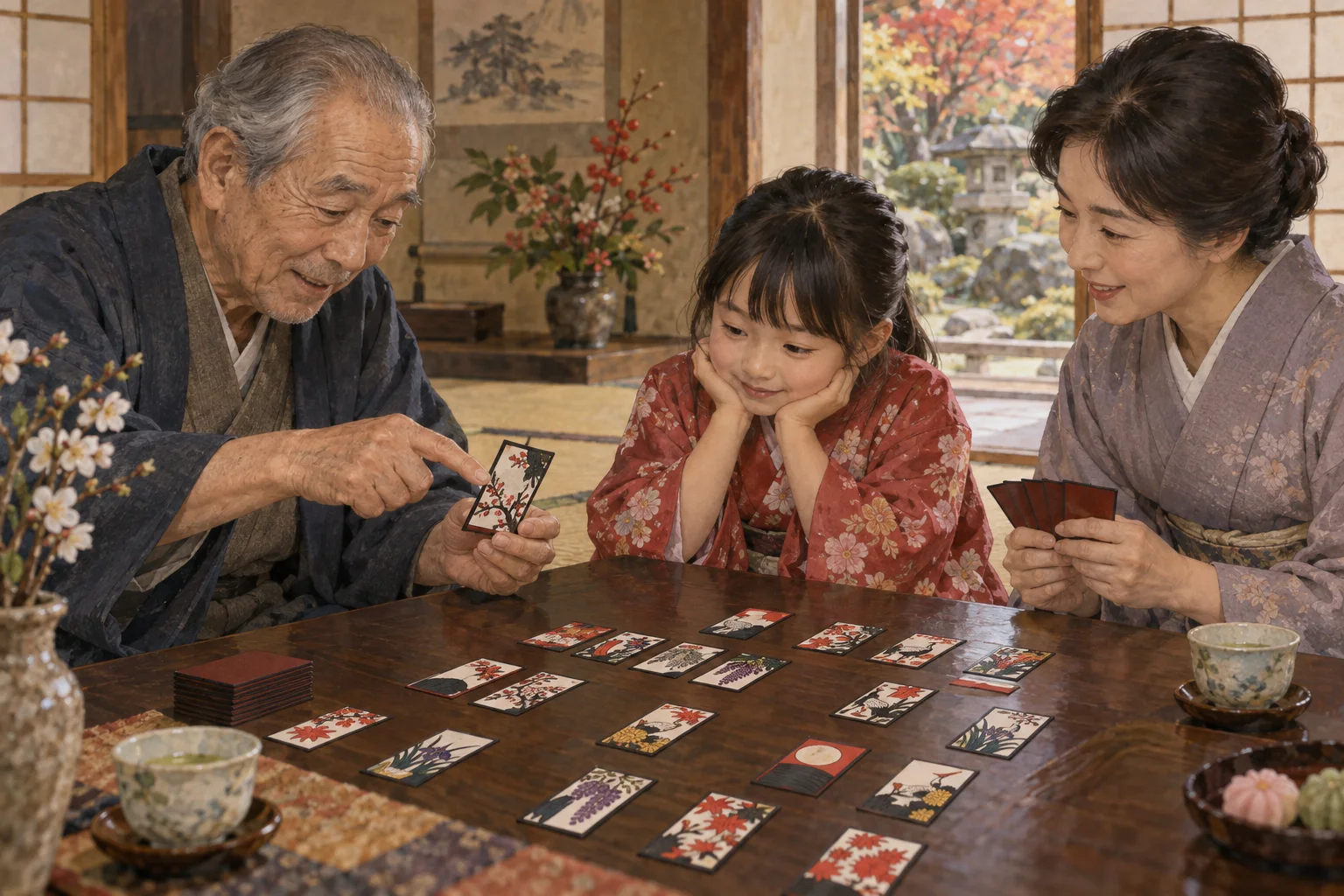
Hanafuda is a card game of forty-eight small cards, four for each month of the year.
花札は四十八枚の小さな札でする遊びで、十二の月にそれぞれ四枚が当てられています。
In 30 seconds
The standard explanation
Hanafuda cards carry no numbers, only pictures: each month has four cards showing its plant, from pine in January to paulownia in December. Players match cards by month and score with set combinations. The cards are thick, stiff and small, and they are slapped down rather than laid, which is half the pleasure of the game.
花札に数字はありません。あるのは絵だけです。月ごとに四枚あり、一月の松から十二月の桐まで、その月の植物が描かれています。遊び方は同じ月の札を合わせ、決まった組み合わせで点を数えるものです。札は厚く硬く小さく、置くのではなく打ちつけます。それが遊びの楽しさの半分でもあります。
As a short speech
A full paragraph you can read aloud
Hanafuda is often explained as the Japanese answer to a problem: playing cards kept getting banned. European cards arrived with Portuguese traders in the sixteenth century, gambling followed, and the shogunate outlawed one design after another. Card makers responded by removing everything that looked like a card.
Hanafuda has no numbers and no suits that a foreigner would recognize, just twelve months of plants, four cards each: pine, plum, cherry, wisteria, iris and so on to the paulownia of December. Games are played by matching a card in your hand to a card of the same month on the table, and by building named combinations.
There is one more thing worth knowing. A small Kyoto workshop began making hanafuda in 1889, kept making them through the twentieth century, and eventually moved into electronic toys. That workshop was Nintendo, and it still sells the cards today.
花札は、ある問題に対する日本の答えだったと説明されます。カードが繰り返し禁じられたのです。十六世紀にポルトガルの商人が持ち込んだカードから賭博が広がり、幕府は意匠を変えるたびに禁令を出しました。作り手は、カードらしく見えるものをすべて消すことで応じます。
花札に数字はなく、外国の人に札の種類とわかる印もありません。あるのは十二か月の植物が四枚ずつ。松、梅、桜、藤、菖蒲と続き、十二月の桐で終わります。遊びは、手札を場の同じ月の札に合わせ、決められた組み合わせを作るものです。
もう一つ知っておくとよいことがあります。京都の小さな工房が1889年に花札を作り始め、二十世紀を通じて作り続け、やがて電子玩具に進みました。その工房が任天堂で、花札は今も売られています。
Questions people actually ask
And how to answer them.
Is it a gambling game?
It has that history, and for a long time the cards carried a shady image because of it. Today it is played at home and online, and the two-player game koi-koi is the version most people know.
そういう歴史があり、そのために札には長く陰の印象がつきまといました。今は家庭やオンラインで遊ばれており、二人でするこいこいがいちばん知られた遊び方です。
Can I learn it quickly?
The matching is easy and takes five minutes. Remembering which combinations score, and what each plant is, takes longer, but a printed list next to you solves that for the first few games.
札を合わせるだけなら五分で覚えられます。どの組み合わせが点になるか、どの絵がどの植物かを覚えるには時間がかかりますが、最初のうちは手元に一覧を置けば足ります。
Are they a good souvenir?
Yes. A pack is small, cheap and beautifully printed, and the designs work as art even if nobody plays. Sets with English instructions are sold at large stores and museum shops.
よいと思います。小さく、高くなく、印刷が美しく、遊ばなくても絵として楽しめます。英語の説明が付いたものが大きな店や博物館の売店にあります。
Phrases you can use
- There are no numbers on the cards.札に数字はありません。
- Each month has four cards.月ごとに四枚あります。
- Match the card to the same month.同じ月の札に合わせます。
- Nintendo started by making these.任天堂はこれを作る会社でした。
- The cards are meant to be slapped down.札は打ちつけて出します。
Words you need
- flower cards花札
- a matching game合わせる遊び
- scoring combination役
- paulownia桐
- to deal配る
Watch
From YouTubeBackground (Japanese)
花札は四十八枚で、十二の月に四枚ずつ、その月を表す植物が描かれています。松、梅、桜、藤、菖蒲、牡丹、萩、芒、菊、紅葉、柳、桐の順です。十六世紀にポルトガルから伝わった南蛮かるたが賭博に使われ、禁令が繰り返されるなかで、数字も記号も持たない絵札として生まれたとされます。任天堂は1889年に京都で花札の製造から始まった会社で、今も花札を販売しています。二人で遊ぶこいこいが最も広く知られた遊び方です。