kanzashi
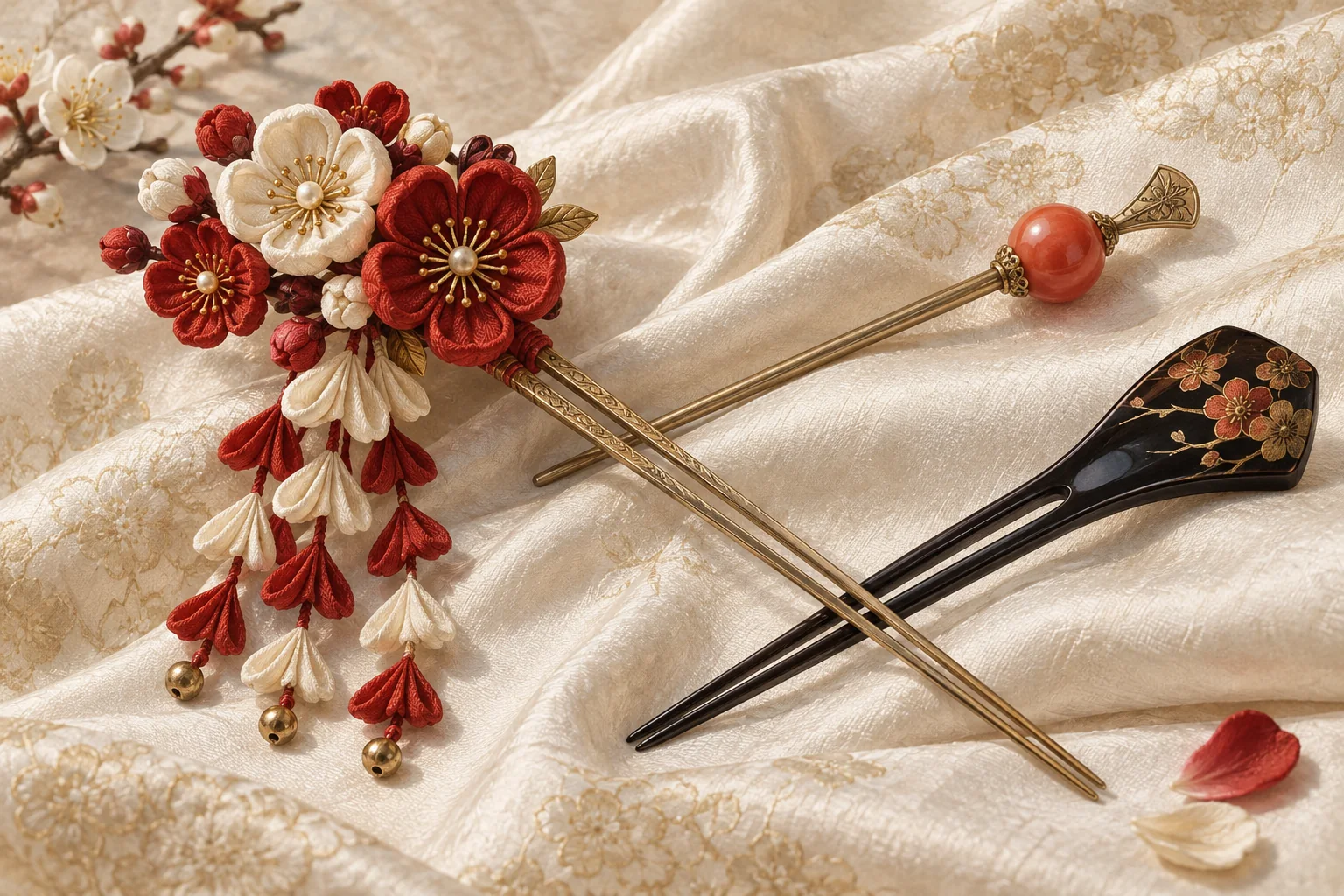
an ornamental hairpin worn with traditional Japanese hairstyles
かんざし(かんざし)
In one line
The shortest answer that works
Kanzashi are ornamental hairpins worn with kimono, ranging from simple sticks to elaborate seasonal designs.
かんざしとは着物に合わせて着ける髪飾りで、簡素な棒状のものから季節の花を模した豪華なものまであります。
In 30 seconds
The standard explanation
Kanzashi are decorative hairpins and hair ornaments worn with traditional Japanese hairstyles, most often alongside a kimono. They range from a single plain lacquered stick used to hold hair in place to elaborate pieces made of silk flowers or dangling metal chains, worn by maiko, apprentice geisha, to signal both the season and how far along they are in their training. A maiko changes her kanzashi design roughly every month to match seasonal flowers, from plum blossoms in winter to maple leaves in autumn. Outside of geisha districts, most people today only wear kanzashi for special occasions like a wedding, a coming-of-age ceremony, or Shichi-Go-San.
かんざしとは、伝統的な日本髪や着物姿に合わせて着ける装飾的な髪飾りです。髪をまとめるだけの漆塗りの簡素な一本の棒から、絹の花や垂れ下がる金属の飾りを使った豪華なものまであり、舞妓と呼ばれる芸妓見習いが季節と修業の進み具合を示すために身につけます。舞妓は冬の梅から秋の紅葉まで、月替わりで季節の花を意匠にしたかんざしに変えます。花街の外では、たいていの人がかんざしを身につけるのは結婚式や成人式、七五三などの特別な機会に限られます。
As a short speech
A full paragraph you can read aloud
Kanzashi are ornamental hairpins worn with traditional Japanese hairstyles, and they range from a simple carved stick that just holds the hair in place to elaborate, almost sculptural pieces covered in silk flowers or dangling metal chains. The most famous versions today are probably the ones worn by maiko, apprentice geisha in cities like Kyoto, who traditionally change their kanzashi design roughly once a month to match the season, plum blossoms in winter, cherry blossoms in spring, and maple leaves in autumn, among many others.
The specific design and how many ornaments a maiko wears can also hint at her rank and how many years she has been training. For most ordinary people today, kanzashi come out only for a handful of occasions, a wedding, a coming-of-age ceremony, or a child's Shichi-Go-San, rather than as everyday accessories the way they once were during the Edo period.
かんざしとは、伝統的な日本髪に合わせて着ける装飾的な髪飾りで、髪をまとめるだけの彫刻を施した棒から、絹の花や垂れる金属の飾りで覆われた、ほとんど彫刻のように手の込んだものまであります。今日もっともよく知られているのは、京都などの花街にいる芸妓見習いの舞妓が着けるものでしょう。
舞妓は伝統的に、冬の梅、春の桜、秋の紅葉など、季節に合わせておよそ月に一度かんざしの意匠を変えます。かんざしの具体的な意匠や飾りの数は、舞妓としての格や修業年数を示すことにもつながります。今のふつうの人にとって、かんざしを身につける機会は、結婚式や成人式、子供の七五三といったわずかな場面に限られ、江戸時代のように日常的なおしゃれ道具ではなくなっています。
Questions people actually ask
And how to answer them.
Do geisha wear the same kanzashi all year round?
No, maiko in particular are known for changing their kanzashi roughly every month to match seasonal flowers and motifs.
いいえ、特に舞妓は季節の花や意匠に合わせて、およそ月に一度かんざしを変えることで知られています。
Are kanzashi only worn by geisha?
No, though geisha and maiko are the most visible wearers today. Ordinary people wear simpler kanzashi with kimono at events like weddings or coming-of-age ceremonies.
いいえ、今もっとも目立つのは芸妓や舞妓ですが、一般の人も結婚式や成人式などで着物に合わせてもっと簡素なかんざしを着けます。
Phrases you can use
- Her kanzashi matches this month's flower.彼女のかんざしは今月の花に合わせています。
- This kanzashi is made of silk flowers.このかんざしは絹の花でできています。
- Maiko change their kanzashi design by season.舞妓さんは季節によってかんざしを変えます。
- You can buy simpler kanzashi at a craft shop.手芸店でもっと簡単なかんざしが買えます。
Words you need
- ornamental hairpinかんざし
- apprentice geisha舞妓
- seasonal motif季節の意匠
- traditional hairstyle日本髪
Watch
From YouTubeBackground (Japanese)
かんざしは江戸時代の女性の日常のおしゃれ道具でもあったが、今では舞妓さんが月替わりで着ける季節の花のかんざしが特によく知られている。1月は松竹梅、4月は桜、11月は紅葉というように、月ごとに意匠が決まっており、かんざしの数や下がりの長さで舞妓としての経験年数を示すともいわれる。一般の人が身につける機会は結婚式や成人式、七五三などに限られることが多い。