gokuraku and jigoku
the Pure Land and the hells in Japanese Buddhism
極楽と地獄(ごくらくとじごく)
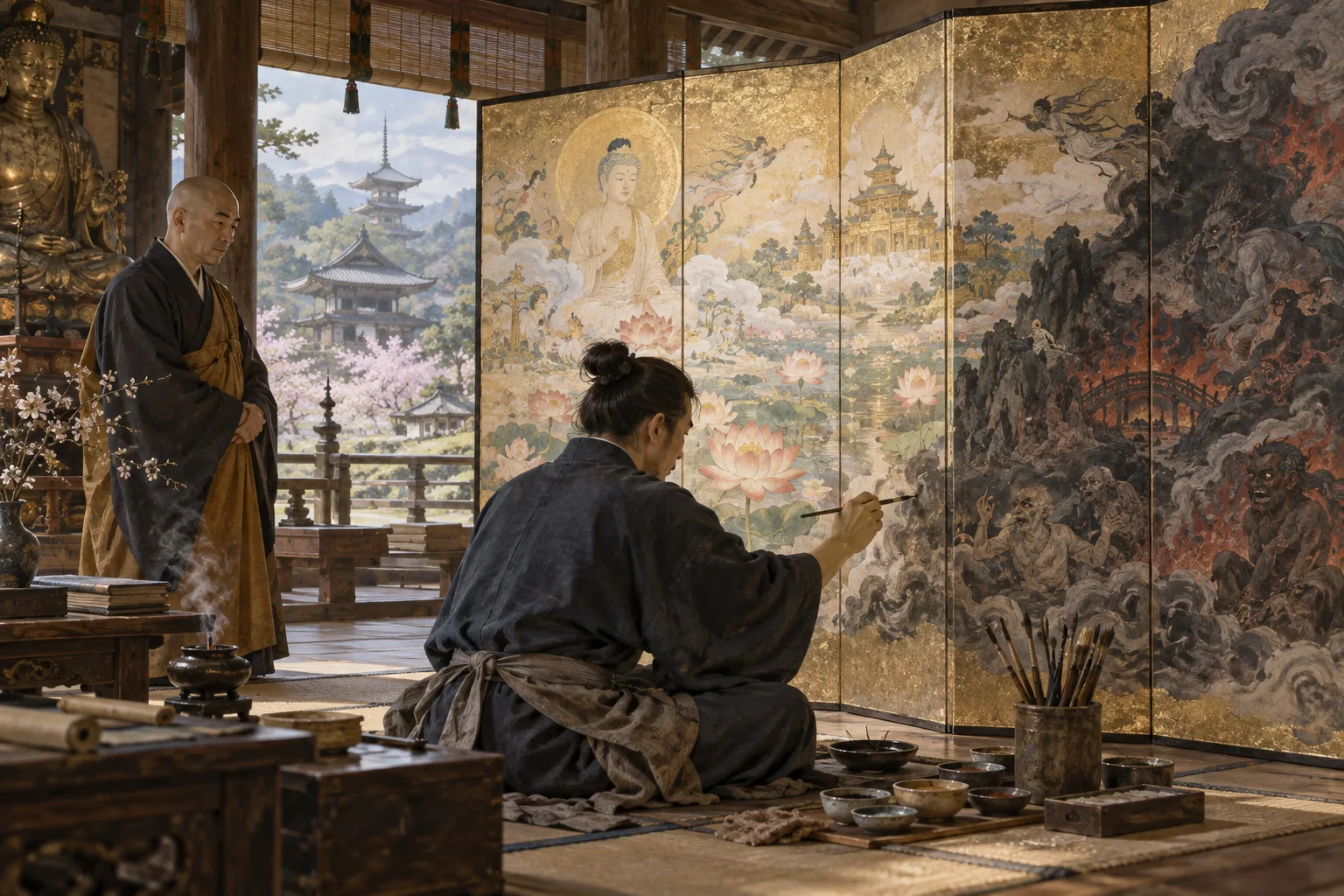
In one line
The shortest answer that works
Gokuraku and jigoku, the Pure Land and hell, are stages on the way, not eternal destinations, in Japanese Buddhism.
極楽と地獄とは、日本の仏教では永遠の行き先ではなく、悟りへ向かう途中の段階とされるものです。
In 30 seconds
The standard explanation
Gokuraku is the Pure Land in the west, where Amida Buddha receives those who call on him. Jigoku is the set of hells where the dead are judged by Enma and punished for what they did. The crucial difference from the Christian picture is that hell is not forever: it is one stage in a cycle of rebirth. The Pure Land lies outside that cycle, and it is a place to reach awakening rather than a final reward.
極楽は西方にある浄土で、阿弥陀仏が念仏に応えて迎え取る場所です。地獄は、死者が閻魔に裁かれ、行いに応じて責めを受ける場所の総称です。キリスト教の世界像と決定的に違うのは、地獄が永遠ではないことです。地獄は輪廻の一段階にすぎません。極楽はその輪の外にあり、最終的な褒美というより、悟りを開くための場所です。
As a short speech
A full paragraph you can read aloud
Japanese children are told that if they lie, Enma will pull their tongue out, which makes hell sound familiar to a Western listener. The structure underneath is different. Japanese Buddhism inherited a cycle of six realms, from the heavens down through humans, animals and hungry ghosts to the hells, and a being moves between them according to what it has done.
Hell is severe and long, but it is a sentence, not an eternity, and when it is served you are reborn elsewhere in the cycle. Against that stands gokuraku, the Pure Land of Amida Buddha in the west, which is not exactly heaven either: it is a place where conditions are so favorable that awakening becomes possible.
From the Heian period onwards, the promise that calling Amida's name would get you there made this the most popular form of Buddhism in Japan. Temple paintings of the hells were used to teach it, and some are still on show.
日本の子どもは、嘘をつくと閻魔様に舌を抜かれると言われて育ちます。そう聞くと、西洋の人には馴染みのある地獄に思えます。ただし土台の作りが違います。日本の仏教は六道という六つの世界の循環を受け継ぎました。
天、人、畜生、餓鬼などを経て地獄に至る道筋で、生き物は行いに応じてそのあいだを移ります。地獄は厳しく長いのですが、それは刑期であって永遠ではありません。終われば、また別のところに生まれ変わります。これに対する極楽は、西方にある阿弥陀仏の浄土で、天国とも少し違います。
悟りに至りやすい条件が整った場所、という位置づけです。平安時代以降、阿弥陀の名を称えればそこへ迎えられるという教えが、日本でもっとも広い仏教の形になりました。寺の地獄絵は、それを説くために使われたもので、今も公開されているものがあります。
Questions people actually ask
And how to answer them.
Is hell permanent?
No. It is described as extremely long but finite, and when the term ends the being is reborn somewhere else in the cycle. Escape from the cycle itself, not from hell, is what Buddhist practice aims at.
永遠ではありません。きわめて長いとされますが終わりがあり、終われば輪廻の別のところに生まれ変わります。仏教の修行が目指すのは、地獄から出ることではなく、輪廻そのものから出ることです。
Is gokuraku the same as heaven?
Not quite. It is a realm where everything supports practice, so that awakening becomes possible; it is a means rather than a reward. There is also a separate realm called the heavens in the six-realm scheme, and even that one is temporary.
少し違います。修行に適した条件がすべて整い、悟りに至れる場所です。褒美というより手立てです。六道には天という世界も別にありますが、そこも永遠ではありません。
Where can I see hell paintings?
Temples in many regions keep hanging scrolls of the hells and show them at fixed times, often around Obon, and museums hold the famous ones. Some temples also have statues of Enma at the gate.
地獄絵の掛軸を持ち、盂蘭盆のころなど時期を決めて公開する寺が各地にあります。名高いものは博物館が所蔵しています。門のそばに閻魔像を置く寺もあります。
A common misunderstanding
MYTHJapanese hell is the same idea as the Christian one.
FACTIt is a temporary realm inside a cycle of rebirth, not an eternal state, and the goal of practice is to leave the cycle rather than to avoid punishment.
Phrases you can use
- Hell doesn't last forever.地獄は永遠ではありません。
- Enma judges the dead.閻魔が死者を裁きます。
- The Pure Land lies to the west.浄土は西にあるとされます。
- It is a cycle of rebirth.生まれ変わりの循環です。
- Children are told that story to behave.子どもはそう言い聞かされて育ちます。
Words you need
- the Pure Land極楽浄土
- hell地獄
- the judge of the dead閻魔
- the six realms六道
- rebirth輪廻
Watch
From YouTubeBackground (Japanese)
極楽は阿弥陀仏の浄土で、西方にあるとされます。地獄は六道の一つで、天、人、修羅、畜生、餓鬼、地獄という六つの世界を巡る輪廻の中にあります。地獄は永遠の場所ではなく、この輪廻から離れることが仏教の目的とされます。極楽は六道の外にあり、そこで悟りを開くための場所と説明されます。閻魔は死者を裁く役で、嘘をつくと舌を抜かれるという言い伝えは子どものしつけに使われてきました。平安時代の末に広まった浄土の教えは、念仏によって極楽に迎えられるとするもので、地獄絵は、それを説くための視覚の教材でもありました。