nokosazu taberu
leaving nothing on the plate
残さず食べる(のこさずたべる)
In one line
The shortest answer that works
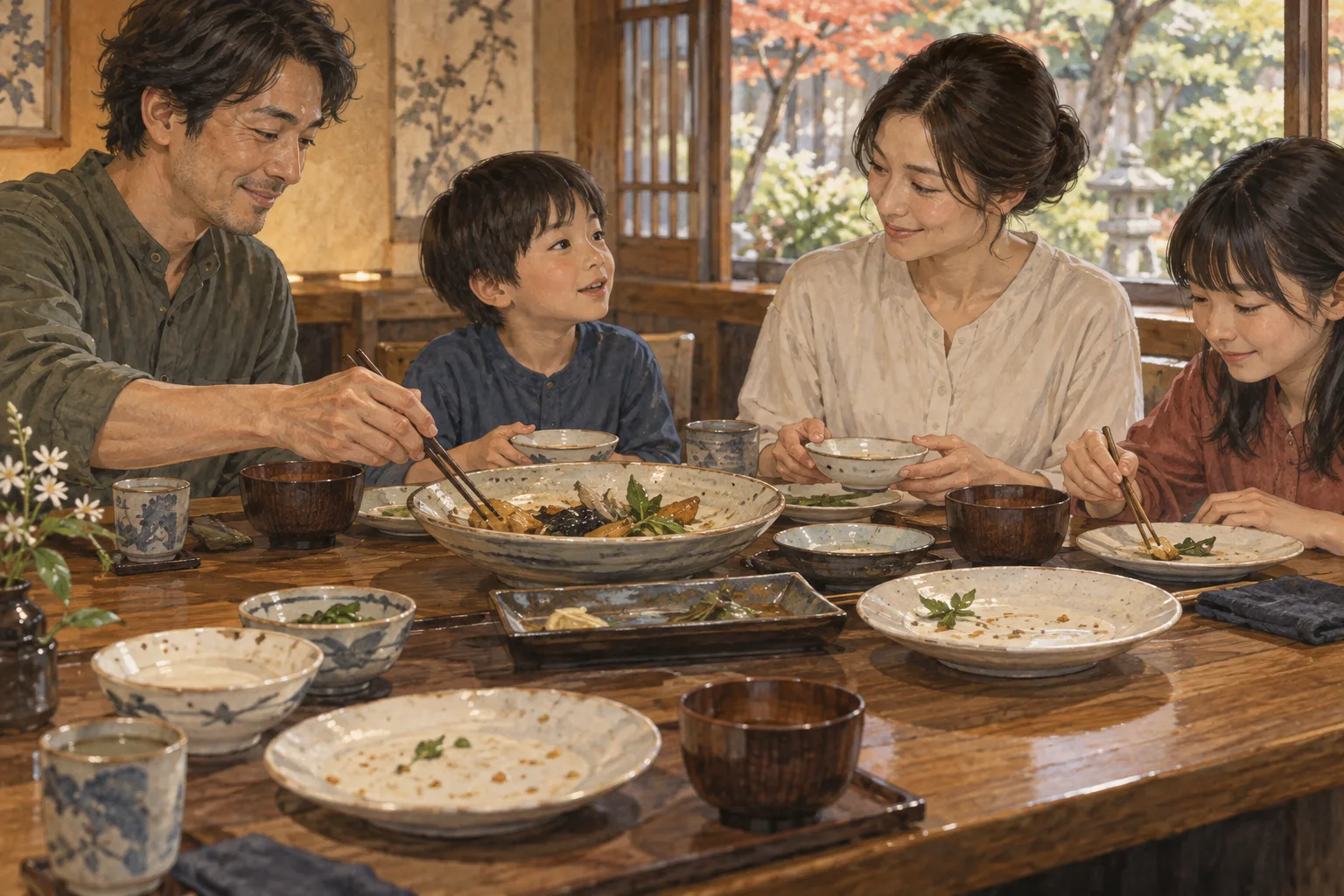
In Japan, finishing everything you are served is the polite outcome, not leaving a little.
日本では、出されたものを食べきることが礼儀で、少し残すことは礼儀ではありません。
In 30 seconds
The standard explanation
Japanese table manners expect you to finish what you are given, down to the last grain of rice. Leaving food to show you have had enough, which is polite in some cultures, reads here as waste. If you cannot eat everything, saying so before the food is served is the graceful move.
日本の食事の作法では、出されたものを最後のひと粒まで食べきることが期待されます。もう十分だと示すために残すのは、そうすることが礼儀の文化もありますが、ここでは無駄と受け取られます。食べきれないなら、出される前にそう伝えるのが上手なやり方です。
As a short speech
A full paragraph you can read aloud
One piece of Japanese etiquette that can trip up a well-mannered visitor is the expectation that you finish your food. In some cultures leaving a little on the plate signals that you were given plenty; in Japan it signals waste.
Children are taught to eat every grain of rice, often with the line that the rice represents someone's work, and school lunches are served with the expectation that the class finishes them. The value behind this is mottainai, the sense that letting something useful go to waste is itself wrong. Practical advice.
If a portion is too large, say so when you order, since many restaurants will serve less rice on request and some reduce the price. At someone's home, saying early that you eat small amounts is easy; refusing a second helping is normal; and leaving a clean bowl is the clearest compliment available. If you genuinely cannot finish, apologize briefly and leave it. Nobody will make a scene.
行儀のよい訪問者ほどつまずきかねない日本の作法の一つが、出されたものを食べきるという前提です。皿に少し残すことで、十分にいただきましたと示す文化もありますが、日本ではそれは無駄を意味します。子どもは米を一粒残さず食べるように教えられ、その米には誰かの手間がかかっているのだと言われます。
給食も、クラスで食べきることを想定して出されます。その背後にある価値がもったいないで、役に立つものを無駄にすること自体がよくないという感覚です。実用的な助言をします。量が多すぎるなら注文のときに言ってください。多くの店ではご飯を少なくしてくれますし、値引きする店もあります。
人の家では、少食だと早めに伝えておけば簡単ですし、おかわりを断るのはふつうのことです。器を空にすることが、いちばん分かりやすい賛辞になります。どうしても食べきれないなら、ひと言詫びて残してください。騒ぎ立てる人はいません。
Questions people actually ask
And how to answer them.
What if the portion is genuinely too big?
Ask for less rice when ordering, which is a normal request, or share a dish. Taking leftovers home is possible at some restaurants but not standard, partly for food safety reasons.
注文のときにご飯を少なめにと頼めます。よくある頼み方です。一皿を分け合うこともできます。持ち帰りに応じる店もありますが一般的ではなく、食品衛生上の理由もあります。
Is it rude to refuse a second helping?
No. A clear thank you, that was plenty is enough. Hosts do press a little, and one polite refusal is usually accepted without further pushing.
失礼ではありません。十分いただきました、とはっきり言えば十分です。もてなす側は少し勧めますが、丁寧に一度断れば、たいていそれ以上は勧められません。
What about food I cannot eat for religious or health reasons?
Say so in advance, ideally when the meal is being planned. Japanese hosts and restaurants generally accommodate this well when told early and find it much harder at the table.
前もって伝えてください。食事の計画の段階が理想です。早く言えば、もてなす側も店もたいていよく対応してくれます。食卓に着いてからでは、ずっと難しくなります。
A common misunderstanding
MYTHLeaving food shows the host was generous.
FACTThat reading does not apply here. An empty bowl is the compliment, and leftovers are read as waste rather than as a sign of plenty.
Phrases you can use
- Could I have less rice, please?ご飯を少なめにしてもらえますか。
- That was plenty, thank you.十分いただきました。
- I'm sorry, I can't quite finish it.すみません、少し食べきれません。
- I don't eat meat. I should have said earlier.肉を食べません。先に言っておくべきでした。
- It was delicious. Thank you for the meal.おいしかったです。ごちそうさまでした。
Words you need
- to leave food食べ残す
- a second helpingおかわり
- small portion少なめ
- food waste食品ロス
- wastefulもったいない
Watch
From YouTubeBackground (Japanese)
米を残さず食べるようにという教えは、農作業の手間や、食べものを粗末にしないという考えと結びついて語られてきました。給食でも食べきることが目標とされてきましたが、無理に食べさせる指導は問題として見直されています。国と自治体は食品ロスの削減を掲げており、飲食店では小盛りや持ち帰りの取り組みも広がりつつあります。持ち帰りは食中毒の危険があるため、店の判断で断られることがあります。