doraggu sutoa
Japan's hybrid of a pharmacy and a discount supermarket
ドラッグストア(どらっぐすとあ)
In one line
The shortest answer that works
Japanese drugstores sell medicine, cosmetics and discounted groceries under one roof, and many customers mainly go for the groceries.
日本のドラッグストアは薬と化粧品、安い食品を一つの店で売っており、食品目当てで通う人も多いです。
In 30 seconds
The standard explanation
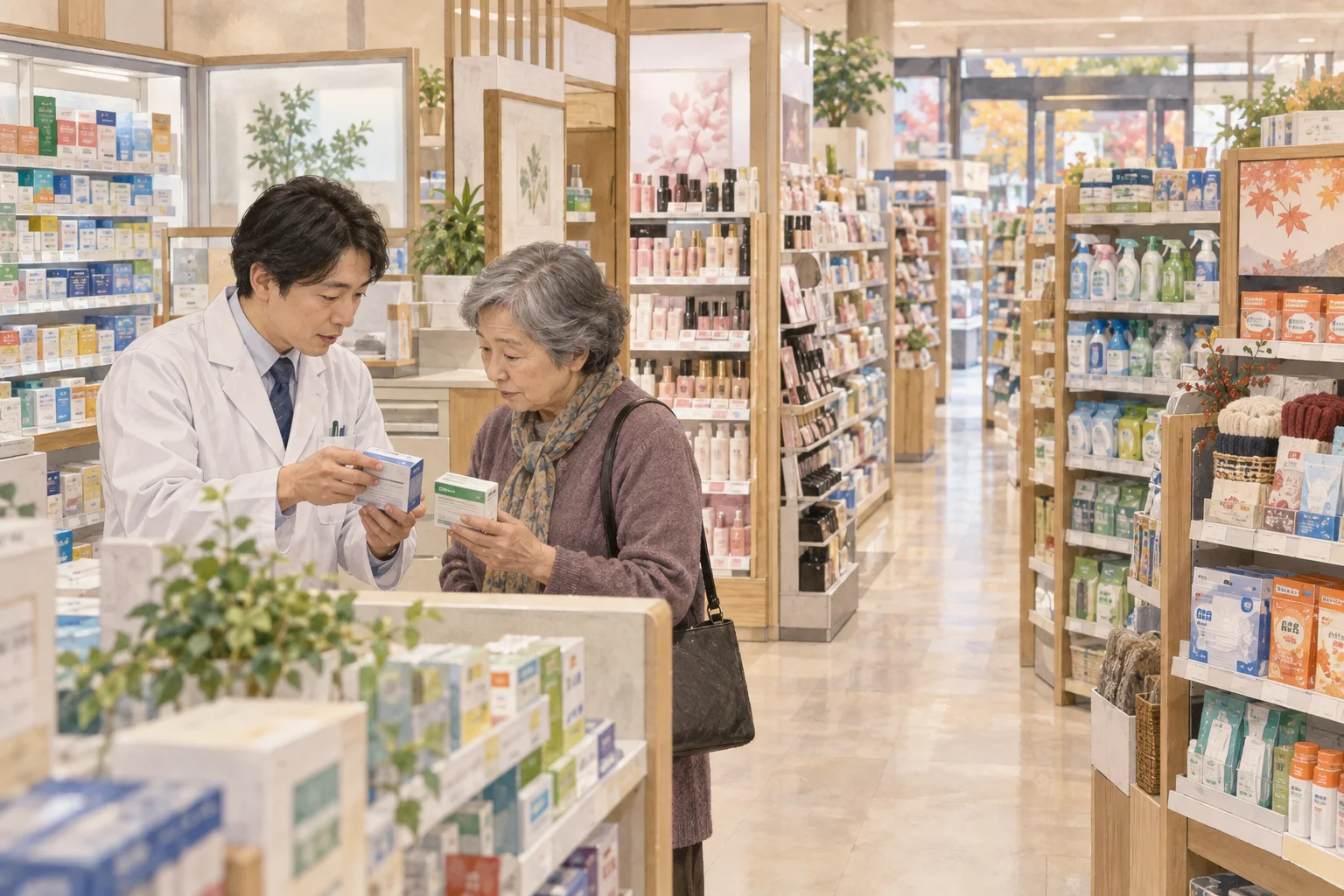
A Japanese drugstore looks like a pharmacy from the outside but functions more like a discount supermarket with a medicine counter attached. Shelves of over-the-counter drugs and cosmetics sit beside cheap snacks, drinks and household goods, often priced lower than a regular supermarket to pull in customers. Medicines are sorted by legal risk category, and only the highest-risk ones require a licensed pharmacist to be present for the sale.
日本のドラッグストアは外見こそ薬局のようですが、実際には薬のコーナーが付いた安売りスーパーに近い性質を持っています。市販薬や化粧品の棚の隣に、安いお菓子や飲み物、日用品が並び、客を呼ぶためにスーパーより値段を下げていることもあります。医薬品は法律上のリスク区分で分けられており、いちばんリスクの高いものだけ薬剤師の立ち会いが必要です。
As a short speech
A full paragraph you can read aloud
A drugstore in Japan, doraggu sutoa, is not quite what the English word suggests. It sells over-the-counter medicine, yes, but also cosmetics, snacks, drinks, toiletries and basic groceries, often at prices lower than a regular supermarket, which is why tourists and locals alike end up buying instant noodles and chocolate there instead of medicine.
Japanese law sorts non-prescription drugs into three risk categories, and only the top category legally requires a pharmacist on-site to sell it; the rest can be handled by a registered seller with less training. That's part of why drugstores can staff themselves more cheaply than a full pharmacy and undercut supermarket prices on food to bring people through the door.
Prescription medicine is a separate matter and is handled at a yakkyoku, a dispensing pharmacy, often near a hospital or clinic. Some drugstores have a dispensing counter inside, but many do not, so a visitor with a prescription should look for a sign saying it is accepted.
日本の「ドラッグストア」は、英語の言葉が思わせるものとは少し違います。市販薬はもちろん扱いますが、化粧品やお菓子、飲み物、日用品、食品まで置いてあり、しかもスーパーより安いことが多いので、観光客も地元の人も薬ではなくカップ麺やチョコレートを買って帰ることになりがちです。
日本の法律は市販薬をリスクの高さで三段階に分けており、いちばん高いリスク区分だけが薬剤師の常駐を法律上求められ、それ以外は登録販売者という薬剤師より取得しやすい資格の人でも販売できます。だからこそドラッグストアは薬剤師を最小限にとどめて人件費を抑えつつ、食品の値段を安くして客を呼び込むことができます。
処方箋にもとづく調剤は別の話で、多くは病院やクリニックのそばにある調剤薬局が担当します。店内に調剤コーナーを持つドラッグストアもありますが、無い店も多いので、処方箋を持っている人は「処方せん受付」の表示を探すとよいでしょう。
Questions people actually ask
And how to answer them.
Can I get a prescription filled at a drugstore?
Only if it has a dispensing counter. Many drugstores sell only over-the-counter medicine, so a prescription usually goes to a yakkyoku, a dispensing pharmacy, which is often right next to a hospital or clinic.
調剤コーナーがある店ならできます。市販薬だけを扱うドラッグストアも多いので、処方箋はふつう調剤薬局に持っていきます。調剤薬局は病院やクリニックのすぐそばにあることが多いです。
Why is the food so cheap there compared to a supermarket?
Drugstores often price everyday groceries and drinks at or near cost to get people in the door, making the actual profit on medicine, cosmetics and other higher-margin items.
ドラッグストアは客を店に呼び込むため、日用の食品や飲み物を原価に近い値段で売ることが多く、実際の利益は医薬品や化粧品など利益率の高い商品から得ています。
Do I need to talk to a pharmacist to buy medicine?
Only for the highest-risk category of over-the-counter drugs, which by law requires a licensed pharmacist to be involved. Lower-risk medicine can be sold by staff with a simpler qualification.
いちばんリスクの高い区分の市販薬だけです。これは法律で薬剤師の関与が求められています。リスクの低い薬は、もっと簡単な資格を持つ店員でも販売できます。
Phrases you can use
- Is there a drugstore nearby?近くにドラッグストアはありますか。
- Where can I get this prescription filled?この処方箋はどこで薬をもらえますか。
- Do you have anything for a cold?風邪に効くものはありますか。
- This one needs a pharmacist to sell it.これは薬剤師でないと販売できません。
- The drinks here are cheaper than the supermarket.ここの飲み物はスーパーより安いです。
Words you need
- over-the-counter medicine市販薬
- dispensing pharmacy調剤薬局
- registered seller登録販売者
- pharmacist薬剤師
- prescription処方箋
Watch
From YouTubeBackground (Japanese)
市販薬は第一類、第二類、第三類の医薬品と要指導医薬品に分けられ、いちばんリスクの高い第一類と要指導医薬品の販売には薬剤師が要る一方、第二類・第三類は登録販売者でも販売できる。この区分のおかげでドラッグストアは薬剤師を最小限にとどめながら、食品や日用品の安売りで集客できる。医師の処方箋にもとづく調剤は薬剤師のいる薬局でしか行えず、病院やクリニックのそばの調剤薬局のほか、調剤コーナーを併設したドラッグストアもある。近年は食品や化粧品の売上が医薬品を上回る店舗も多い。