bukatsu no gasshuku
the multi-day training camp a school club holds, often in summer
部活の合宿(ぶかつのがっしゅく)
In one line
The shortest answer that works
A bukatsu training camp is a multi-day trip where a school club lives and trains together, usually in summer.
部活の合宿とは、部員が数日間寝食をともにしながら練習する行事で、たいてい夏に行われます。
In 30 seconds
The standard explanation
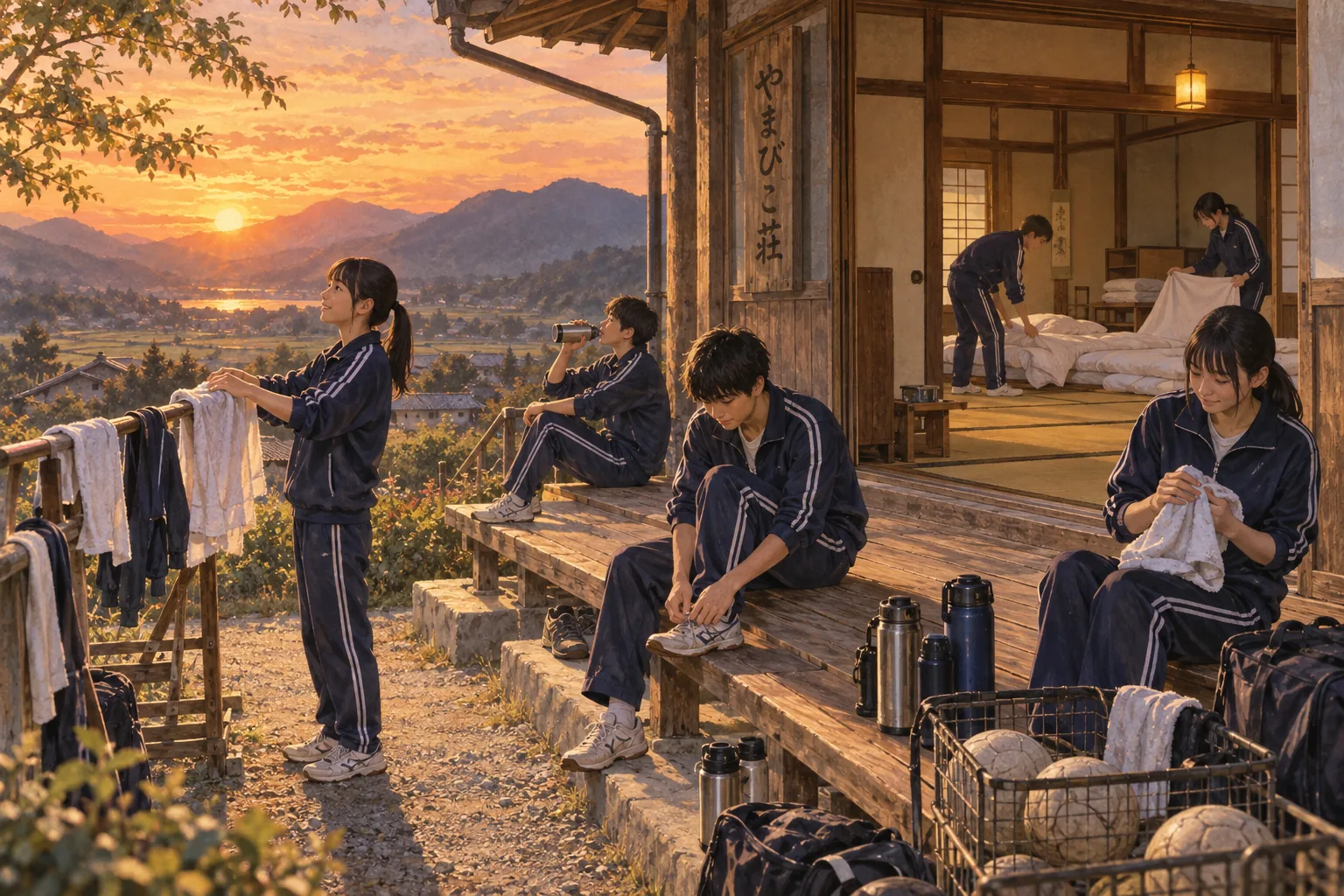
Many Japanese school clubs hold a training camp, or gasshuku, during the long summer break. The whole club travels together to a dormitory or sports facility and spends several days doing little but train, eat and sleep under one roof. Coaches often push harder than during term time, and days can start before dawn. For many students it becomes the most intense, and most bonding, part of club life.
日本の多くの部活は、夏休みなどの長期休暇に合宿を行います。部員全員で合宿所やスポーツ施設に移動し、数日間、練習と食事と睡眠だけを同じ屋根の下で繰り返します。指導者は学期中より厳しく指導することが多く、夜明け前に始まる日もあります。多くの生徒にとって、部活動でいちばん濃い、結びつきの強い時間になります。
As a short speech
A full paragraph you can read aloud
A bukatsu training camp, or gasshuku, is a multi-day trip a school club takes together, most often during the long summer break. The whole team travels to a dormitory or sports facility, sometimes near mountains or the sea, and for several days does almost nothing but practice, eat, clean and sleep under the same roof.
Mornings can start before six with a run, and evening meetings sometimes run late. Parents often help cover the cost, since school budgets rarely pay for it in full.
It is exhausting, and schools now work harder to prevent older students from hazing younger ones during camp, a problem that has drawn public criticism in the past. Even so, for most participants a training camp becomes one of the strongest shared memories of their school years, closer to family than to a normal club activity.
部活の合宿とは、部員全員が一緒に出かける数日間の行事で、たいてい夏休みなどの長期休暇に行われます。山や海の近くの合宿所やスポーツ施設に移動し、数日間、ほとんど練習と食事と掃除と睡眠だけを同じ屋根の下で過ごします。
朝は6時前に走り込みから始まることもあり、夜のミーティングが長引くこともあります。学校の予算だけでは足りないことが多く、保護者が費用の一部を負担するのもふつうです。
厳しい行事で、合宿中に上級生が下級生をいじめる問題が過去に批判を集めたこともあり、学校側は今もそれを防ぐ取り組みを進めています。それでも多くの参加者にとって、合宿はふつうの部活動というより家族に近い、学生時代でいちばん強く残る思い出のひとつになります。
Questions people actually ask
And how to answer them.
Who pays for a training camp?
Families do, on top of what the school or booster club contributes. A few days at a dormitory with meals can cost tens of thousands of yen per student, which is a real burden for some households.
学校や後援会が一部を出しても、残りは家庭の負担です。数日間、宿泊と食事つきで数万円かかることもあり、家庭によっては軽くない負担になります。
Is it optional?
Officially yes, but in practice it is treated as close to mandatory for club members, especially in sports clubs. Skipping it without a strong reason can affect a student's standing on the team.
建前は自由ですが、実際にはほぼ必須として扱われ、とくに運動部でその傾向が強くあります。よほどの理由なく休むと、チーム内での立場に影響することもあります。
Do students get any free time?
A little, usually in the evening, but the schedule is dense. Cultural clubs like brass bands and choirs also hold camps, and theirs can run just as long a day as a sports team's.
少しはありますが、たいてい夜だけで、日程は詰まっています。吹奏楽部や合唱部のような文化部も合宿を行い、練習時間は運動部に劣らず長くなることがあります。
Phrases you can use
- Our club has a three-day training camp in August.うちの部は8月に3日間の合宿があります。
- We stay at a dormitory near the mountains.山の近くの合宿所に泊まります。
- Practice starts before six in the morning.朝6時前から練習が始まります。
- Parents cover part of the cost.費用の一部は保護者が負担します。
- It's exhausting, but it brings the team together.きついけれど、チームの結びつきが強くなります。
Words you need
- training camp合宿
- dormitory合宿所
- booster club後援会
- team bondingチームの結束
- hazingしごき
Watch
From YouTubeBackground (Japanese)
合宿は運動部だけでなく、吹奏楽部や合唱部、演劇部といった文化部でも広く行われ、本番前の追い込みとして重要視されます。費用は学校や部活動によって差が大きく、地方の合宿所を利用する場合は1泊数千円から、遠征を兼ねる場合は数万円になることもあります。上級生が下級生に過度な練習や雑用を強いる問題も過去に報道されています。教員が引率することが多いため、教員の負担が大きい行事としても議論されています。