bukatsu no intai
leaving your school club after the last tournament
部活の引退(ぶかつのいんたい)
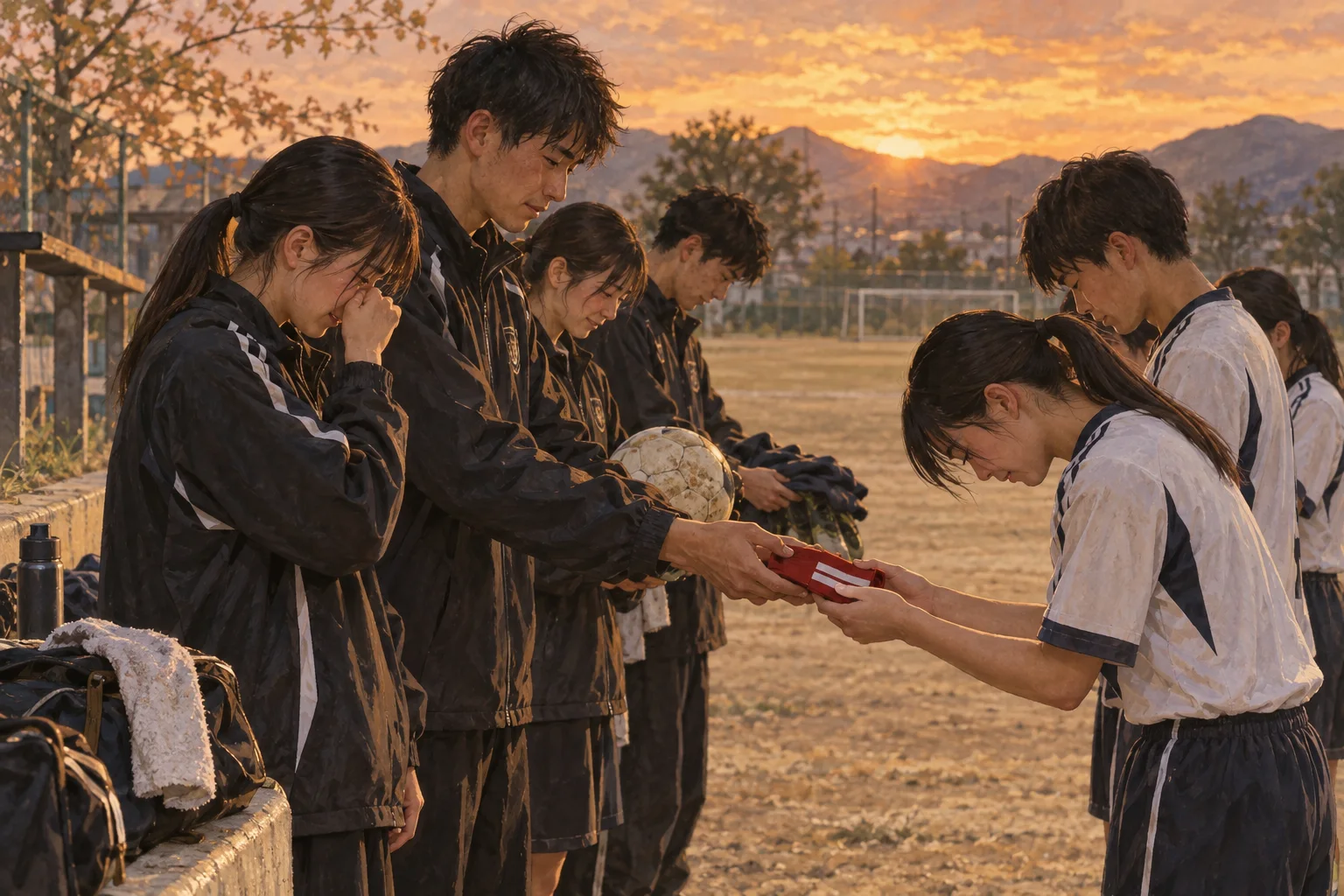
In one line
The shortest answer that works
Bukatsu no intai, or club retirement, is leaving your school club when your final tournament ends, usually in summer.
部活の引退とは、最後の大会が終わった日に部を去ることで、多くは夏です。
In 30 seconds
The standard explanation
School clubs run on a three-year cycle, and the oldest year group leaves together when their last competition finishes, whether they lose in the first round or make it to the nationals. The day is called intai, retirement, and for many students it is the sharpest emotional moment of school. After it, they hand the club to the year below and turn to entrance exams.
学校の部活動は三年の周期で回り、最上級生は最後の大会が終わったところで一斉に去ります。一回戦で負けても、全国大会まで勝ち進んでも、最後の試合が終われば同じです。その日を引退と呼び、多くの生徒にとって学校生活でいちばん胸に残る場面になります。そのあとは部を下の学年に引き継ぎ、受験に向かいます。
As a short speech
A full paragraph you can read aloud
Bukatsu no intai is the moment a student leaves their school club, and it has a weight that is hard to convey to people who did not grow up with the system. Clubs meet almost every day, often before school and on weekends, and the membership runs in a strict three-year cycle. The last year group's involvement ends on a single day: the day their final tournament finishes.
If the team loses in the first round in July, that is the end, immediately, with no further practices. Players cry on the field, the younger members line up to thank them, and someone makes a short speech. The next week the third years stop coming and start studying for entrance exams, and the second years find themselves running the club.
What makes it so charged is the abruptness and the totality. Three years of daily effort end at a known moment, decided by a result rather than a date, and most people in Japan who did a club remember their own. It is one of the most common subjects in essays, songs and television drama about school for exactly this reason.
部活の引退とは、生徒が学校の部を去る瞬間のことで、この仕組みの中で育たなかった人には伝えにくい重さがあります。部はほぼ毎日活動し、朝や週末にも集まることが多く、部員は三年の周期で厳密に入れ替わります。最上級生の活動は、たった一日で終わります。最後の大会が終わった日です。
七月の一回戦で負ければ、そこで終わりです。その場で、次の練習はもうありません。選手はグラウンドで泣き、下級生が並んで礼を述べ、誰かが短く挨拶をします。翌週から三年生は来なくなり、受験の勉強に向かい、二年生は自分たちが部を動かしていることに気づきます。
これほど胸に迫るのは、断ち切られ方が急で、そして全部だからです。三年間の毎日の積み重ねが、日付ではなく結果によって決まる、はっきりした一点で終わります。部活をやった日本人の多くが、自分の引退を覚えています。学校を描いた作文や歌やドラマで、これがくり返し題材になるのは、まさにそのためです。
Questions people actually ask
And how to answer them.
Can you keep going after you retire?
Usually not in any formal sense. Some return to help coach or to practice informally, but they are no longer registered members and do not compete. The point of the cut-off is to hand the club over cleanly.
正式には、ふつう続けません。指導を手伝いに来たり、個人的に練習に来たりする人はいますが、もう部員ではなく、大会にも出ません。区切りを付けるのは、部をきれいに引き継ぐためです。
Why does it coincide with exams?
Largely, yes. In most sports the last big tournament falls in summer, which leaves the final year group about half a year to prepare for entrance exams, and many students describe the switch as sudden and difficult.
おおむねそうです。多くの競技では最後の大きな大会が夏にあり、最上級生には受験まで半年ほどが残ります。この切り替えを、急で難しかったと語る生徒は多いです。
Is the system changing?
Yes. Concern about teachers' working hours and about excessive practice has led to caps on club hours and days off, and in some areas clubs are being moved from schools to community organizations.
変わりつつあります。教員の勤務時間と、練習の過剰さへの懸念から、活動時間の上限や休養日が設けられました。地域によっては、部活動を学校から地域の団体へ移す動きも進んでいます。
Phrases you can use
- The third years retire after the summer tournament.三年生は夏の大会で引退します。
- That was our last match.あれが最後の試合でした。
- Thank you for everything these three years.三年間、ありがとうございました。
- The club is yours now.これからは君たちの部です。
- He is studying for entrance exams now.今は受験勉強をしています。
Words you need
- to retire from a club引退する
- a tournament大会
- a year group学年
- to hand over引き継ぐ
- a farewell送別
Watch
From YouTubeBackground (Japanese)
運動部では、夏の大会が最後の舞台になることが多く、高校野球の地方大会もその一つです。文化部では、コンクールや文化祭が区切りになります。引退の日には、下級生から色紙や花を贈る習わしのある学校も多いです。引退後も、指導の手伝いに来る卒業生を中心に、先輩と後輩の関係は続きます。近年は、教員の負担と生徒の休養を考えて、活動時間の上限や休養日を定める指針が示され、地域のクラブへ移していく取り組みも各地で進んでいます。