bunkasai
the school culture festival
文化祭(ぶんかさい)
In one line
The shortest answer that works
Bunkasai is the annual school festival where each class runs its own stall, performance or exhibition.
文化祭とは、クラスごとに模擬店や公演、展示を行う、学校の年に一度の祭りです。
In 30 seconds
The standard explanation
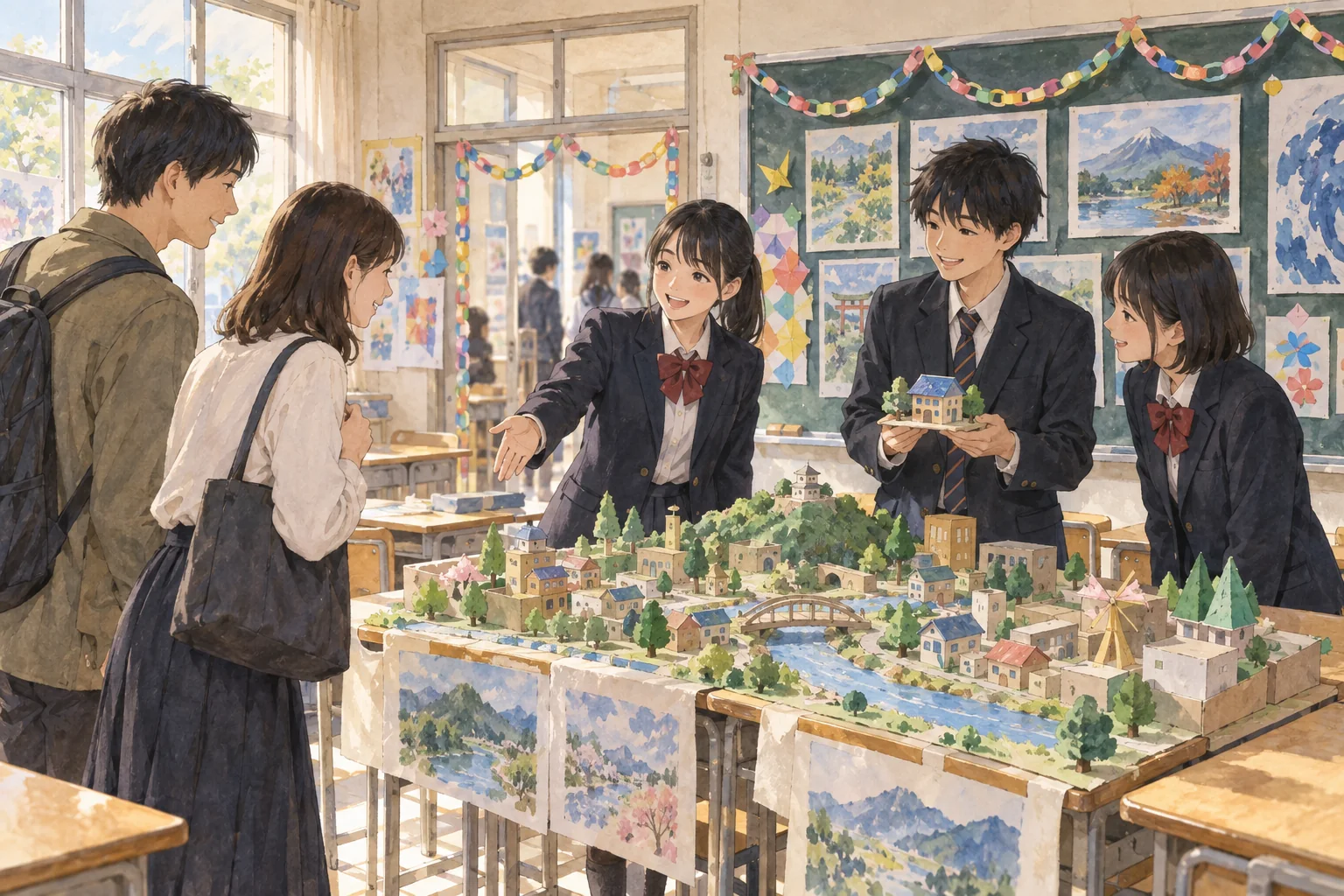
Once a year, usually in autumn, a Japanese school opens to the public for a culture festival. Each class decides what to do and does it: a cafe, a haunted house, a play, an exhibition. Clubs perform. Students plan, build and run everything themselves over weeks of preparation, and families and neighbors come to look.
年に一度、たいてい秋に、日本の学校は文化祭で一般に開放されます。クラスごとに何をするか決めて、自分たちでやります。喫茶店、お化け屋敷、劇、展示。部活も発表します。生徒が何週間もかけて企画し、作り、運営し、家族や近所の人が見に来ます。
As a short speech
A full paragraph you can read aloud
The bunkasai is a school culture festival held once a year, usually over a weekend in autumn, and the school opens its doors to families and the public. What makes it distinctive is that the students run it.
Each class decides on a project and executes it: a cafe in the classroom, a haunted house built out of cardboard and black garbage bags, a play, a research exhibition. Clubs give performances. Preparation takes weeks, happens after school, and generates a genuine amount of conflict and cooperation, which is arguably the point.
If you know this only from anime, the depiction is accurate: the classroom cafe, the last-minute painting, the arguments over who does what, the strange melancholy of taking it all down afterwards. Ask a Japanese adult what they remember from high school, and there is a good chance the answer will be a bunkasai rather than a lesson.
文化祭は年に一度の学校の祭りで、たいてい秋の週末に行われ、学校が家族や一般に開放されます。特徴は、生徒が運営することです。クラスごとに企画を決めて実行します。教室の喫茶店、段ボールと黒いごみ袋で作るお化け屋敷、劇、調べたことの展示。
部活は発表をします。準備は何週間もかかり、放課後に行われ、それなりの量の衝突と協力を生みます。おそらくそこが眼目です。アニメでしか知らない方へ言うと、描写は正確です。
教室の喫茶店、間際の塗装、誰が何をやるかの言い合い、そして終わったあとに片づける妙な寂しさ。日本の大人に高校で覚えていることを聞けば、授業ではなく文化祭が返ってくる可能性は、かなり高いです。
Questions people actually ask
And how to answer them.
Can outsiders go?
Usually yes, at least on one of the days. Some schools require a ticket from a student or advance registration, and policies tightened after security concerns. Check the school's website.
たいてい入れます。少なくとも一日は公開されます。生徒からの入場券や事前登録が必要な学校もあり、安全面の懸念から手続きが厳しくなりました。学校のサイトを確認してください。
Do they really cook and sell food?
Within limits. Health rules restrict what students can prepare, so many stalls sell pre-packaged or simple items, and full cooking is often reserved for approved setups.
制限つきです。衛生の規則で調理できるものが限られるため、包装済みや簡単なものを売る店が多く、本格的な調理は許可された設備に限られます。
What is a taiikusai?
The sports festival, a separate event held in a different season. Culture festival and sports festival are the two big student-run events of the Japanese school year.
体育祭です。別の季節に行われる、別の行事です。文化祭と体育祭が、日本の学校の生徒主導の二大行事です。
Phrases you can use
- Each class runs its own project.クラスごとに出し物をします。
- The students plan and run all of it.企画も運営も、すべて生徒がやります。
- Preparation takes weeks after school.準備は放課後に何週間もかけます。
- Families and neighbors come to look.家族や近所の人が見に来ます。
- The anime version is actually pretty accurate.アニメの描写は、けっこう正確です。
Words you need
- festival祭り、文化祭
- stall / booth模擬店
- performance公演、発表
- set up / take down設営する/撤収する
- open to the public一般公開の
Watch
From YouTubeBackground (Japanese)
文化祭は学習指導要領の「特別活動」に位置づけられ、学校行事のうち「文化的行事」にあたる。開催時期は秋が多いが、学校によっては春や夏に行う。高校では生徒会や実行委員会が中心となって運営し、テーマやポスターを公募することも多い。近年は近隣への配慮や安全確保のため、入場を関係者に限る学校が増えている。大学の学園祭は規模が大きく、芸能人を招くステージや模擬店が並び、一般客が数万人規模で訪れる大学もある。なお、文化祭の翌日に代休が設定されることが多い。