rinkan-gakko
a short class trip to the mountains or coast built around group living and outdoor activities
林間学校(りんかんがっこう)
In one line
The shortest answer that works
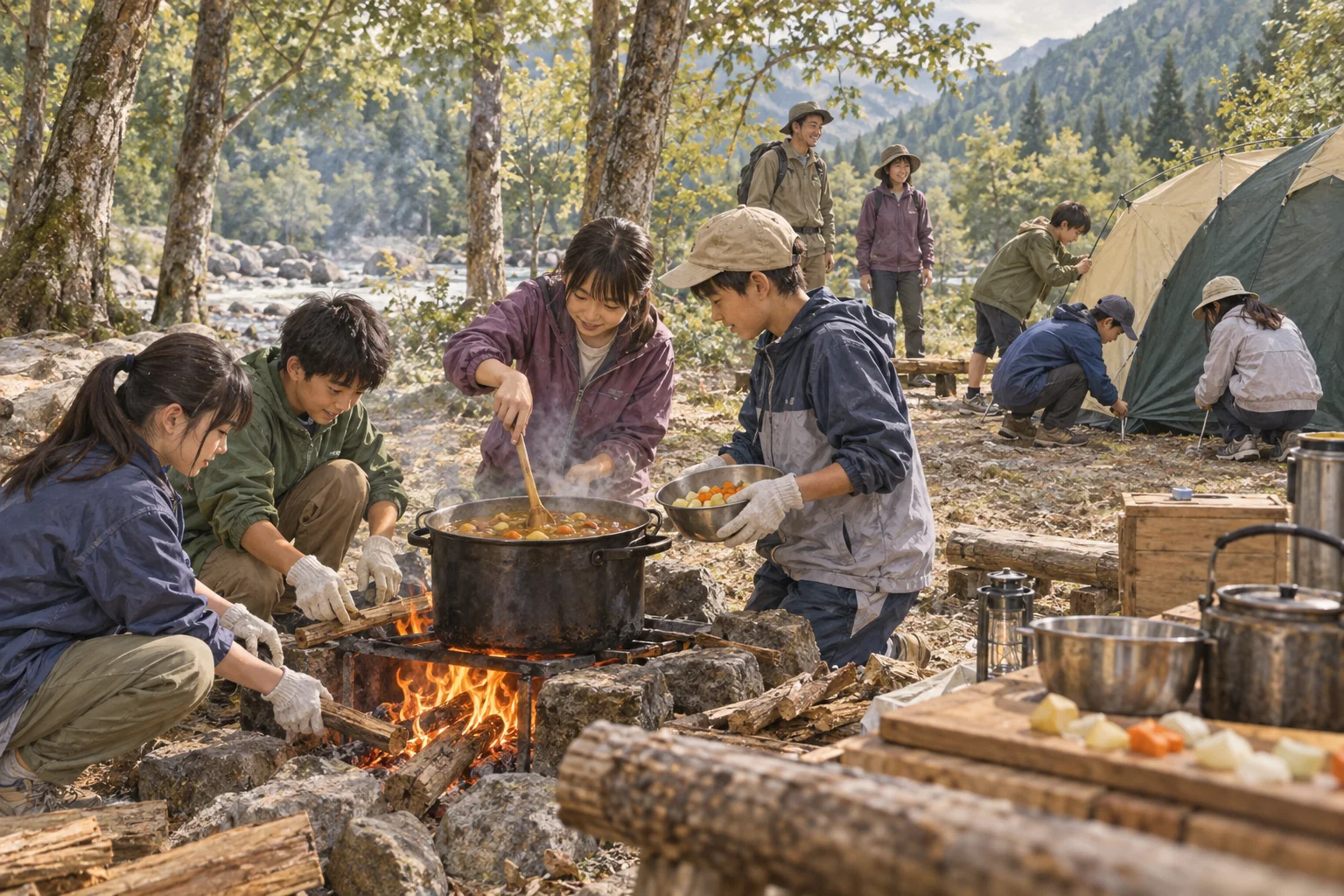
Rinkan-gakko is a short class trip to the mountains built around campfires, hiking and living together as a group.
林間学校とは、山で数日を過ごし、キャンプファイヤーや登山、集団生活を経験する学校行事です。
In 30 seconds
The standard explanation
Rinkan-gakko is a multi-day school trip, usually for upper elementary or junior high students, held in the mountains and centered on outdoor activities and communal life rather than sightseeing. Students sleep in shared lodges, cook rice and curry over an open fire, hike, and gather around a campfire for songs and folk dance in the evening. A version held by the sea instead is called rinkai-gakko. Unlike the more famous shugaku-ryoko, which visits historic cities, the point here is nature and independence away from parents.
林間学校とは、主に小学校高学年や中学生を対象に、山で数日を過ごす学校行事で、観光ではなく野外活動と集団生活が中心です。宿舎に泊まり、野外の火でご飯を炊いてカレーを作り、登山をし、夜にはキャンプファイヤーを囲んで歌やフォークダンスを楽しみます。海辺で行う場合は臨海学校と呼ばれます。京都や奈良などの歴史ある町を訪れる修学旅行とは違い、ここでのねらいは自然と、親元を離れた自立です。
As a short speech
A full paragraph you can read aloud
Rinkan-gakko is easy to confuse with shugaku-ryoko, the bigger school trip students take later on, but the two are built around completely different goals. Shugaku-ryoko is mostly about sightseeing, often a multi-day visit to a historic city like Kyoto or Nara, or further afield to Okinawa. Rinkan-gakko, usually taken in the upper years of elementary school or in junior high, sends the whole class to a mountain lodge instead, where the schedule is built around hiking, cooking rice in metal mess tins called hango and curry in a pot over an open fire, and gathering around a campfire in the evening for songs and a folk dance that many Japanese adults can still half-remember decades later.
A version held on the coast instead of in the mountains is called rinkai-gakko, and adds swimming and beach activities to the same basic structure. Families usually pay a portion of the cost on top of what the school covers, and for many children, several nights away from their parents, sharing a room and chores with classmates, is their first real taste of living independently.
林間学校は、のちに経験するもっと大きな学校行事、修学旅行と混同されがちですが、二つはねらいがまったく違います。修学旅行はおおむね観光が中心で、多くは京都や奈良のような歴史ある町、あるいは沖縄などへの数日間の旅行です。一方、林間学校は主に小学校高学年か中学生のころに行われ、クラス全体で山の宿舎へ向かい、登山や、飯盒と呼ばれる金属の炊飯具でご飯を炊き、鍋でカレーを作ること、そして夜にキャンプファイヤーを囲んで歌い、多くの日本の大人が何十年たっても半分は覚えているフォークダンスを踊ることが日程の中心になります。
山ではなく海辺で行う場合は臨海学校と呼ばれ、同じような組み立てに水泳や砂浜での活動が加わります。費用は学校が負担する分に加えて家庭も一部を払うのがふつうで、多くの子どもにとって、親元を離れてクラスメートと部屋や家事を分け合う数日間は、初めての本格的な自立の経験になります。
Questions people actually ask
And how to answer them.
Is this the same as shugaku-ryoko?
No. Shugaku-ryoko is a longer, sightseeing-focused trip to a distant historic city, usually taken in the final year of elementary or junior high, while rinkan-gakko is shorter, nature-focused, and centered on group living rather than tourism.
いいえ、違います。修学旅行は、たいてい小学校や中学校の最終学年に行く、遠くの歴史ある町への観光中心の長めの旅行です。林間学校はもっと短く、自然と集団生活が中心で、観光が目的ではありません。
Do families have to pay for it?
Usually families cover part of the cost on top of whatever the school or local government subsidizes, and the fee is typically collected over several months rather than all at once.
たいていは、学校や自治体が補助する分に加えて家庭が一部を負担します。費用は一度に集めるのではなく、数か月かけて分割で集められるのが一般的です。
What happens if it's held by the sea instead of the mountains?
It's usually called rinkai-gakko instead, keeping the same idea of group living and outdoor activity but adding swimming lessons and beach-based activities in place of hiking.
その場合はたいてい臨海学校と呼ばれ、集団生活と野外活動という基本の考え方は同じですが、登山の代わりに水泳の指導や砂浜での活動が加わります。
Phrases you can use
- We're going to rinkan-gakko next month.来月、林間学校に行きます。
- We cooked rice in a hango and made curry over the fire.飯盒でご飯を炊いて、カレーを作りました。
- There's a campfire with songs and folk dance at night.夜はキャンプファイヤーで歌とフォークダンスをします。
- It's not sightseeing like shugaku-ryoko.修学旅行のような観光ではありません。
- We slept in a shared lodge for three nights.3泊、みんなで宿舎に泊まりました。
Words you need
- mountain lodge山の宿舎
- mess tin for cooking rice飯盒
- campfireキャンプファイヤー
- folk danceフォークダンス
- seaside version of the same trip臨海学校
Watch
From YouTubeBackground (Japanese)
林間学校は、避暑や体力づくりを兼ねた野外教育の行事として広まったとされ、海辺で行う場合は臨海学校と呼ばれる。定番の飯盒炊爨とキャンプファイヤーでのフォークダンスは、学校や地域によって内容の差はあるものの、長く受け継がれてきた組み合わせである。観光地を巡る修学旅行と違い、宿舎での役割分担や協力を通じて集団生活を学ぶことに重きが置かれ、親元を離れて数日過ごす初めての機会になる子どもも多い。