takushi no jido doa
the door that opens by itself
タクシーの自動ドア(たくしーのじどうどあ)
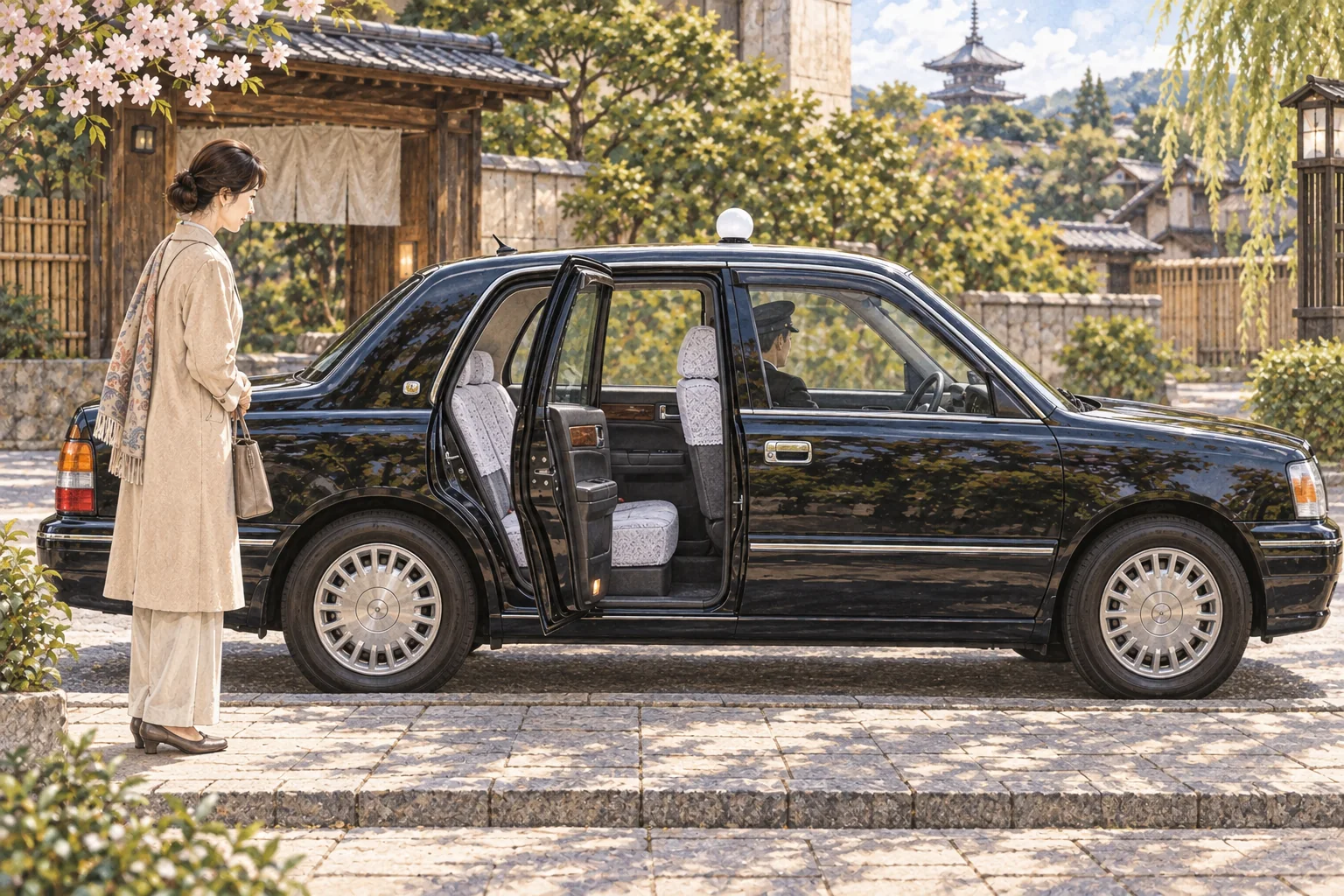
In one line
The shortest answer that works
Japanese taxi rear doors are opened and closed by the driver, so passengers should not touch them.
日本のタクシーの後部のドアは運転手が開閉するので、客は手を触れません。
In 30 seconds
The standard explanation
The rear passenger door of a Japanese taxi is operated by the driver, usually with a lever or a switch, not by you. Wait for it to open, get in, and do not pull it shut behind you. Forcing it by hand can damage the mechanism, and drivers will tell you so.
日本のタクシーの後部座席のドアは、客が操作するものではなく、運転手がレバーやスイッチで開閉します。開くのを待って乗り、降りたあとも自分で閉めません。手で無理に動かすと機構を傷めることがあり、運転手に注意されます。
As a short speech
A full paragraph you can read aloud
The first thing that surprises a visitor taking a taxi in Japan is that the rear door opens on its own as the car stops. It is not automatic in the sense of a sensor; in many taxis the driver pulls a lever connected to the door by a linkage, which is why it opens with a slightly mechanical sweep, and newer tall models have a sliding door the driver opens with a switch.
This means three things for you. Do not reach for the handle, because you will be fighting the mechanism. Do not slam it shut when you get out, because the driver will close it. And stand clear when the taxi pulls up, since the door swings out toward the sidewalk.
Only the rear left door works this way; the front passenger door is normal and is rarely used. While you are in there, a few other things differ: the seats often have white lace covers, many drivers wear gloves, many taxis now take cards and IC cards, and there is no tipping at all.
日本でタクシーに乗って最初に驚くのは、車が止まると後ろのドアがひとりでに開くことです。感知器で動く意味の自動ではありません。多くの車では運転手がドアにつながったレバーを引いていて、だからやや機械的な動きで開きます。背の高い新しい車種では、運転手がスイッチで開けるスライドドアです。
ここから三つのことが出てきます。取っ手に手を伸ばさないこと。機構と力比べをすることになります。降りるときに勢いよく閉めないこと。運転手が閉めます。そしてタクシーが止まるときは少し離れて立つこと。ドアは歩道側へ開きます。
この仕組みで動くのは後ろの左のドアだけで、助手席のドアはふつうの扉で、使われることはあまりありません。乗っている間にも違うところがあります。座席には白いレースの覆いがかかっていることが多く、手袋をした運転手も多く、今は多くのタクシーでカードや交通系ICカードが使え、チップはまったく不要です。
Questions people actually ask
And how to answer them.
So I should not touch the door at all?
Correct. Wait for it to open, get in, and when you arrive wait a moment after paying; the driver will open it again. If you are in a hurry and reach for it, you may hear a polite but firm request not to.
そのとおりです。開くのを待って乗り、着いたら支払いのあと少し待ってください。運転手がまた開けてくれます。急いで手を伸ばすと、ていねいですがはっきりした声で止められることがあります。
How do I pay?
In big cities, most taxis take cash, credit cards and transport IC cards, and many take QR payment. Say the destination or show it on a map, and there is no tip. A receipt is given automatically or on request.
都市部では、ほとんどのタクシーが現金、クレジットカード、交通系ICカードに対応し、コード決済が使える車も多くあります。行き先は口で言うか地図を見せてください。チップは不要です。領収書は自動で、または頼めば出ます。
Phrases you can use
- The driver opens the door.ドアは運転手が開けます。
- Please don't touch the handle.取っ手には触らないでください。
- Stand back while it opens.開くまで少し下がってください。
- There's no tipping in Japan.日本にチップはありません。
Words you need
- rear door後部のドア
- leverレバー
- fare運賃
- receipt領収書
Watch
From YouTubeBackground (Japanese)
タクシーの自動ドアは、運転手がレバーを操作して開閉する仕組みで、日本では1964年の東京オリンピックのころに広まったとされます。開くのは後部の左側のドアだけです。客が自分で閉めると機構に負担がかかるため、運転手が閉めるまで待つのが作法です。車内の白いレースの覆いはシートカバーで、清潔さを示す意味があるとされます。近年は配車アプリで呼ぶ人も増えています。