Aritayaki to Imariyaki
Japan's first porcelain, and the export port that gave it a second name in the West
有田焼と伊万里焼(ありたやきといまりやき)
In one line
The shortest answer that works
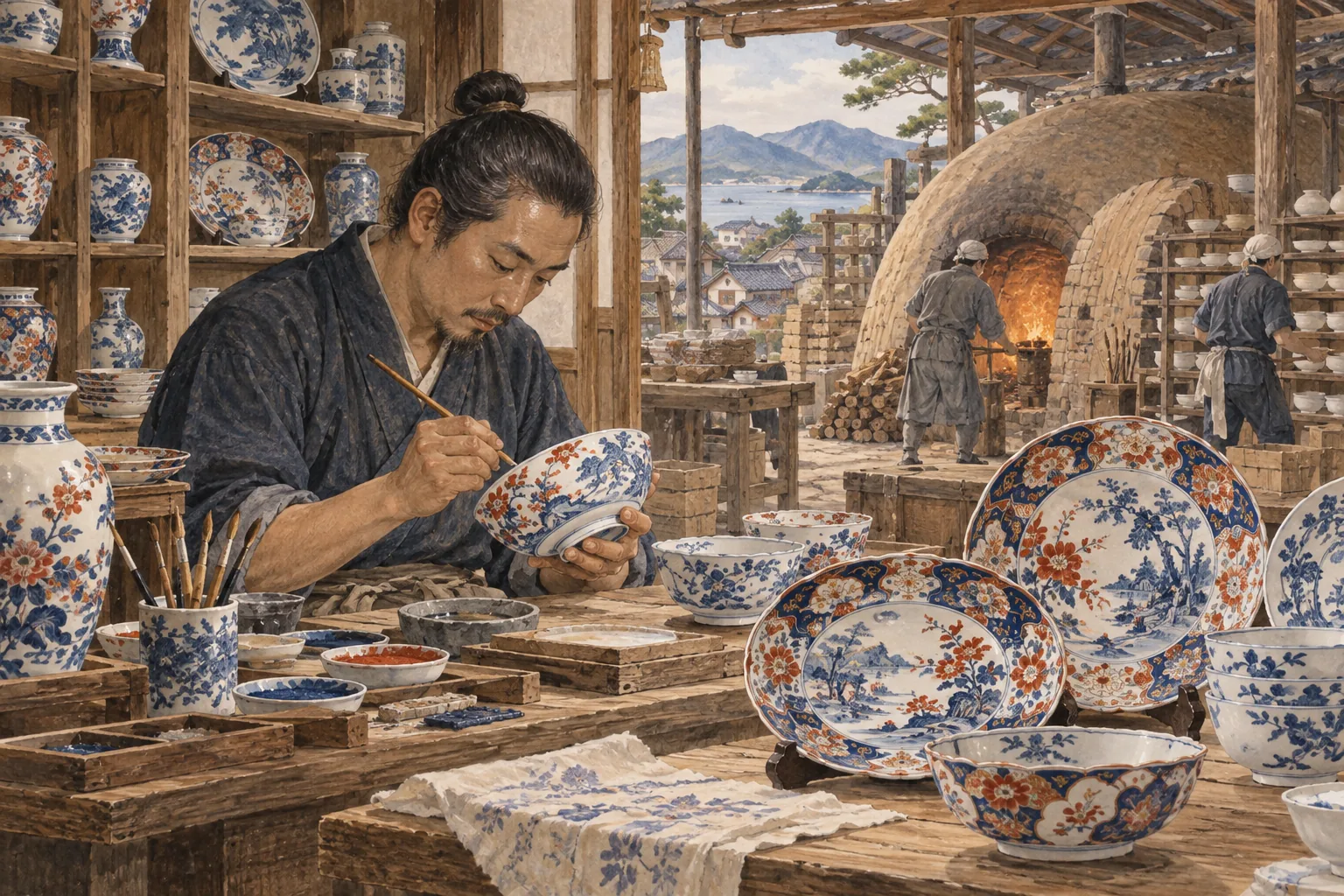
Aritayaki to Imariyaki, Arita and Imari ware, are largely the same porcelain, named after its kiln town and shipping port.
有田焼と伊万里焼とは、ほぼ同じ磁器を、作られた町と積み出された港のそれぞれの名で呼んだものです。
In 30 seconds
The standard explanation
Arita ware takes its name from Arita, a town in Saga Prefecture where a Korean potter is said to have discovered porcelain stone around 1616, making it the birthplace of Japanese porcelain. Because Arita has no port of its own, finished pieces were carried to nearby Imari to be shipped out, and from the 1650s the Dutch East India Company exported huge quantities from there to Europe. Buyers there, and in Japan too, called it Imari ware after the port it came from. Today both names are used, sometimes interchangeably and sometimes to distinguish antique export pieces from ware still produced in Arita.
有田焼という名前は、佐賀県の町、有田に由来し、1616年ごろに朝鮮半島出身の陶工が磁器の原料となる石を発見したとされ、日本の磁器発祥の地とされています。有田には港がなかったため、完成した器は近くの伊万里まで運ばれて積み出され、1650年代からはオランダ東インド会社がここから大量にヨーロッパへ輸出しました。ヨーロッパでも日本国内でも、買い手は積出港の名にちなんで「伊万里焼」と呼んだのです。今日では両方の名前が使われており、同じ意味で使われることもあれば、有田で今も作られている焼き物と、輸出された古い伊万里焼を区別するために使い分けられることもあります。
As a short speech
A full paragraph you can read aloud
Ask a porcelain collector why the same style of ware carries two different names, Arita and Imari, and the answer is really about geography and marketing. Arita, a small town in Saga Prefecture, is where Japan's first porcelain was actually made, after a potter traditionally identified as Yi Sam-pyeong, a Korean craftsman working under the Nabeshima domain, is said to have found porcelain stone there around 1616. Arita itself sat inland, though, so finished pieces traveled to the nearby port of Imari to be loaded onto ships.
From the 1650s, the Dutch East India Company carried enormous quantities out through that port to Europe, and European buyers, knowing it by the port it came from, called it all Imari ware, as buyers in Japan also did, a name that stuck in the West for two centuries even as production stayed centered in Arita. The distinction still matters to specialists, though most people today use the two names interchangeably.
陶磁器の収集家に、なぜ同じ様式の焼き物が有田焼と伊万里焼という二つの名前を持つのか尋ねると、答えは地理と売り方に関わる話になります。佐賀県の小さな町、有田は実際に日本で最初の磁器が作られた場所で、伝承では李参平という、鍋島藩に仕えた朝鮮出身の陶工が1616年ごろにこの地で磁器の原料となる石を発見したとされています。
しかし有田自体は内陸にあったため、完成した器は積み出しのために近くの港町、伊万里まで運ばれました。1650年代からオランダ東インド会社がこの港を通じて大量にヨーロッパへ運び出し、ヨーロッパの買い手は、国内の買い手と同じく、積出港の名でそれをまとめて「伊万里焼」と呼ぶようになりました。
生産の中心は有田にあり続けたにもかかわらず、この呼び名は西洋で二世紀にわたって定着しました。今日でもこの区別は専門家にとって意味を持ちますが、多くの人はこの二つの名前をほぼ同じ意味で使っています。
Questions people actually ask
And how to answer them.
So is Imari ware fake or lower quality than Arita ware?
No — historically it's the same porcelain, just named for the export port rather than the production town, though in the antiques market 'Imari' sometimes specifically refers to older export pieces with a particular red-and-gold color style rather than modern Arita production.
いいえ、歴史的には同じ磁器で、生産地ではなく積み出した港にちなんで呼ばれているだけです。ただし骨董品市場では、「伊万里」という言葉が、現代の有田の製品ではなく、特有の赤と金の色使いを持つ古い輸出向けの器を指して使われることもあります。
Who is credited with starting porcelain production in Arita?
Tradition credits a Korean potter given the Japanese name Kanagae Sanbei, more widely known as Yi Sam-pyeong, though as with many origin stories from this period, some details rest on local tradition rather than fully documented record.
伝承では、金ヶ江三兵衛という日本名を与えられた、李参平としてより広く知られる朝鮮出身の陶工が始めたとされています。ただしこの時代の起源にまつわる話の多くがそうであるように、細部は完全に記録された史実というより、地元の言い伝えに基づく部分もあります。
Why did European buyers want this porcelain so much?
European kilns hadn't yet worked out how to make true hard porcelain themselves, so Arita's colorful, durable ware filled a gap the market badly wanted, and it's said to have influenced European ceramics, including early Meissen porcelain designs, once European workshops caught up.
当時のヨーロッパの窯では、まだ本格的な硬質磁器の作り方を自力で確立できておらず、有田の色鮮やかで丈夫な焼き物は市場が強く求めていた空白を埋めました。ヨーロッパの工房が追いつくと、有田の焼き物はヨーロッパの陶磁器、初期のマイセン磁器のデザインにまで影響を与えたとされています。
A common misunderstanding
MYTHImari ware and Arita ware are two different types of pottery from different regions.
FACTThey're historically the same porcelain tradition — Arita is where it was made, and Imari was simply the nearby port it was shipped out from, a distinction of geography rather than two separate crafts.
Phrases you can use
- This piece is Arita ware, sometimes called Imari.この器は有田焼で、伊万里焼と呼ばれることもあります。
- Porcelain was first made in Japan here, in Arita.日本で最初に磁器が作られたのは、この有田です。
- Imari was the port it shipped out from, not where it was made.伊万里は作られた場所ではなく、積み出された港です。
- The colors and gold leaf are typical of old Imari export ware.この色使いと金の装飾は、古い輸出用の伊万里焼に典型的です。
- European collectors prized this porcelain for centuries.ヨーロッパの収集家は何世紀もこの磁器を珍重しました。
Words you need
- porcelain磁器
- porcelain stone陶石
- export port積出港
- kiln窯
- underglaze and overglaze decoration染付・上絵付け
Watch
From YouTubeBackground (Japanese)
有田焼は、佐賀藩の保護のもとで発展した磁器で、朝鮮出身の陶工・李参平が1616年ごろ有田泉山で磁器の原料となる陶石を発見したのが始まりとされる。内陸の有田には港がなかったため、製品は近くの伊万里港から積み出され、1650年代以降はオランダ東インド会社を通じて大量にヨーロッパへ輸出された。ヨーロッパでは積出港の名にちなみ「イマリ」の名で広く知られ、その赤・青・金を使った色絵は、ドイツのマイセン窯など後発のヨーロッパ磁器にも影響を与えたとされる。なお現在は、伊万里市の大川内山などで作られる焼き物を「伊万里焼」と呼ぶこともある。