ningen kokuho
a Living National Treasure, a state-certified master of a traditional art or craft
人間国宝(にんげんこくほう)
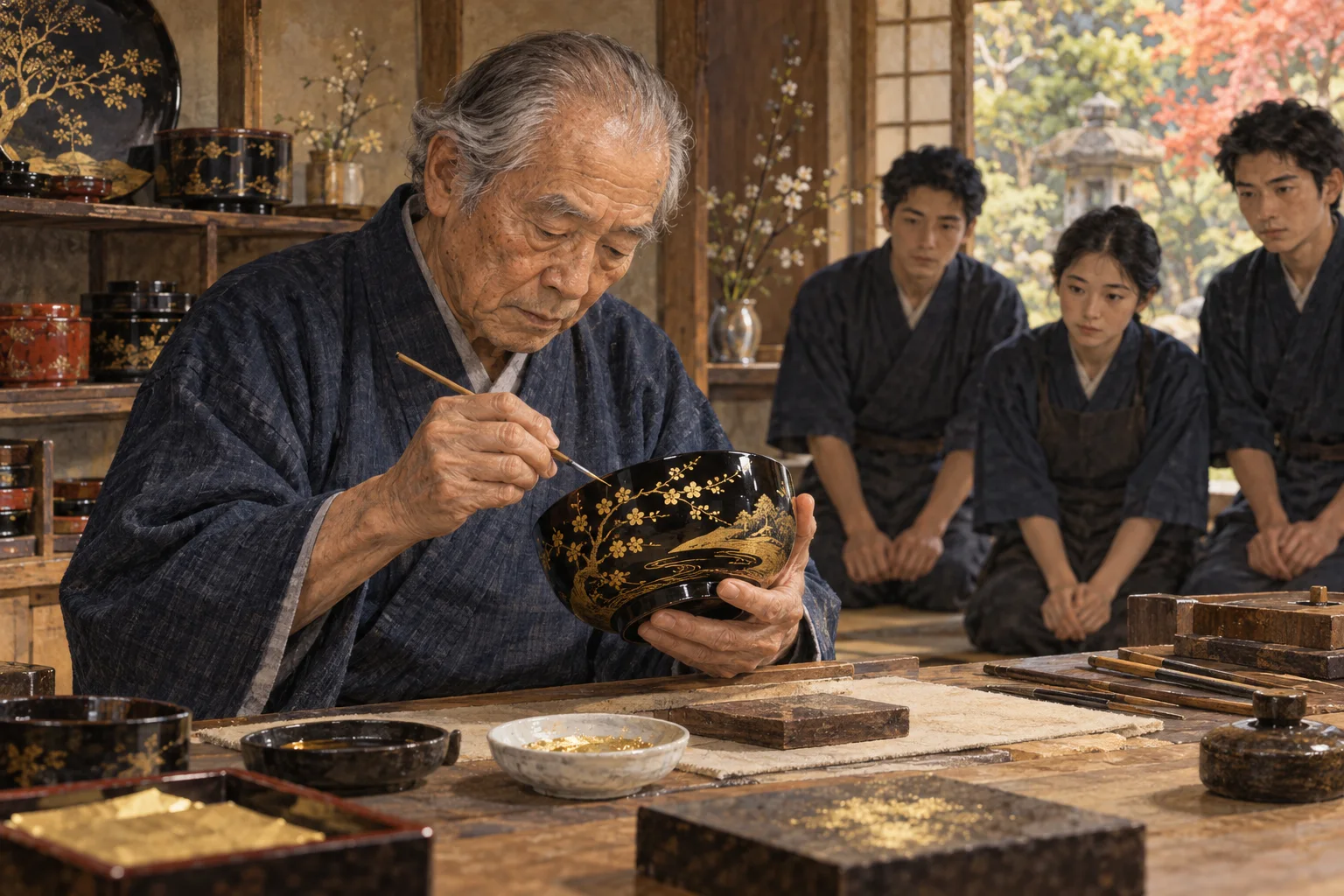
In one line
The shortest answer that works
Ningen kokuho, or a Living National Treasure, is a person the state certifies as holding an important traditional skill.
人間国宝とは、重要な伝統技術を保持していると国が認定した人のことです。
In 30 seconds
The standard explanation
Japan protects some cultural property that has no physical form — a way of weaving, a style of singing, a method of firing pottery. Since the skill exists only inside a person, the state certifies the person. The formal term is holder of an Important Intangible Cultural Property, and the nickname is Living National Treasure. Certified holders receive an annual grant intended to help them train successors.
日本には、形のない文化財を守る仕組みがあります。織りの技法、謡い方、焼き物の焼成法などです。その技は人の中にしか存在しないので、国はその人を認定します。正式には重要無形文化財保持者といい、通称が人間国宝です。認定されると、後継者を育てるための助成金が毎年支給されます。
As a short speech
A full paragraph you can read aloud
Japan has a category of cultural property that cannot be put in a museum, because it is not an object. It is a skill: how to dye with indigo, how to perform a certain role in noh, how to forge a blade. The law protects these as Important Intangible Cultural Properties, and since the skill lives only in a person, the state certifies individual people as holders.
In everyday Japanese they are called ningen kokuho, Living National Treasures. The first certifications were made in 1955, and they include potters, weavers, swordsmiths, noh and kabuki performers, and puppeteers. Two things surprise people.
First, the certification ends when the person dies, because what was protected was that person's skill. Second, the grant they receive is not a prize for past work. It is meant to support honing the skill and teaching the next generation, which is the part the whole system is really worried about.
日本には、博物館に置けない文化財の分類があります。物ではないからです。藍で染める技、能のある役の演じ方、刀を鍛える技。法律はこれを重要無形文化財として守り、その技は人の中にしかないので、国は個人を保持者として認定します。
日常の言葉では人間国宝と呼ばれます。最初の認定は1955年で、陶芸家、織物の作り手、刀工、能や歌舞伎の役者、人形遣いなどが含まれます。驚かれる点が2つあります。まず、認定は本人が亡くなれば終わります。
守られていたのはその人の技だからです。もうひとつ、支給されるお金は過去の業績への賞金ではありません。技を磨き、次の世代に教えるためのもので、この仕組みが本当に心配しているのはそこなのです。
Questions people actually ask
And how to answer them.
Is it like a knighthood or a lifetime achievement award?
Not quite. Those honor a person for what they have done. This certifies that a specific skill currently exists in that person and needs protecting. The money that comes with it is meant for refining the skill and passing it on.
少し違います。勲章や功労賞は、その人がしてきたことをたたえるものです。こちらは、ある技がいまその人の中にあり、守る必要があると認めるものです。付随するお金も、技を磨き、伝えるために使うものとされています。
Can a whole group be certified?
Yes. Besides individual holders, there are group certifications for arts that cannot be performed alone, and certifications for preservation groups. A local association that keeps a traditional weaving technique alive, for example, can be recognized that way.
できます。個人の認定のほかに、一人では成り立たない芸能のための総合認定や、保持団体の認定があります。たとえば、ある織物の技法を守る地元の保存会が認定されることがあります。
Does it mean their work is expensive?
Often, yes, but that is a side effect rather than the purpose. Some people point out a downside: if a master's work becomes a collector's item, ordinary people may stop using the craft, and the skill can lose its everyday market.
高くなることが多いですが、それは目的ではなく副作用です。問題を指摘する声もあります。作品が収集の対象になると、普通の人がその工芸を使わなくなり、技が日常の市場を失いかねないというものです。
A common misunderstanding
MYTHLiving National Treasure is a title for famous old artists.
FACTIt certifies a skill, not fame. The point is that the technique would disappear if that person stopped, so the state pays to have it taught to someone else.
Phrases you can use
- He's certified by the state as a Living National Treasure.その人は国から人間国宝に認定されています。
- What's protected is the skill, not the object.守られているのは物ではなく、技のほうです。
- The certification ends when the person dies.認定は、本人が亡くなると終わります。
- The grant is meant for training successors.助成金は、後継者を育てるためのものです。
- There are group certifications too, not just individuals.個人だけでなく、団体の認定もあります。
Words you need
- intangible cultural property無形文化財
- certify認定する
- successor後継者
- craftsman, artisan職人
- grant, subsidy助成金
Watch
From YouTubeBackground (Japanese)
制度の根拠は1954年の文化財保護法改正で、これにより重要無形文化財の指定と保持者の認定が法律に定められた。最初の認定は1955年2月に告示され、陶芸の濱田庄司や富本憲吉、漆芸の松田権六、能の喜多六平太らが含まれていた。人間国宝という呼び名は法律用語ではなく、報道から広まった通称である。分野は芸能と工芸技術に大きく分かれ、認定には個人認定のほか、複数人をまとめる総合認定、保持団体の認定がある。技そのものを守る仕組みのため、保持者が亡くなるとその認定は解除される。