shikki
lacquerware
漆器(しっき)
In one line
The shortest answer that works
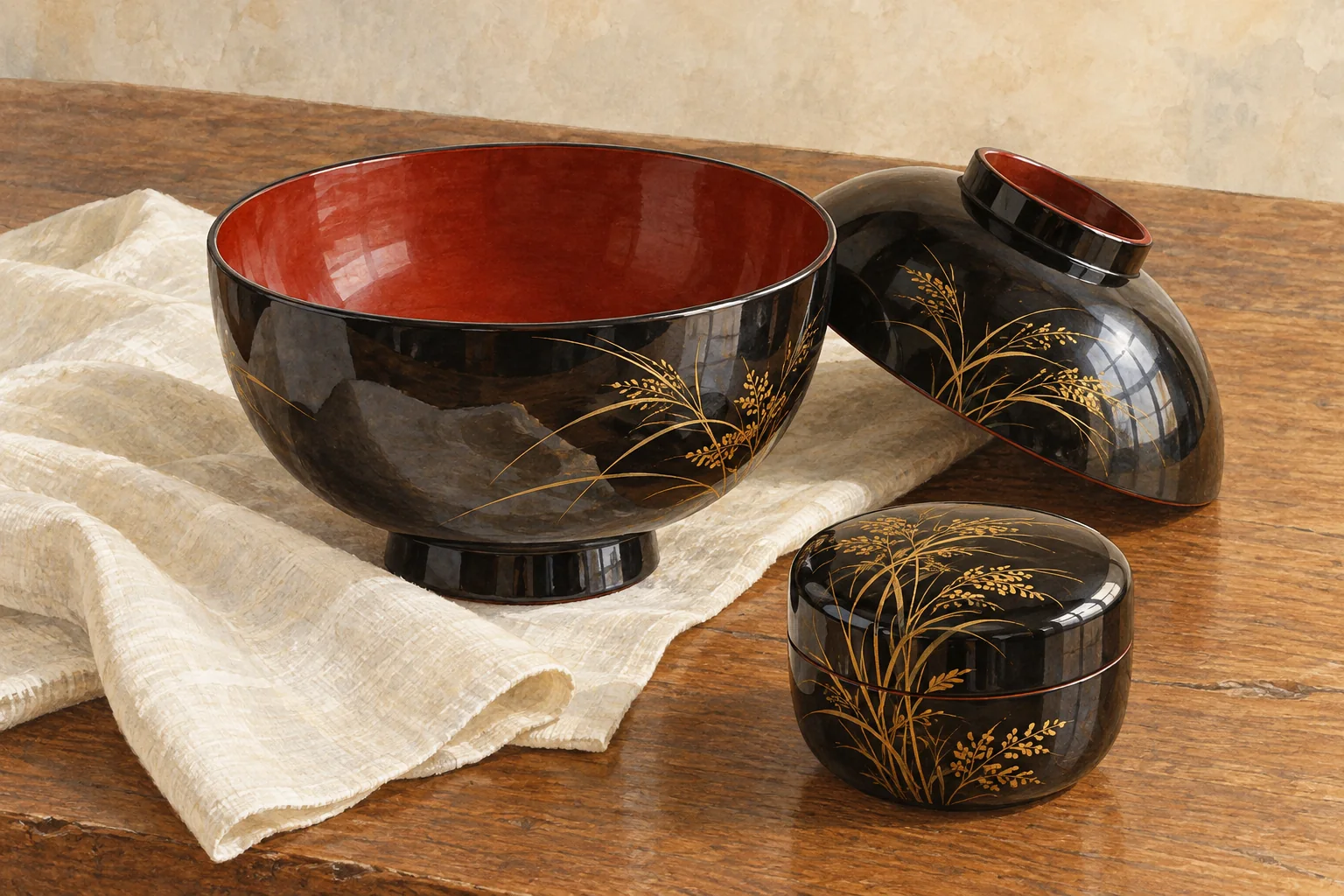
Shikki is Japanese lacquerware, made by applying many coats of urushi tree sap that hardens into a durable finish.
漆器とは、漆の木の樹液を何度も塗り重ねて硬い塗膜にする、日本の塗り物です。
In 30 seconds
The standard explanation
Lacquer is the sap of the urushi tree, applied to wood in many thin coats, each dried and polished before the next. The result is light, waterproof, heat-resistant and repairable. Japanese lacquerware was exported to Europe from the sixteenth century, and the English word japan was used for lacquer in the same way china means porcelain.
漆は漆の木の樹液で、木地に薄く何度も塗り、一層ごとに乾かして研いでから次を塗ります。できあがりは軽く、水に強く、熱にも耐え、直して使えます。日本の漆器は16世紀からヨーロッパへ輸出され、英語では china が磁器を指すのと同じように、japan が漆器を指す語として使われました。
As a short speech
A full paragraph you can read aloud
Lacquerware is one of the oldest crafts in Japan, and the English language records how highly it was valued. Just as china came to mean porcelain, the word japan was used in English for lacquer and lacquered goods. Lacquer is the sap of the urushi tree, collected by scoring the bark.
It is applied to a wooden base in very thin layers, sometimes dozens of them, and each layer must harden and be polished before the next goes on. Unusually, it hardens not by drying out but by absorbing moisture from the air, so it cures in a humid room.
The finished object is light, waterproof, resistant to heat and acid, and it can be repaired rather than discarded. That is also where kintsugi comes from, repairing broken pottery with lacquer mixed with gold. One warning: raw lacquer causes a serious skin reaction, and craftspeople build up tolerance over years.
漆器は日本で最も古い工芸のひとつで、それがどれほど高く評価されたかは英語に記録されています。china が磁器を意味するようになったのと同じく、英語では japan が漆と漆器を指す語として使われました。
漆は漆の木の樹液で、樹皮に傷をつけて採ります。木地にごく薄く、ときに何十層も塗り重ね、一層ごとに硬化させて研いでから次を塗ります。変わっているのは、乾いて固まるのではなく、空気中の水分を取り込んで硬化することです。
だから湿度の高い室で固めます。仕上がった器は軽く、水に強く、熱にも酸にも耐え、捨てずに直して使えます。割れた陶器を金を混ぜた漆で直す金継ぎも、ここから来ています。注意が一つ。生漆は強いかぶれを起こすため、職人は何年もかけて体を慣らします。
Questions people actually ask
And how to answer them.
How do I look after lacquerware?
Wash by hand in warm water with a soft sponge and dry immediately. No dishwasher, no abrasive cleaner, and avoid leaving it in direct sunlight for long periods.
ぬるま湯とやわらかいスポンジで手洗いし、すぐ拭きます。食洗機と研磨剤入りの洗剤は避け、直射日光に長く当てないようにします。
Why is it so expensive?
Time. A single piece can take months because of the number of coats and the drying between them, and decorated pieces with gold powder require a second specialist skill.
時間です。塗りの層の数と、そのあいだの乾燥のため、一つに何か月もかかります。金粉で装飾する蒔絵はさらに別の専門技術が要ります。
Is all of it black and red?
Those are the classic colors, because early pigments were limited. Other colors exist, and modern makers use a wider palette, but black and vermilion remain the signature combination.
その二色が定番なのは、古い時代に使えた顔料が限られていたからです。他の色もありますし、現代の作り手は色数を増やしていますが、黒と朱は今も代表的な組み合わせです。
Phrases you can use
- The English word japan used to mean lacquer.英語の japan はかつて漆器を意味しました。
- It hardens by absorbing moisture, not by drying.乾くのではなく、湿気を取り込んで固まります。
- Each coat is polished before the next goes on.一層ごとに研いでから、次を塗ります。
- Wash it by hand and dry it straight away.手洗いして、すぐ拭いてください。
- It can be repaired rather than thrown away.捨てずに、直して使えます。
Words you need
- lacquer漆
- sap樹液
- coat / layer塗りの層
- cure / harden硬化する
- inlay / gold decoration蒔絵、象嵌
Watch
From YouTubeBackground (Japanese)
日本での漆の使用は縄文時代にさかのぼり、北海道の垣ノ島遺跡からは約9千年前の漆製品が出土している。漆は空気中の水分を取り込み、酵素の働きで硬化するため、乾燥ではなく高湿度の「漆風呂」で固める。金粉や銀粉で文様を描く技法を蒔絵といい、平安時代に発展した。産地としては石川県の輪島塗、福島県の会津塗、青森県の津軽塗などが知られる。英語の japan が漆器を指す用法は17世紀以降の文献に見られ、japanning は西洋で漆器を模した塗装技法を指した。なお漆の主成分ウルシオールは接触皮膚炎を起こし、硬化後は安全だが、生漆の扱いには注意が要る。