tojiki
Japanese pottery and porcelain
陶磁器(とうじき)
In one line
The shortest answer that works
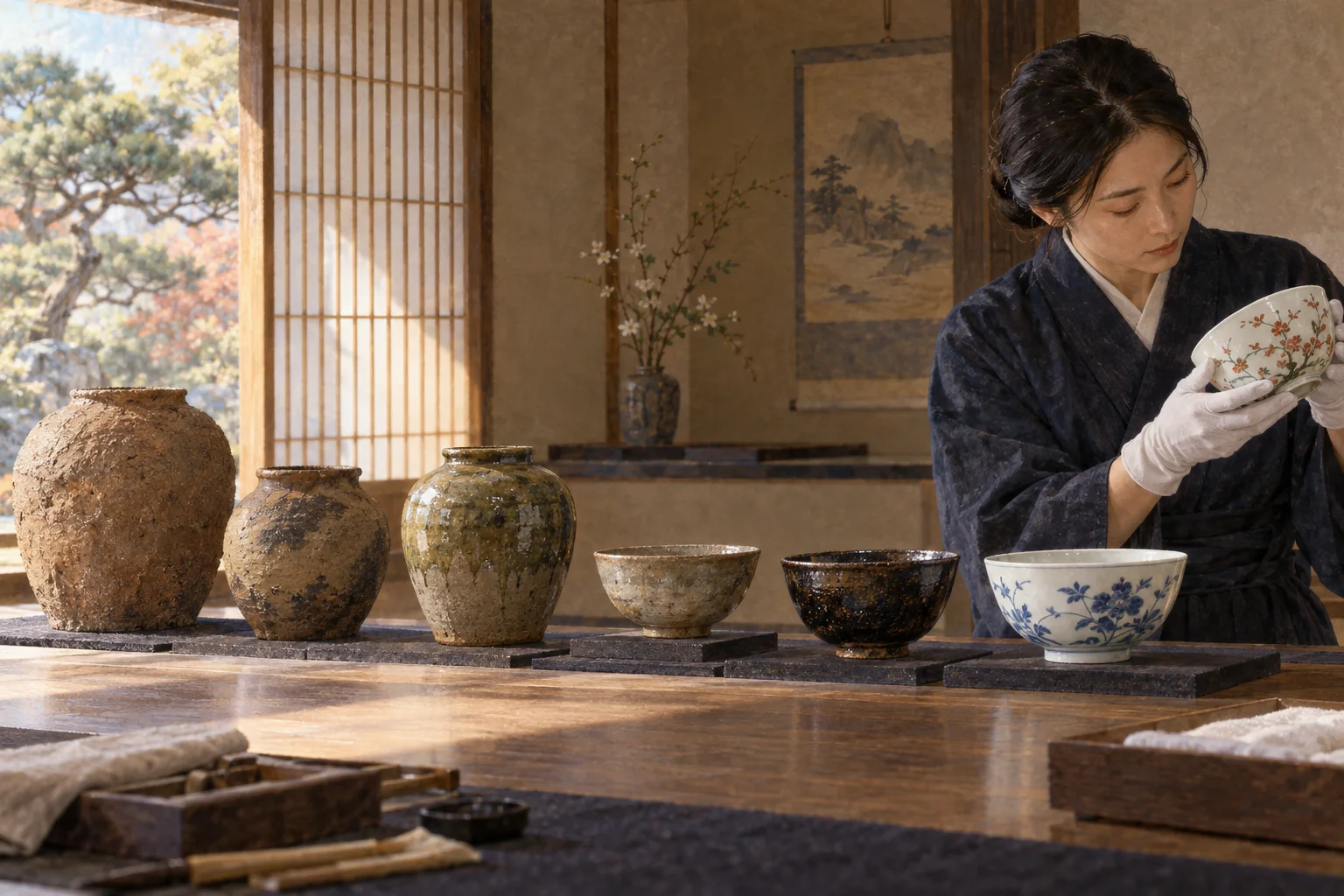
Tojiki covers both Japanese pottery and porcelain, which are different materials made in different regions.
陶磁器は日本の陶器と磁器の両方を指し、材料も産地も異なります。
In 30 seconds
The standard explanation
Pottery is made from clay, fired at a lower temperature, and is opaque and slightly porous. Porcelain is made from crushed stone, fired hotter, and is white, hard and translucent at the edges. Japan has dozens of named regional traditions, from the rough earthy wares favored in tea ceremony to the fine painted porcelain that was exported to Europe.
陶器は粘土から作り、低めの温度で焼き、不透明でわずかに吸水します。磁器は砕いた石から作り、高温で焼き、白く硬く、縁が光を透します。日本には各地の窯の伝統が数十あり、茶の湯で好まれた素朴な土ものから、ヨーロッパへ輸出された絵付けの磁器まで幅があります。
As a short speech
A full paragraph you can read aloud
Japanese ceramics divide into two things that are often confused. Pottery is made of clay, fired at a lower temperature, and comes out opaque, heavier and slightly porous, which is why it develops character with use. Porcelain is made from crushed stone, fired much hotter, and comes out white, hard and translucent at the rim.
Japan has dozens of regional traditions with their own names, and the taste in tea ceremony has long favored the rough end of the range: irregular, thick, visibly handmade. The history of porcelain here is tied to war.
Porcelain production began in Japan in the early seventeenth century in Arita, and the technique was established largely by Korean potters brought to Japan by force during the invasions of Korea in the 1590s. Within decades, Japanese porcelain was being exported to Europe in enormous quantities, partly because civil war had disrupted Chinese production.
日本のやきものは、しばしば混同される二つに分かれます。陶器は粘土から作り、低めの温度で焼きます。不透明で重く、わずかに水を吸うため、使ううちに味が出ます。磁器は砕いた石から作り、ずっと高い温度で焼きます。
白く硬く、縁が光を透します。日本には各地に名のついた窯の伝統が数十あり、茶の湯の好みは長く、素朴なほうに寄っていました。ゆがみがあり、厚く、手の跡が見えるもの。磁器の歴史は、戦争と結びついています。
日本での磁器の生産は17世紀初めに有田で始まりましたが、その技術は1590年代の朝鮮出兵で日本へ連れてこられた朝鮮の陶工たちによって確立された部分が大きいのです。それから数十年で日本の磁器は大量にヨーロッパへ輸出されました。中国で内乱が生産を止めていたことも、その背景にあります。
Questions people actually ask
And how to answer them.
How do I tell pottery from porcelain?
Hold it to a light: porcelain is translucent at the thin edges and rings when tapped. Pottery is opaque and gives a duller sound. Porcelain is also colder to the touch.
光にかざしてください。磁器は薄い縁が透け、叩くと澄んだ音がします。陶器は透けず、鈍い音です。磁器のほうが触れたとき冷たく感じます。
Why does tea ceremony prefer rough bowls?
It follows the wabi aesthetic: a plain, irregular bowl was valued over a flawless imported one. Sen no Rikyu's preference shaped this, and it is why deliberately uneven pieces are prized.
侘びの美意識に沿うためです。完璧な舶来の器より、素朴でゆがんだ器が尊ばれました。千利休の好みがこれを決定づけ、あえて不均一なものが高く評価される理由になっています。
Which regions should I know?
Arita and Imari for porcelain, Bizen and Shigaraki for unglazed high-fired pottery, Mashiko for folk craft, Kyoto for refined painted ware. Each has a different clay and a different look.
磁器なら有田・伊万里、釉薬を使わない焼き締めなら備前・信楽、民芸なら益子、洗練された絵付けなら京焼。土も見た目もそれぞれ違います。
Phrases you can use
- Pottery is clay; porcelain is stone.陶器は土、磁器は石です。
- Hold it up to the light to tell.光にかざすと分かります。
- Tea ceremony prefers the rough, irregular pieces.茶の湯では素朴でゆがんだ器が好まれます。
- Each region has its own clay and style.産地ごとに土も作風も違います。
- Japanese porcelain was exported to Europe from the 1600s.日本の磁器は1600年代からヨーロッパへ輸出されました。
Words you need
- pottery / earthenware陶器
- porcelain磁器
- kiln窯
- glaze釉薬
- fire (verb)焼く、焼成する
Watch
From YouTubeBackground (Japanese)
日本の磁器生産は1610年代、肥前有田で始まったとされ、朝鮮出兵で渡来した陶工・李参平が泉山で磁石鉱を発見したことが契機と伝えられる。製品は伊万里港から積み出されたため「伊万里焼」と呼ばれ、17世紀後半には中国の景徳鎮が内乱で生産を止めたことでオランダ東インド会社を通じ大量にヨーロッパへ輸出された。柿右衛門様式の白磁に赤絵の意匠は、ドイツのマイセンなどに模倣された。一方、備前焼や信楽焼は釉薬を使わず、灰が溶けてできる自然釉を景色とする。「六古窯」は瀬戸・常滑・越前・信楽・丹波・備前を指し、中世から続く窯として2017年に日本遺産に認定された。