 ワークシート
 ぬりえ
 迷路
美人画の歌麿が、虫の図鑑!?羽のすじまで見える細かさにびっくり。Utamaro, master of beauties, made an insect book!? Every wing vein is there.
 美術館アンテナ:喜多川歌麿の作品に会える展覧会
この作品のお話
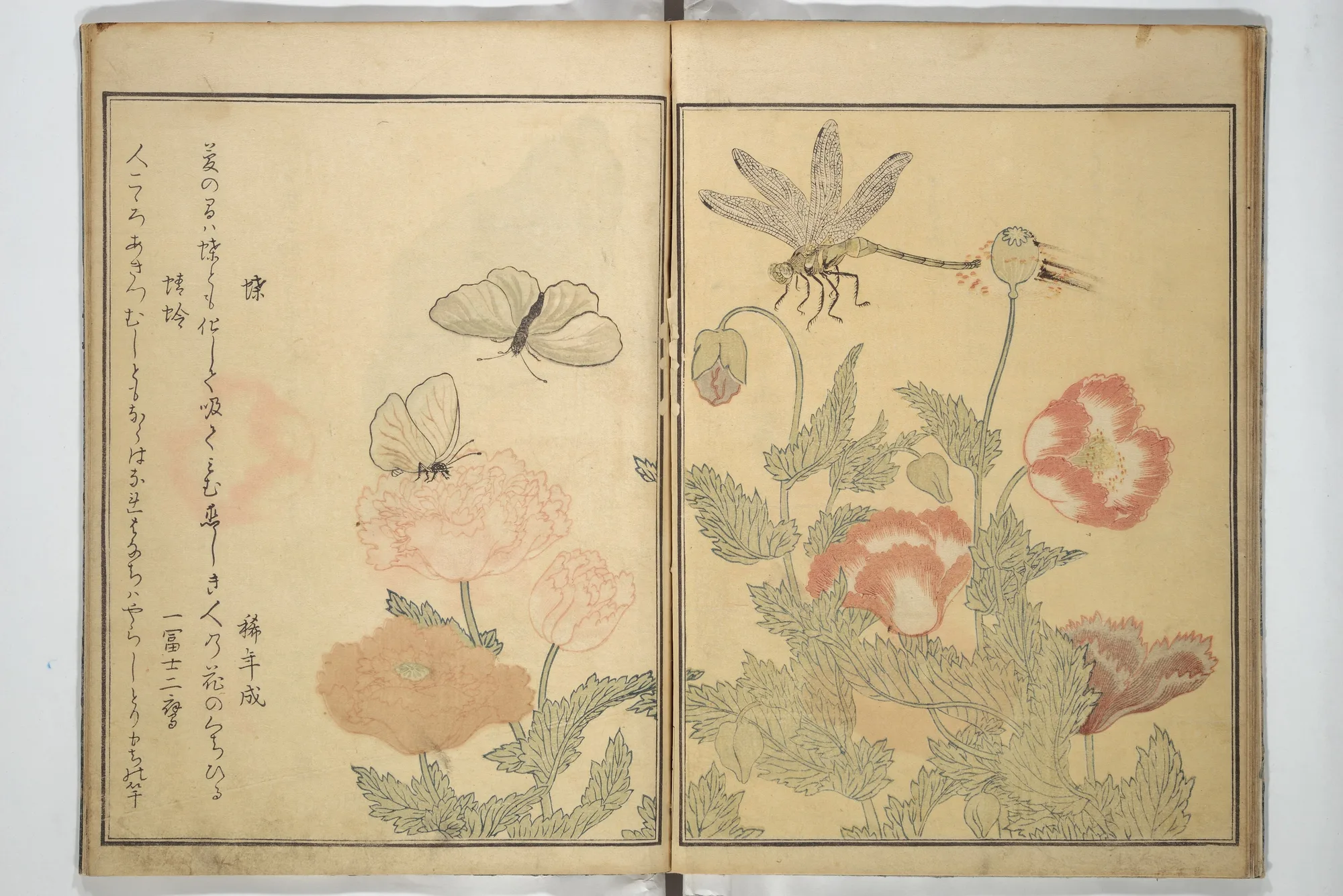
Story開いた本の右のページには、ケシの花と実、そのそばを飛ぶ一匹のトンボ。左のページには、花のまわりを舞う二匹のチョウと、くずした文字の歌が二首。喜多川歌麿が絵を描き、1788年に出版された絵本『画本虫撰(えほんむしえらみ)』の一場面です。美人画で有名になる前の歌麿が、虫や草花を細かく描いた作品として知られています。
On the right page of the open book, a dragonfly hovers near a poppy seed pod among poppy flowers. On the left page, two butterflies flutter around the flowers, next to two poems in flowing script. This is a page from Ehon mushi erami, a picture book illustrated by Kitagawa Utamaro and published in 1788. It shows the young Utamaro, before he became famous for pictures of beautiful women, drawing insects and plants in fine detail.
この本は、狂歌(きょうか)というユーモアのある短歌を作る人々が、虫をテーマに歌をよみ合った「歌合わせ」の本です。歌麿は虫と草花を見開きに一組ずつ描き、そこに狂歌がそえられています。版元は、のちに歌麿や写楽を世に送り出す蔦屋重三郎。トンボの羽のあみ目やチョウの触角まで、細い線で彫りと摺りの技がつくされています。
The book was made for a poetry contest. Writers of kyōka, funny short poems, wrote verses about insects. Utamaro drew a pair of creatures with plants on each spread, and the poems were added beside them. The publisher was Tsutaya Jūzaburō, who later made Utamaro and Sharaku famous. Fine lines show even the net of the dragonfly's wings and the butterflies' feelers, thanks to skilled carving and printing.
『画本虫撰』からは、美人画で有名になる前の歌麿が、すでに細かい観察の名人だったことがわかります。19世紀にはヨーロッパのコレクターにも高く評価されます。メトロポリタン美術館は、この2冊の本を所蔵しています。人物を描かなくても、歌麿の目のするどさがよくわかる一冊です。
Ehon mushi erami shows that Utamaro was already a master of close observation before he became famous for pictures of beautiful women. In the 19th century, European collectors also praised it highly. The Metropolitan Museum of Art owns these two volumes. Even without people, this book shows how sharp Utamaro's eyes were.
これは昔の絵本です。トンボがケシの近くを飛んでいます。二匹のチョウが花のそばを飛んでいます。歌麿の先生は、歌麿が子どものころから小さな生き物をよく観察していたと書いています。歌麿は羽の線を一本一本描いたのです!
This is an old picture book. A dragonfly flies near a poppy plant. Two butterflies fly by the flowers. Utamaro's teacher wrote that he watched small creatures closely as a child. Utamaro drew every line of the wings!
英語のレベルは上の「やさしい/ふつう」で切りかえられます。
えっ!?な裏ネタ
Secretsこの本の終わりには、歌麿の師・鳥山石燕が文章をよせています。そこには、歌麿が幼いころから小さな生き物をじっと観察するのが好きだったことが書かれています。子どものころの虫遊びが、この本で花開いたのです。
At the end of the book, Utamaro's teacher, Toriyama Sekien, wrote an afterword. He says that since childhood Utamaro loved watching small creatures closely. His childhood play with bugs bloomed in this book.
そえられた狂歌は、虫を題材にしながら、恋の気持ちをおもしろおかしくよんだものです。チョウの歌は恋しい人の花のようなくちびるを思い、トンボの歌は人の心がわりと別れを、ことば遊びで結びつけています。大人がくすっと笑う、しゃれた遊びの本でした。
The kyōka poems use insects to describe love in a funny way. The butterfly poem imagines a loved one's flower-like lips, and the dragonfly poem plays with words about a changing heart and parting. It was a stylish book that made adults smile.
左ページの歌の作者名をよく見ると「一富士二鷹」。初夢で縁起がいいとされる「一富士二鷹三茄子」からとったペンネームです。狂歌を作る人々は、こんなふざけた名前を名のって楽しんでいました。
Look at the poet's name on the left page: 'Ichi Fuji Ni Taka,' meaning 'First Fuji, Second Hawk.' It comes from a saying about lucky first dreams of the year: Fuji, a hawk and an eggplant. Kyōka poets enjoyed using silly pen names like this.
フランスの作家エドモン・ド・ゴンクールは1891年に歌麿についての本を書き、この虫の絵本もくわしく紹介したと言われます。美人画だけでなく、虫の絵でも、歌麿はヨーロッパの人々をおどろかせたのです。
The French writer Edmond de Goncourt wrote a book about Utamaro in 1891, and he is said to have described this insect book in detail. Not only with beautiful women but also with insects, Utamaro amazed people in Europe.
ここを見て!
Look Closer1トンボDragonfly
ケシの実のそばを飛ぶトンボ。すきとおった羽のあみ目まで細かく描かれています。
A dragonfly hovers near a poppy seed pod. Even the net pattern of its clear wings is drawn in detail.
2二匹のチョウTwo butterflies
花のまわりを舞う白っぽいチョウ。一匹は花にとまりかけています。
Pale butterflies flutter around the flowers. One is about to land on a flower.
3ケシの花Poppy flower
赤とピンクのケシの花。花びらのふちのギザギザまで表されています。
Red and pink poppies. Even the ragged edges of the petals are shown.
4作者名「一富士二鷹」Poet's name: 'Ichi Fuji Ni Taka'
狂歌の作者の名前。初夢の縁起物からとった、ユーモアのあるペンネームです。
The name of a kyōka poet, a funny pen name taken from a lucky New Year's saying.
英語で名画を語ろう
Talk about Art in EnglishA dragonfly is hovering near a poppy seed pod.
トンボがケシの実の近くで、空中にとどまっています。
💡 hover は、鳥や虫が空中のほぼ同じ場所にとどまる動き。ヘリコプターにも使います。
英語で説明すると… Describe it
これは開いた絵本です。右のページには、赤やピンクの花を咲かせたケシの近くを、トンボが飛んでいます。左のページでは、二匹のチョウが花の近くを飛んでいます。左には日本語の歌も二首あります。
This is an open picture book. On the right page, a dragonfly is hovering near a poppy plant with red and pink flowers. On the left page, two butterflies are flying near the flowers. There are also two poems in Japanese on the left.
考えてみよう Think & Talk
- 歌麿はなぜ、虫をこんなにていねいに描いたのだと思いますか?Why do you think Utamaro drew insects so carefully?
- 一つの生き物の絵本を作るなら、何を選びますか?If you made a picture book about one animal, which would you choose?
この作品の英単語
WordsA dragonfly is flying near a poppy seed pod.
トンボがケシの実の近くを飛んでいます。
Two butterflies fly around the poppies.
二匹のチョウがケシのまわりを飛んでいます。
Utamaro observed insects very closely.
歌麿は虫をとてもよく観察しました。
The wings look thin and delicate.
羽はうすくて繊細に見えます。
ミニクイズ
QuizQ. この本を出した版元(出版社)はだれ?Who published this book?
のちに歌麿や写楽を世に出した名プロデューサー・蔦屋重三郎です。
It was Tsutaya Jūzaburō, the famous producer who later made Utamaro and Sharaku stars.
ウソ?ホント? この本の歌は、虫をテーマにした狂歌だ。The poems in this book are funny kyōka about insects.
狂歌を作る人々が、虫を題材によみ合った歌がのっています。
Kyōka poets wrote verses about insects for the book.
ウソ?ホント? この本は、歌麿が美人画で大人気になったあとの晩年の作品だ。Utamaro made this book late in life, after his beauty prints made him famous.
1788年、美人画で大ブレイクする前の作品です。
It was made in 1788, before his beauty prints became big hits.
 画像の出典とライセンス / Image credit
- CC0MET 2013 852 a b a 07.jpg(Wikimedia Commons)
ライセンス:CC0(パブリックドメイン提供)/作者・撮影者の表記:Kitagawa Utamaro
この作品は、作者の死後長い年月がたち著作権の保護期間が終わった「パブリックドメイン」の作品です。画像は平面の作品を忠実に写したもので、新しい著作権は生じません(Wikimedia Commons の PD-Art の考え方)。 所蔵:メトロポリタン美術館(The Metropolitan Museum of Art)。画像は表示のために縮小・WebP 形式に変換しています。