 ワークシート
 ぬりえ
 迷路
江戸のトップアイドル3人!家紋でわかる、あの子はだれ?Three top idols of Edo! Their family crests tell you who's who.
 美術館アンテナ:喜多川歌麿の作品に会える展覧会
この作品のお話
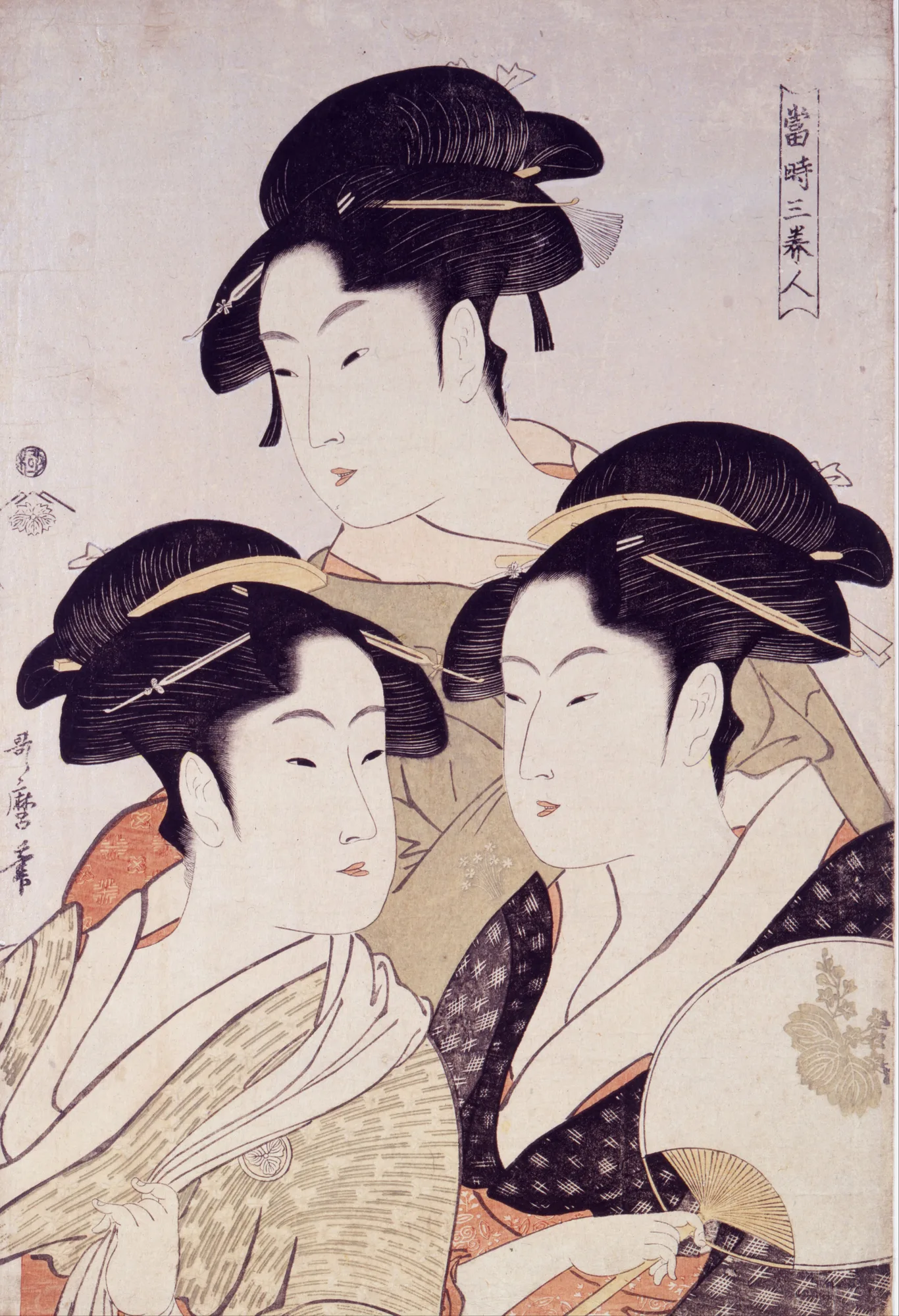
Story1793年ごろ、喜多川歌麿が描いた「当時三美人」です。当時の江戸で評判だった3人の町娘を、胸から上の大きな姿で描いています。上が芸者の富本豊雛(とみもと・とよひな)、右下が浅草の茶屋・難波屋のおきた、左下が両国の煎餅屋・高島屋のおひさです。画像の摺りはアメリカのトレド美術館の所蔵で、同じ図柄の摺りは東京国立博物館などにもあります。
Kitagawa Utamaro made this print around 1793. It shows three young women who were famous in Edo, drawn large from the chest up. At the top is Tomimoto Toyohina, a geisha. At the lower right is Okita from the Naniwaya teahouse in Asakusa. At the lower left is Ohisa from the Takashimaya rice-cracker shop in Ryōgoku. This impression is in the Toledo Museum of Art. Other prints of the same design are in places like the Tokyo National Museum.
版元(出版社)は、才能を見抜く名プロデューサー・蔦屋重三郎です。歌麿は顔をアップにした「大首絵(おおくびえ)」の美人画で大ヒットしました。背景には雲母(きら)という鉱物の粉を使い、光にあたるとほのかに輝きます。3人は同じような顔に見えますが、目や鼻、口元を少しずつ描き分けています。
The publisher was Tsutaya Jūzaburō, a great producer who found new talent. Utamaro became a star with close-up portraits of women called ōkubi-e, or 'big-head pictures'. The background has powdered mica, a mineral that shines softly in the light. The three faces look alike at first. But Utamaro drew their eyes, noses and mouths a little differently.
3人の着物や持ち物には、それぞれの家紋が描かれ、だれなのかがわかるようになっています。3人はすでに江戸で評判の女性で、こうした版画は、今で言うスターの写真のように、その姿を広く伝えました。ところが幕府はぜいたくをいましめ、まもなく町娘の名前を浮世絵に書くことを禁じてしまいます。
Each woman has her family crest on her clothes or fan, so people knew who she was. The three women were already famous in Edo. Prints like this spread their images, much like celebrity photos today. But the shogunate wanted to stop luxury. Soon it banned the names of ordinary young women on prints.
これは3人の若い女性です。江戸でとても人気がありました。今のアイドルのような人たちです!それぞれの着物やうちわに、家の紋がついています。人々はその紋を見て、だれなのかがわかりました。
These are three young women. They were very popular in Edo. They were like pop idols today! Each woman has a family mark on her clothes or fan. People knew their names from the marks.
英語のレベルは上の「やさしい/ふつう」で切りかえられます。
えっ!?な裏ネタ
Secrets豊雛は桜草、おきたは桐、おひさは三つ柏の紋。江戸の人は家紋を見ただけで「あ、おきただ!」とわかりました。右下の女性のうちわに、桐の紋が見えます。家紋は、今で言う「推しのマーク」だったのです。
Toyohina's crest was a primrose, Okita's was paulownia, and Ohisa's was three oak leaves. Edo people knew who was who just by the crest. You can see the paulownia crest on the fan at the lower right. The crests worked like fan logos today.
1793年、幕府は遊女以外の町の女性の名前を絵に書くことを禁じました。すると歌麿たちは、名前を絵で表す「判じ絵(なぞなぞ絵)」を入れて、禁止をくぐり抜けたのです。
In 1793, the shogunate banned the names of ordinary women on prints. So Utamaro and others used picture puzzles called hanji-e to show the names without writing them.
版元の蔦屋重三郎は、歌麿や写楽を世に出した名プロデューサー。2025年のNHK大河ドラマ『べらぼう』の主人公にもなりました。蔦屋は本屋としても多くの人気作家を育てた、江戸の出版界の大物でした。
The publisher Tsutaya Jūzaburō launched Utamaro and Sharaku. In 2025, he was the hero of an NHK historical drama called 'Berabō'. As a bookseller, Tsutaya also helped many popular writers. He was a giant of Edo publishing.
背景の白っぽい部分には、雲母という鉱物の粉がまかれています。角度を変えると、ほんのり光ります。写真ではわかりにくい、本物ならではのぜいたくです。雲母摺りは、手間もお金もかかる、ぜいたくな摺り方でした。
The pale background has powdered mica, a shiny mineral. When you change the angle, it glows softly. It is a luxury you can only see on the real print. Mica printing took time and money. It was a luxury technique.
ここを見て!
Look Closer1富本豊雛Tomimoto Toyohina
上の女性は、富本節の芸者・豊雛。3人の中心に立つ人気者です。
The woman at the top is Toyohina, a geisha who sang Tomimoto-style music. She is the star in the center.
2高島屋おひさTakashima Ohisa
左下は、両国の煎餅屋の娘おひさ。手ぬぐいを肩にかけています。
At the lower left is Ohisa, daughter of a rice-cracker shop in Ryōgoku. She has a towel over her shoulder.
3桐の紋のうちわFan with paulownia crest
右下のおきたが持つうちわには、桐の紋。これがおきたの目印です。
Okita, at the lower right, holds a fan with a paulownia crest. It is her sign.
4題名「当時三美人」Title: Three Beauties
右上の枠に「当時三美人」。「今いちばんの3人の美人」という意味です。
The box at the upper right says 'Three Beauties of the Present Day'.
英語で名画を語ろう
Talk about Art in EnglishAt the top, a geisha named Toyohina looks down.
上には、豊雛という芸者がいて、下を見ています。
💡 at the top / at the bottom で絵の上下を説明できます。
英語で説明すると… Describe it
これは3人の女性の絵です。上には緑の着物の女性がいます。左下の女性は、肩に手ぬぐいをかけています。右下の女性は、丸いうちわを持っています。3人とも美しい黒髪です。
This is a picture of three women. At the top, there is a woman in a green kimono. At the bottom left, a woman has a towel on her shoulder. At the bottom right, a woman is holding a round fan. They all have beautiful black hair.
考えてみよう Think & Talk
- 「今の三大スター」の絵を作るなら、だれを選びますか?それはなぜ?Who would you put in a picture of 'three stars of today'? Why?
- 幕府はなぜこうした版画をよく思わなかったのでしょう?Why do you think the government did not like these prints?
この作品の英単語
WordsThe publisher of this print was Tsutaya Jūzaburō.
この版画の版元は蔦屋重三郎だった。
Each woman has her own crest.
それぞれの女性に自分の紋がある。
The government banned their names on prints.
幕府は版画に名前を書くことを禁止した。
Utamaro was famous for close-up portraits.
歌麿は大写しの肖像で有名だった。
ミニクイズ
QuizQ. 江戸の人は、絵の女性がだれかを何で見分けた?How did Edo people know who each woman was?
着物やうちわの家紋が、それぞれの目印でした。
The crests on their clothes and fans showed who they were.
ウソ?ホント? この版画の版元は蔦屋重三郎だ。The publisher of this print was Tsutaya Jūzaburō.
左の中ほどに、蔦屋の印があります。
Tsutaya's mark is on the left side.
ウソ?ホント? 3人はみな江戸城に住むお姫様だった。All three were princesses living in Edo Castle.
芸者、茶屋の娘、煎餅屋の娘という、町の人気者でした。
They were a geisha, a teahouse girl and a rice-cracker shop girl, popular in town.
 画像の出典とライセンス / Image credit
- PDKitagawa Utamaro - Toji san bijin (Three Beauties of the Present Day)From Bijin-ga (Pictures of Beautiful Women), published by Tsutaya Juzaburo - Google Art Project.jpg(Wikimedia Commons)
ライセンス:Public domain(パブリックドメイン)/作者・撮影者の表記:Kitagawa Utamaro/提供元:cgH3Mn22MIBngA at Google Cultural Institute maximum zoom level
この作品は、作者の死後長い年月がたち著作権の保護期間が終わった「パブリックドメイン」の作品です。画像は平面の作品を忠実に写したもので、新しい著作権は生じません(Wikimedia Commons の PD-Art の考え方)。 所蔵:トレド美術館(Toledo Museum of Art)。画像は表示のために縮小・WebP 形式に変換しています。