 ワークシート
 ぬりえ
 迷路
にらむ目、への字の口、広げた手!10か月で消えたなぞの絵師の代表作。Glaring eyes and grasping hands! A masterpiece by a mysterious artist who vanished after ten months.
 美術館アンテナ:東洲斎写楽の作品に会える展覧会
この作品のお話
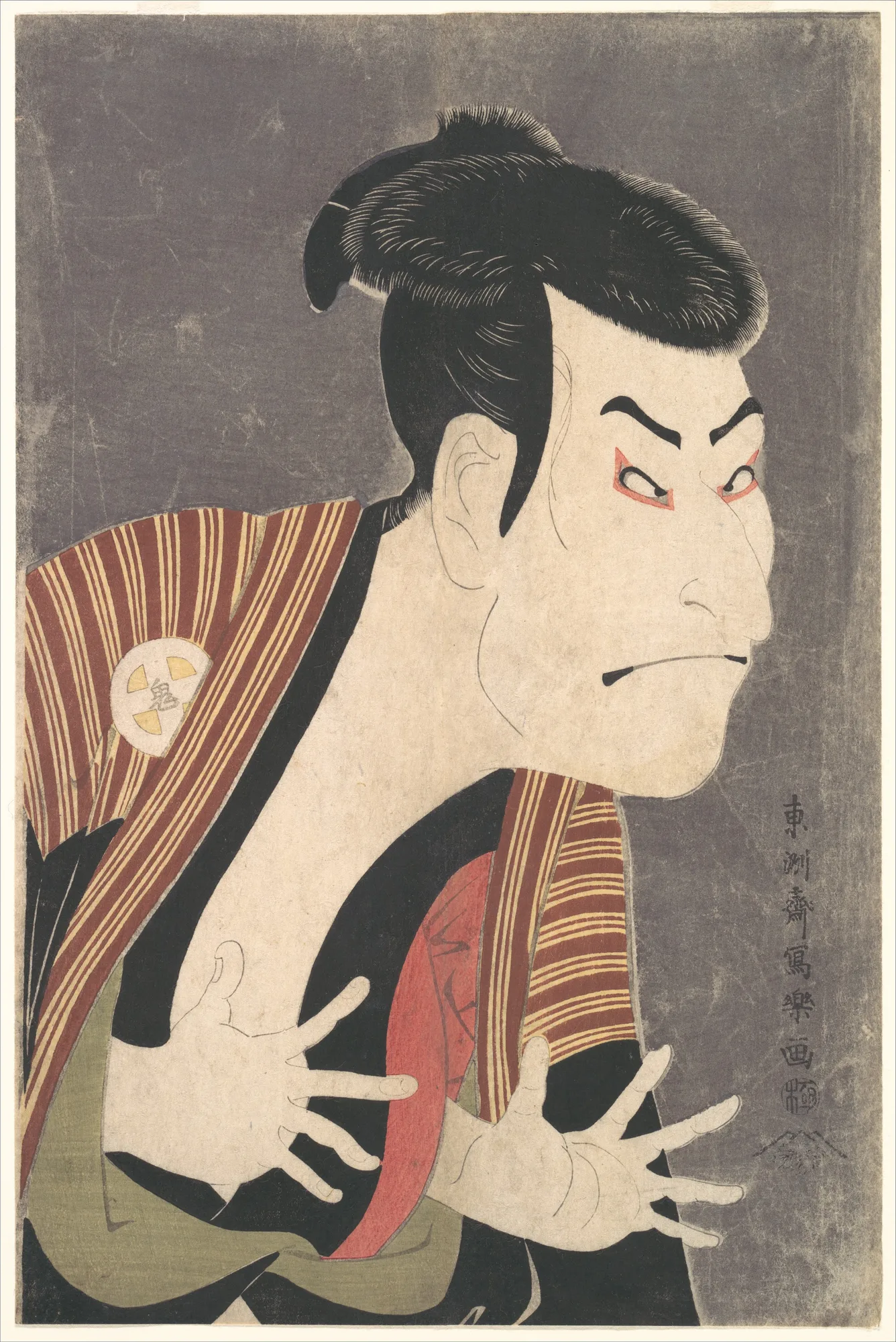
Story1794年5月、江戸の河原崎座で上演された歌舞伎『恋女房染分手綱(こいにょうぼうそめわけたづな)』で、悪役の江戸兵衛を演じた三代目大谷鬼次を描いた役者絵です。両手をぐっと広げ、相手からお金をうばおうとする一瞬の、すごみのある表情をとらえています。画像の摺りはメトロポリタン美術館の所蔵で、同じ図柄の摺りは世界各地にあります。
This is a picture of the kabuki actor Ōtani Oniji III. In May 1794, he played the villain Edobei in a play at the Kawarazaki Theater in Edo. He spreads his hands as he is about to rob someone. Sharaku caught his fierce face in that moment. This impression is in The Metropolitan Museum of Art. Prints of the same design are in museums around the world.
写楽は、版元の蔦屋重三郎から、いきなり28枚の大首絵(顔の大きな役者絵)で売り出されました。背景は黒雲母摺(くろきらずり)といい、黒っぽい地に雲母の粉をまいて、にぶく光らせるぜいたくな作りです。役者の顔のくせを大げさに描くので、ファンの中には喜ばない人もいたと言われます。
The publisher Tsutaya Jūzaburō launched Sharaku with 28 large-head actor prints at once. The dark background has mica powder that shines softly. This was a costly technique. Sharaku showed actors' features in an exaggerated way. It is said that some fans did not like it.
写楽は1794年5月から翌年1月までの約10か月で、およそ140点あまりの作品を残し、ぱったりと姿を消しました。正体は長くなぞでしたが、今では阿波藩の能役者・斎藤十郎兵衛という説が有力です。明治以降、海外で高く評価され、日本でも再び注目されるようになりました。
Sharaku made about 140 prints in only ten months, from May 1794 to January 1795. Then he suddenly disappeared. For a long time, nobody knew who he was. Today many experts think he was Saitō Jūrōbei, a Noh actor who served the Awa domain. After the Meiji period, people overseas praised his work, and Japan rediscovered him.
この人は歌舞伎役者です。お芝居で悪い男の役をしています。怒った目と、広げた手を見てください。絵師の写楽は、たった10か月だけ版画を作りました。そして姿を消してしまったのです!
This man is a kabuki actor. He plays a bad man in a play. Look at his angry eyes and his open hands. The artist, Sharaku, made prints for only ten months. Then he disappeared!
英語のレベルは上の「やさしい/ふつう」で切りかえられます。
えっ!?な裏ネタ
Secrets写楽が作品を出したのは1794年5月から翌年1月まで。約10か月で140点ほどを出し、そのまま消えてしまいました。浮世絵の歴史でも最大のなぞの一つです。作品数は数え方によって、140点あまりから145点ほどとされます。
Sharaku published prints only from May 1794 to January 1795. He made around 140 prints in about ten months, then vanished. It is one of the biggest mysteries in ukiyo-e history. Depending on how you count, he made about 140 to 145 prints.
写楽の正体には、北斎説や歌麿説など、たくさんの説がありました。今は、阿波藩に仕えた能役者・斎藤十郎兵衛だという説がもっとも有力です。江戸時代の記録に、写楽は「阿波の殿様に仕える能役者」と書かれていたことが、大きな手がかりです。
There were many theories about who Sharaku was, even Hokusai or Utamaro. Today the strongest theory says he was Saitō Jūrōbei, a Noh actor for the Awa domain. A key clue is an Edo-period record that calls Sharaku a Noh actor serving the lord of Awa.
1910年、ドイツの研究者ユリウス・クルトが写楽の本を出し、欧米で写楽の研究と評価が広がるきっかけの一つになりました。写楽はそれ以前からフランスなどの収集家にも知られていました。日本での人気も、海外の評価を受けて高まった面があると言われます。
In 1910, the German scholar Julius Kurth published a book about Sharaku. It helped spread interest in Sharaku in Europe and America, although collectors in France and elsewhere already knew his work. Some say his popularity in Japan also grew because of this praise from abroad.
左の着物の紋をよく見ると、「鬼」という字が入っています。役者の名前「鬼次」にちなんだ印で、ファンはこれで役者を見分けました。役者絵では、紋が役者を見分ける大事な手がかりでした。字が読めなくても、紋を見ればだれだかわかったのです。
Look at the crest on the left sleeve. It has the character for 'oni', or demon. It comes from the actor's name, Oniji. Fans used it to know the actor. In actor prints, crests were key clues. Even people who could not read knew the actor from the crest.
ここを見て!
Look Closer1にらむ顔Glaring face
つり上がった目、赤いくま取り、への字の口。悪役のすごみを大げさに表しています。
Angry eyes, red makeup and a tight mouth. They show the villain's menace in a bold way.
2広げた両手Spread hands
指を大きく広げた手。顔にくらべて小さく描かれ、顔の迫力が引き立ちます。
Hands with fingers spread wide. They are small for the face, so the face looks even stronger.
3「鬼」の紋'Oni' crest
着物の紋に「鬼」の字。役者・大谷鬼次の目印です。
The crest has the character 'oni'. It is the sign of the actor Ōtani Oniji.
4写楽の署名Sharaku's signature
「東洲斎写楽画」の署名と、版元・蔦屋の印があります。
The signature 'drawn by Tōshūsai Sharaku' and the mark of the publisher Tsutaya.
英語で名画を語ろう
Talk about Art in EnglishŌtani Oniji is playing the role of a villain.
大谷鬼次は悪役を演じています。
💡 役者絵の説明に必須。play the role of +役名 で「〜の役を演じる」。
英語で説明すると… Describe it
これは歌舞伎役者の絵です。怒った目のこわい顔をしています。口はぎゅっと閉じています。手前では両手を広げています。背景は暗い灰色です。
This is a picture of a kabuki actor. He has a scary face with angry eyes. His mouth is closed tight. In the front, he is spreading his hands. The background is dark gray.
考えてみよう Think & Talk
- 写楽はなぜ、こんなに早く絵をやめてしまったと思いますか?Why do you think Sharaku stopped making prints so quickly?
- 自分の顔を大げさに描かれたら、うれしいですか?それはなぜですか?Would you like a picture of you with your face exaggerated? Why or why not?
この作品の英単語
WordsOniji is playing a villain.
鬼次は悪役を演じている。
Sharaku exaggerated the actors' faces.
写楽は役者の顔を大げさに描いた。
Sharaku disappeared after ten months.
写楽は10か月後に姿を消した。
This is a print of a famous kabuki actor.
これは有名な歌舞伎役者の版画だ。
ミニクイズ
QuizQ. 写楽が浮世絵を出していた期間は?How long did Sharaku make prints?
1794年5月から翌年1月までのわずか10か月ほどでした。
Only about ten months, from May 1794 to January 1795.
ウソ?ホント? 写楽の版元は蔦屋重三郎だった。Sharaku's publisher was Tsutaya Jūzaburō.
歌麿も手がけた名プロデューサーが写楽を売り出しました。
The same producer who worked with Utamaro launched Sharaku.
ウソ?ホント? この絵の人物は、正義のヒーローの役だ。The man in this picture is playing a hero.
江戸兵衛は、お金をうばおうとする悪役です。
Edobei is a villain who tries to steal money.
 画像の出典とライセンス / Image credit
- CC0三代目大谷鬼次の奴江戸兵衛-Kabuki Actor Ōtani Oniji III as Yakko Edobei in the Play The Colored Reins of a Loving Wife (Koi nyōbō somewake tazuna) MET DP130228.jpg(Wikimedia Commons)
ライセンス:CC0(パブリックドメイン提供)/作者・撮影者の表記:Sharaku/提供元:This file was donated to Wikimedia Commons as part of a project by the Metropolitan Museum of Art. See the Image and Data Resources Open Access Policy
この作品は、作者の死後長い年月がたち著作権の保護期間が終わった「パブリックドメイン」の作品です。画像は平面の作品を忠実に写したもので、新しい著作権は生じません(Wikimedia Commons の PD-Art の考え方)。 所蔵:メトロポリタン美術館(The Metropolitan Museum of Art)。画像は表示のために縮小・WebP 形式に変換しています。