 ワークシート
 ぬりえ
 迷路
「これ以上の役者はいない」と言われた大スターの、どアップ!A close-up of the top star of his day, 'the best actor of all'!
 美術館アンテナ:東洲斎写楽の作品に会える展覧会
この作品のお話
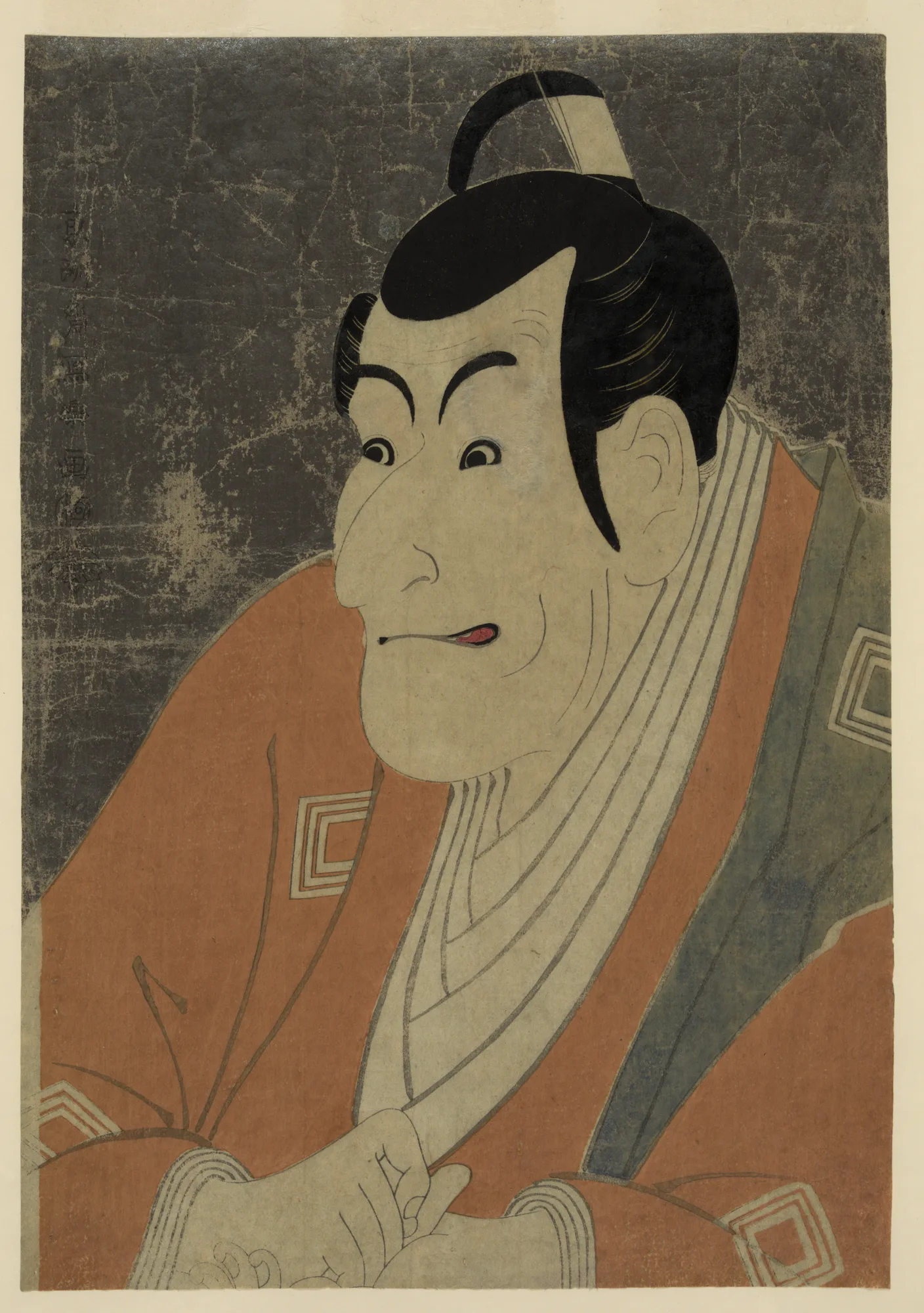
Story1794年5月、江戸の河原崎座で上演された歌舞伎『恋女房染分手綱(こいにょうぼうそめわけたづな)』で、能の師匠・竹村定之進を演じた市川鰕蔵(5代目市川團十郎)を描いた役者絵です。大きな顔、ぎょろりとした目、がっしりした鼻、への字に結んだ口。背景は黒雲母摺で、にぶく光ります。画像の摺りはアメリカ議会図書館の所蔵です。
This actor print shows Ichikawa Ebizō, also known as Ichikawa Danjūrō V, as Takemura Sadanoshin, a master of Noh theater, in the kabuki play 'Koi Nyōbō Somewake Tazuna'. It was staged at the Kawarazaki Theater in Edo in May 1794. He has a big face, staring eyes, a strong nose and a tightly closed mouth. The background is dark mica that shines softly. This impression is in the Library of Congress.
鰕蔵は当時の役者の評判記で、「極上上大吉無類(これ以上の役者はいない)」という最高の位をもらった名優でした。写楽はこの役者絵を、デビューと同時に出した28枚の大首絵の一つとして、版元・蔦屋重三郎から売り出しました。定之進は、娘の罪をつぐなうため、能の秘曲『道成寺』を主君に伝える、重々しい役です。
Ebizō was a great actor who was given the highest rank, 'gokujō-jō-daikichi murui', meaning there was no better actor, in the actor rating books of the time. Sharaku's publisher, Tsutaya Jūzaburō, released this print as one of the 28 large-head portraits of his debut. Sadanoshin is a serious role: to make up for his daughter's wrongdoing, he teaches the secret Noh piece 'Dōjōji' to his lord.
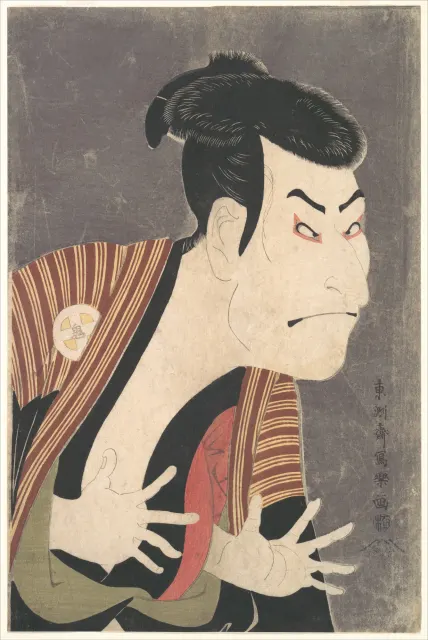
同じ芝居からは、悪役の迫力で知られる写楽の代表作「三代目大谷鬼次の江戸兵衛」も生まれています。年をかさねた名優の風格と、気むずかしそうな表情を、写楽は遠慮なく大きく描きました。木版画なので同じ図柄の摺りが世界各地にあり、写楽の最高傑作の一つともいわれます。
Sharaku's famous print of Ōtani Oniji III as Edobei came from the same play. Sharaku boldly showed the dignity and the grumpy look of this older star in a big close-up. As a woodblock print, there are impressions of it around the world, and it is often called one of Sharaku's greatest works.
これは有名な歌舞伎役者です。顔がとても大きく描かれています。大きな目と大きな鼻をしています。とてもまじめな顔つきです。袖の四角い印は、役者の家のしるしです。
This is a famous kabuki actor. His face is very big. He has big eyes and a big nose. He looks very serious. The square marks on his sleeves are his family's sign.
英語のレベルは上の「やさしい/ふつう」で切りかえられます。
えっ!?な裏ネタ
Secrets着物の袖に見える、四角を3つ重ねた模様は「三升(みます)」という紋です。市川團十郎の家に代々伝わる紋で、今の團十郎も使っています。江戸の人は顔を見なくても、この紋で「あ、團十郎の家の役者だ」とわかったのです。
The pattern of three squares, one inside another, on his sleeve is the 'mimasu' crest. It has been passed down in the Ichikawa Danjūrō family for generations, and today's Danjūrō still uses it. People in Edo could tell he was from the Danjūrō family just by seeing it.
5代目團十郎は、1791年に息子へ團十郎の名をゆずり、「えびぞう」を名乗りました。そのとき、父が名乗った「海老蔵」の字ではなく、小さなエビを表す「蝦」の字を使い、「おれはえびはえびでも雑魚えびの蝦」と言ったと伝わります。写楽の絵の題では「鰕」の字が使われています。
In 1791, Danjūrō V passed the name Danjūrō to his son and began calling himself Ebizō. Instead of the characters his father had used for that name, he chose a character meaning a small shrimp. He is said to have joked, 'I'm a shrimp, but just a little one.' The title of Sharaku's print uses yet another character for 'shrimp'.
竹村定之進は、能の師匠という役柄です。いっぽう写楽の正体は、阿波藩に仕えた能役者・斎藤十郎兵衛だという説が有力です。もしそうなら、本物の能役者が、能の師匠を演じる歌舞伎役者を描いたことになります。ちょっとふしぎなめぐり合わせです。
Takemura Sadanoshin is a master of Noh theater. Meanwhile, the leading theory says Sharaku was really Saitō Jūrobei, a Noh actor serving the lord of Awa. If so, a real Noh actor drew a kabuki actor playing a Noh master, a curious coincidence.
江戸時代には、役者の芸を格付けする「評判記」という本が毎年出ていました。鰕蔵はその中で「極上上大吉無類」、つまり「これ以上の役者はいない」という最高の位をもらっています。写楽は、そんな超一流の大スターの顔を、しわまでありのままに描いたのです。
In the Edo period, books called hyōbanki ranked actors every year. Ebizō received the very top rank, 'gokujō-jō-daikichi murui', meaning 'there is no better actor'. Sharaku drew the face of this superstar just as it was, wrinkles and all.
ここを見て!
Look Closer1ぎょろりとした目と大きな鼻Staring eyes and a big nose
太いまゆ、見開いた目、がっしりした鼻。年をかさねた名優の迫力が、顔いっぱいにあふれます。
Thick eyebrows, wide eyes and a strong nose. The power of this older star fills his whole face.
2三升の紋The mimasu crest
四角を3つ重ねた「三升」。市川團十郎の家の紋です。右の袖にも同じ紋があります。
Three nested squares, the mimasu crest of the Danjūrō family. The same crest is on the right sleeve too.
3下の両手Hands at the bottom
画面の下で組んだ両手。顔にくらべて小さく、顔をいっそう大きく見せています。
His hands meet at the bottom. They look small next to his face, which makes the face seem even bigger.
4「東洲斎写楽画」の署名The signature 'Tōshūsai Sharaku ga'
左はしの黒地に「東洲斎写楽画」の文字と、版元・蔦屋や検閲の印がうっすら見えます。
On the dark left edge, you can faintly see 'Tōshūsai Sharaku ga' and the seals of the publisher Tsutaya and the censor.
英語で名画を語ろう
Talk about Art in EnglishThe actor stares to the side with a stern look.
役者はきびしい顔つきで横をにらんでいます。
💡 stern は「きびしい」。with a ~ look で表情を表せます(with a happy look など)。
英語で説明すると… Describe it
これは歌舞伎役者のどアップです。太いまゆ、大きな目、大きな鼻をしています。四角い印のついたオレンジ色の着物を着ています。背景は暗く、少し光っています。
This is a close-up of a kabuki actor. He has thick eyebrows, big eyes and a large nose. He is wearing an orange robe with square marks. The background is dark and shines a little.
考えてみよう Think & Talk
- この役者は、自分のこの絵を気に入ったと思いますか?それはなぜ?Do you think this actor liked this picture of himself? Why?
- 写楽はなぜ顔をこんなに大きく描いたのだと思いますか?Why do you think Sharaku drew the face so big?
この作品の英単語
WordsEbizō was the best actor of his time.
鰕蔵は当時いちばんの役者でした。
The crest on his sleeve shows his family.
袖の紋は彼の家を表しています。
He is playing the role of a Noh master.
彼は能の師匠の役を演じています。
His face looks very serious.
彼の顔はとてもまじめに見えます。
ミニクイズ
QuizQ. 袖にある、四角を3つ重ねた紋の名前は?What is the crest of three nested squares on his sleeve called?
「三升」は市川團十郎の家に伝わる紋です。
Mimasu is the crest passed down in the Ichikawa Danjūrō family.
ウソ?ホント? この役者は、5代目市川團十郎と同じ人物だ。This actor is the same person as Ichikawa Danjūrō V.
團十郎の名を息子にゆずったあと、鰕蔵と名乗っていました。
After giving the name Danjūrō to his son, he called himself Ebizō.
ウソ?ホント? 背景は金箔でできている。The background is made of gold leaf.
背景は黒雲母摺。黒っぽい地に雲母の粉を使い、にぶく光らせています。
It is dark mica printing. Mica powder on a dark ground gives a soft shine.
 画像の出典とライセンス / Image credit
- PDSharaku - Ichikawa Ebizō as Takemura Sadanoshin.png(Wikimedia Commons)
ライセンス:Public domain(パブリックドメイン)/作者・撮影者の表記:Tōshūsai Sharaku
この作品は、作者の死後長い年月がたち著作権の保護期間が終わった「パブリックドメイン」の作品です。画像は平面の作品を忠実に写したもので、新しい著作権は生じません(Wikimedia Commons の PD-Art の考え方)。 所蔵:アメリカ議会図書館(同じ図柄の摺りは世界各地の美術館に)(Library of Congress (other impressions are in museums worldwide))。画像は表示のために縮小・WebP 形式に変換しています。