 ワークシート
 ぬりえ
 迷路
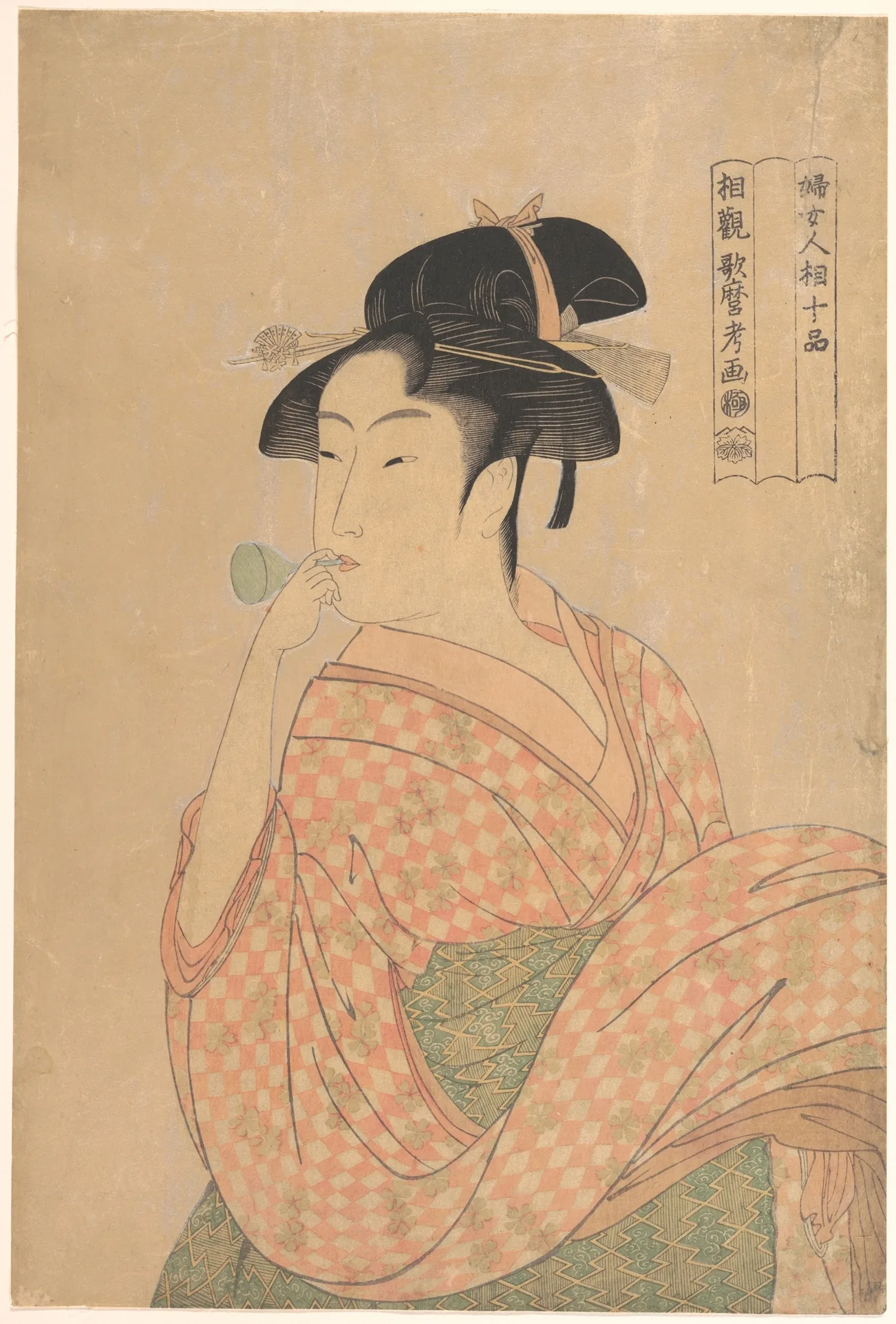
「ポッペン」と鳴るガラスのおもちゃ!ふり向いた娘の一瞬をパチリ。A glass toy that goes 'pop-pen'! A girl caught in a split second.
 美術館アンテナ:喜多川歌麿の作品に会える展覧会
この作品のお話
Story喜多川歌麿の「婦女人相十品(ふじょにんそうじっぽん)」というシリーズの1枚です。市松模様に桜を散らした着物の若い娘が、横を向いて、ガラスのおもちゃ「ポッピン」を口にくわえて吹いています。画像の摺りはメトロポリタン美術館の所蔵で、同じ図柄は東京国立博物館などにもあります。
This print is from Kitagawa Utamaro's series 'Ten Classes of Women's Physiognomy'. A young woman wears a checkered kimono with cherry blossoms. She faces to the side and blows a glass toy called a popen. This impression is in The Metropolitan Museum of Art. Prints of the same design are also in places like the Tokyo National Museum.
ポッピン(ビードロ)は、底のうすいガラスの笛のようなおもちゃです。息を吹きこむと、うすいガラスがへこんだりもどったりして「ポッペン」と鳴ります。西洋式のガラス作りは長崎を通じて広まり、歌麿の時代には江戸などでもガラス製品が作られていました。ポッピンは、当時のおしゃれなおもちゃでした。歌麿は、すきとおるガラスを細い線とうすい色だけで見事に表しています。
A popen is a glass toy with a very thin bottom. When you blow into it, the thin glass moves in and out and makes a 'pop-pen' sound. European-style glassmaking spread through Nagasaki, and by Utamaro's time glass objects were also made in Edo and other places. The popen was a fashionable toy. Utamaro showed the clear glass with only fine lines and light color.
題名の「人相」は、顔つきから性格を読む「人相見」のこと。署名も「相観(そうかん)歌麿考画」、つまり「人相見の歌麿がよく考えて描いた」と、遊び心たっぷりです。この絵は1955年に記念切手の図柄になり、「見返り美人」とならんで切手ファンのあこがれになりました。
'Physiognomy' means reading a person's character from the face. Utamaro even signed this print as 'the physiognomist Utamaro, drawn with thought'. That was his playful joke. In 1955, this picture was used on a special stamp. Like the 'Beauty Looking Back' stamp, it became a dream for stamp collectors.
若い女性がガラスのおもちゃを吹いています。おもちゃは「ポッペン、ポッペン」と鳴ります。着物は赤と白の四角い模様です。ガラスがすきとおって見えますね。でもこれは木版画なのです!すごいでしょう?
A young woman is blowing a glass toy. The toy makes a sound: 'pop-pen, pop-pen!' Her kimono has red and white squares. The glass looks clear. But this is a woodblock print! Amazing, right?
英語のレベルは上の「やさしい/ふつう」で切りかえられます。
えっ!?な裏ネタ
Secretsポッピンの部分をよく見ると、うすい色と細い輪郭線だけで、ガラスのすきとおった感じが表されています。版木で摺った絵なのに、透明な素材を感じさせる、彫師と摺師の腕の見せどころです。ガラスのうすさまで感じられるほどです。
Look closely at the toy. Pale color and fine outlines make the glass look clear. It is a woodblock print, yet it shows see-through glass. This shows the skill of the carver and the printer. You can almost feel how thin the glass is.
1955年の「切手趣味週間」の切手にこの絵が使われました。1948年の「見返り美人」と並び、浮世絵の切手の代表として今も知られています。額面は10円で、今も収集家に人気の一枚です。
This picture was used on a Philatelic Week stamp in 1955. Together with 'Beauty Looking Back' from 1948, it is one of Japan's best-known ukiyo-e stamps. Its face value was 10 yen, and collectors still love it.
1804年、歌麿は豊臣秀吉の時代を題材にした絵が幕府の決まりにふれ、手鎖(てぐさり)50日の罰を受けました。人気絵師でも、きびしい取りしまりからは逃げられなかったのです。
In 1804, Utamaro broke the shogunate's rules with prints about the age of Toyotomi Hideyoshi. He was punished with 50 days in handcuffs. Even a star artist could not escape the strict rules.
ガラス作りの技術は長崎を通じて広まり、歌麿の時代には日本でもガラスのおもちゃが作られていました。ポッピンは江戸の娘たちに人気のおもちゃでした。流行のおもちゃに流行の着物。この絵は当時の「最先端」を切りとっています。
Glassmaking spread through Nagasaki, and by Utamaro's time glass toys were made in Japan. The popen was a popular toy with young women in Edo. A trendy toy and a trendy kimono: this print captures the latest fashion of the time.
ここを見て!
Look Closer1ガラスのポッピンGlass popen
口にくわえたガラスのおもちゃ。うすい色と線だけで、すきとおるガラスを表しています。
The glass toy at her lips. Light color and fine lines show the clear glass.
2ふり向く顔Turning face
ほおをふくらませ、横を向いた顔。何かに気づいてふり向いた瞬間のようです。
Her cheeks are puffed, and her face turns to the side. It looks like a moment when she noticed something.
3市松と桜の着物Checkered kimono with cherry blossoms
赤と白の市松模様に、桜の花びらを散らしたかわいい着物です。
A cute kimono with red and white checks and cherry blossoms.
4シリーズ名と署名Series title and signature
「婦女人相十品」と「相観歌麿考画」。人相見になりきった歌麿のしゃれです。
The series title and the signature 'the physiognomist Utamaro'. A playful joke.
英語で名画を語ろう
Talk about Art in EnglishThe young woman is blowing a glass toy.
若い女性がガラスのおもちゃを吹いています。
💡 現在進行形 is + -ing で「今まさにしている」動きを説明できます。
英語で説明すると… Describe it
これは若い女性の絵です。赤と白の着物を着ています。小さなガラスのおもちゃを吹いています。黒い髪には、くしとかんざしがついています。右側には、シリーズの題名があります。
This is a picture of a young woman. She is wearing a red and white kimono. She is blowing a small glass toy. Her black hair has combs and pins. On the right, there is the title of the series.
考えてみよう Think & Talk
- 彼女は今、何に気づいたと思いますか?What do you think she just noticed?
- 顔つきから、彼女はどんな性格の人だと思いますか?What kind of person do you think she is, from her face?
この作品の英単語
WordsShe blows into a glass toy.
彼女はガラスのおもちゃを吹いている。
The toy is made of very thin glass.
そのおもちゃはとてもうすいガラスでできている。
She wears a checkered kimono.
彼女は市松模様の着物を着ている。
The carver cut very fine lines for her hair.
彫師は髪の毛のとても細い線を彫った。
ミニクイズ
QuizQ. ポッピンは何でできたおもちゃ?What is a popen made of?
うすいガラスでできていて、吹くと「ポッペン」と鳴ります。
It is made of thin glass and makes a 'pop-pen' sound when you blow.
ウソ?ホント? この絵は1955年に記念切手になった。This picture was used on a stamp in 1955.
「切手趣味週間」の切手として発行されました。
It was issued for Philatelic Week.
ウソ?ホント? ポッピンは、吹くとシャボン玉が出るおもちゃだ。A popen is a toy that makes soap bubbles.
うすいガラスの底が動いて、音が鳴るおもちゃです。
Its thin glass bottom moves and makes a sound.
 画像の出典とライセンス / Image credit
- CC0婦女人相十品 相観歌麿考画-Woman with a Glass Noisemaker (Popen) MET DP135591.jpg(Wikimedia Commons)
ライセンス:CC0(パブリックドメイン提供)/作者・撮影者の表記:Kitagawa Utamaro/提供元:This file was donated to Wikimedia Commons as part of a project by the Metropolitan Museum of Art. See the Image and Data Resources Open Access Policy
この作品は、作者の死後長い年月がたち著作権の保護期間が終わった「パブリックドメイン」の作品です。画像は平面の作品を忠実に写したもので、新しい著作権は生じません(Wikimedia Commons の PD-Art の考え方)。 所蔵:メトロポリタン美術館(The Metropolitan Museum of Art)。画像は表示のために縮小・WebP 形式に変換しています。