yuru-kyara
local mascot characters
ゆるキャラ(ゆるきゃら)
In one line
The shortest answer that works
Yuru-kyara are the soft, slightly clumsy mascot characters that Japanese towns and offices use.
ゆるキャラとは、日本の自治体や役所が使う、ゆるくて少し不格好なマスコットのことです。
In 30 seconds
The standard explanation
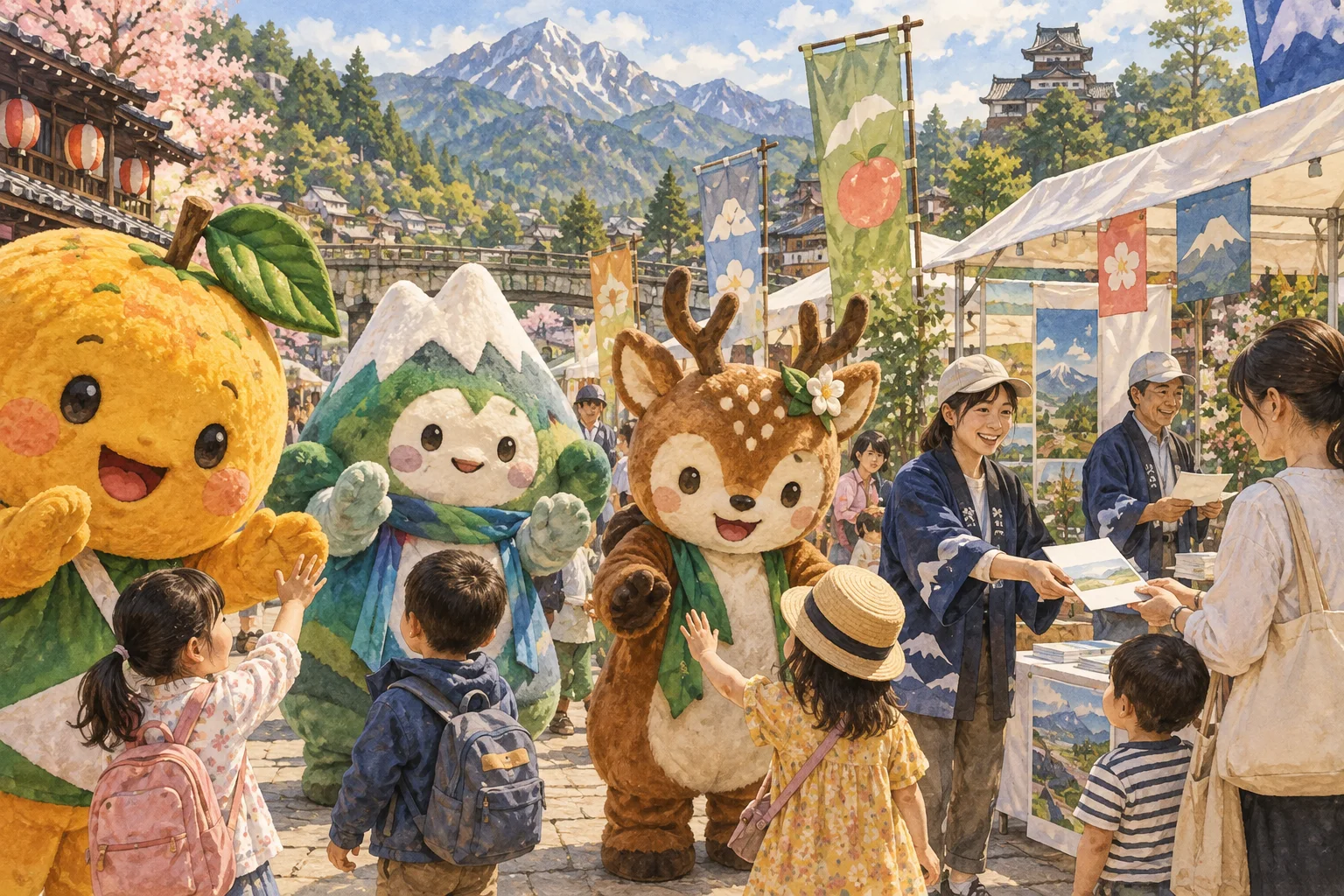
Yuru-kyara are mascot characters made by towns, prefectures and public offices to promote themselves. The name means loose character, because the design is deliberately soft and a bit awkward rather than slick. A great many towns in Japan have one, usually built from a local product or legend, and they appear at festivals in full costume. Some have become genuinely famous and earn real money.
ゆるキャラとは、市町村や県、役所が宣伝のためにつくるマスコットです。名前は「ゆるいキャラクター」の意味で、かっこよくではなく、わざとゆるく少し不格好にデザインされているからです。日本ではとても多くの町が持っていて、たいていは地元の産物や伝説から作られ、祭りには着ぐるみで登場します。本当に有名になり、大きな収入を生むものもあります。
As a short speech
A full paragraph you can read aloud
Yuru-kyara are local mascot characters, and the word literally means loose character. A huge number of towns, prefectures and government offices in Japan have one, and so do many police forces. The design usually comes from something local: a pear, a castle, a bear, a kind of stone.
They are deliberately not cool. The costume is often lumpy, the movements are slow, and that clumsiness is the appeal. The word was coined by the illustrator Jun Miura, and for about a decade there was an annual national ranking that towns campaigned hard to win.
Kumamon, the black bear from Kumamoto Prefecture, came out of that period and now appears on products all over the country. It sounds silly, but for a small town with no famous sight, a good mascot is a serious piece of marketing.
ゆるキャラはご当地のマスコットで、言葉そのものは「ゆるいキャラクター」という意味です。日本ではとても多くの市町村、県、役所が持っていて、警察にもいます。姿はたいてい地元の何か、梨、城、熊、特産の石などから作られます。
わざとかっこよくしていません。着ぐるみはたいてい不格好で動きは遅く、その不器用さが魅力です。この言葉はイラストレーターのみうらじゅんによる造語で、十年ほどの間は全国規模の年間順位づけがあり、自治体は本気で票を集めました。
熊本県の黒い熊、くまモンはその時期に生まれ、今では全国の商品に登場します。ばかげて聞こえますが、有名な名所のない小さな町にとって、良いマスコットは本気の宣伝手段です。
Questions people actually ask
And how to answer them.
Who pays for these?
Usually the local government, as part of its tourism budget. Many mascots then license their image to food makers and shops, and a successful one can bring in more than it costs. Kumamoto Prefecture famously lets companies use Kumamon without a license fee if the product promotes the prefecture.
たいていは自治体が観光予算の中で負担します。多くは食品メーカーや店に絵柄の使用を許諾し、成功すれば費用以上の収入になります。熊本県は、県の宣伝になる商品ならくまモンを使用料なしで使わせることで知られています。
Why do they look badly made on purpose?
Because polish creates distance. A slightly wobbly mascot is easy for children to approach and easy for adults to make jokes about, and both reactions spread the character. A professionally sleek design would look like an advertisement.
洗練されると距離ができるからです。少しよろけるマスコットは子どもが近づきやすく、大人は冗談にしやすい。そのどちらもキャラクターを広げます。きれいに作り込むと、ただの広告に見えてしまいます。
Can I talk to the person inside?
No, and you should not try. Most official mascots do not speak, and staff standing nearby will handle questions. Pulling at the costume or asking who is inside is considered rude, and in front of children it spoils the character.
できませんし、しないでください。公式のマスコットの多くは話さず、そばに立つ係員が受け答えをします。着ぐるみを引っ張ったり中の人を尋ねたりするのは失礼とされ、子どもの前ではキャラクターを壊してしまいます。
A common misunderstanding
MYTHThese mascots are just a children's amusement.
FACTThey are a working part of local government marketing, with licensing income, official social media accounts and staff assigned to them.
Phrases you can use
- Lots of towns in Japan have one of these.日本にはこういうキャラクターのいる町がたくさんあります。
- It's based on the local specialty.地元の特産品がもとになっています。
- They don't speak, but you can shake hands.しゃべりませんが、握手はできます。
- Please don't ask who's inside.中の人のことは聞かないであげてください。
- This one is run by the city hall.これは市役所が運営しています。
Words you need
- mascotマスコット
- local specialty特産品
- costume character着ぐるみのキャラクター
- to promote宣伝する
- licensing使用許諾
Watch
From YouTubeBackground (Japanese)
「ゆるキャラ」はみうらじゅんによる造語で、登録商標でもあります。くまモンは2010年に生まれ、翌年の全国投票で1位になって一気に知られました。彦根市のひこにゃんのように、市の記念事業から生まれて定着した例もあります。一方で、自治体が次々とキャラクターをつくった結果、ほとんど使われないまま消えたものも多く、数が増えすぎたことへの批判もありました。非公認のまま人気が出たキャラクターも存在します。