Tokyo Eki no ekisha
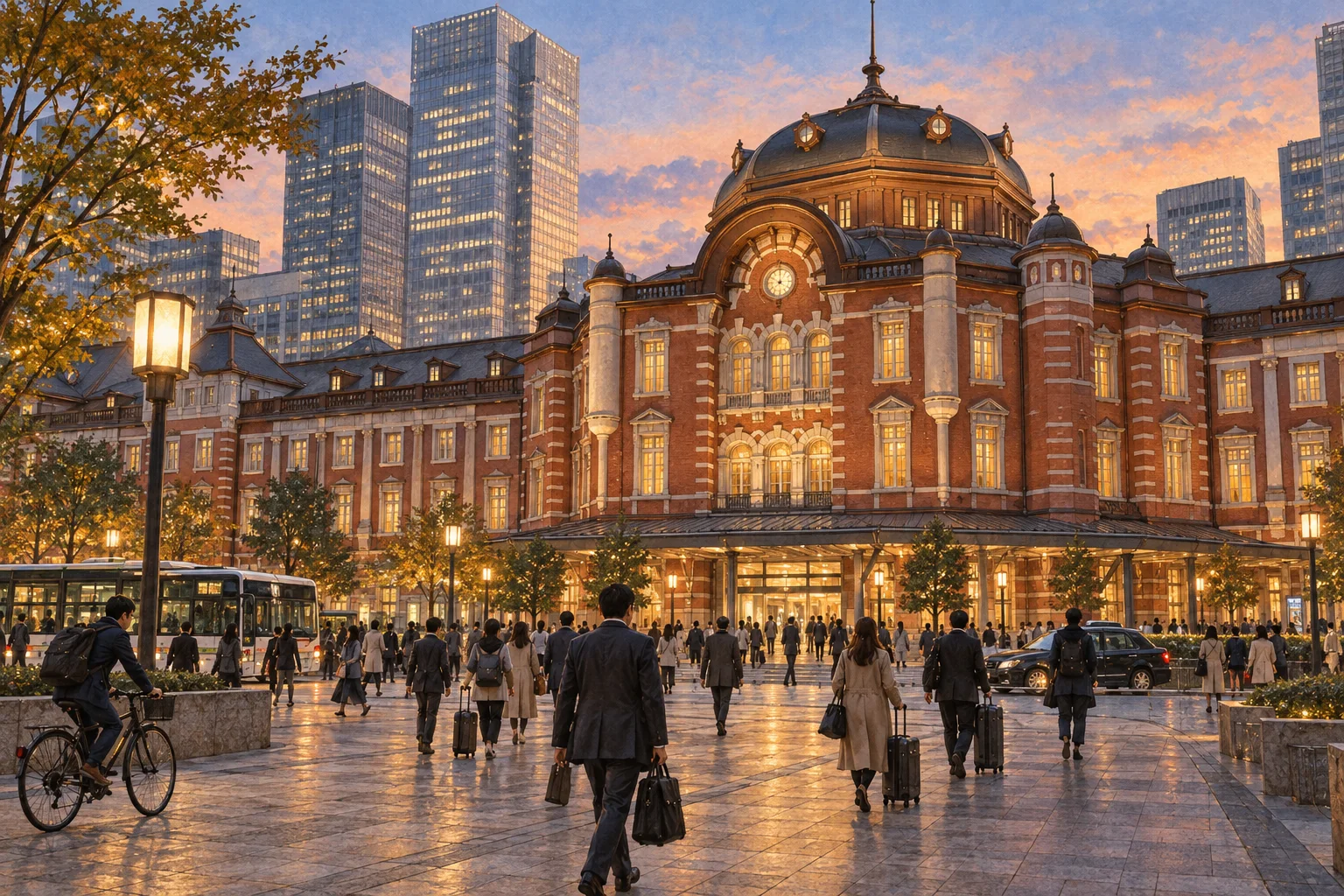
the red brick station building of 1914, restored in 2012
東京駅の駅舎(とうきょうえきのえきしゃ)
In one line
The shortest answer that works
Tokyo Eki no ekisha, or Tokyo Station's building, is a red brick structure opened in 1914 and restored in 2012.
東京駅の駅舎とは、1914年に開業し、2012年にその姿に戻された赤れんがの建物です。
In 30 seconds
The standard explanation
The red brick building on the west side of Tokyo Station opened in 1914, designed by Tatsuno Kingo. Air raids in 1945 destroyed the two domes and the third floor, and the postwar repair simply put a low roof on what was left. That patched version stood for sixty-seven years. In 2012 the building was restored to its 1914 form, domes and all.
東京駅の西側にある赤れんがの建物は1914年に開業したもので、設計は辰野金吾です。1945年の空襲で二つのドームと三階部分が焼け、戦後の修理は残った部分に低い屋根をかけただけのものでした。その応急の姿が67年続きました。2012年、建物は1914年の形に、ドームごと戻されました。
As a short speech
A full paragraph you can read aloud
Most people walk through Tokyo Station without looking at it, which is a shame, because the red brick building on the Marunouchi side is one of the best stories in the city. It opened in 1914, designed by Tatsuno Kingo, the architect who studied in Britain and then taught many of the next generation.
In 1945 air raids burned the two domes and the top floor. The country had no money, so the repair was blunt: cut the building down to two stories and put a plain roof on it. That temporary fix lasted sixty-seven years, and a whole generation grew up thinking that was what Tokyo Station looked like.
Then between 2007 and 2012 it was restored to the original design, domes rebuilt, while trains kept running underneath. Go inside the north dome and look up. The relief work in the ceiling was reconstructed from old photographs.
多くの人は東京駅を見上げずに通り過ぎますが、もったいない話です。丸の内側の赤れんがの建物には、この街でも指折りの物語があります。開業は1914年、設計は辰野金吾。英国で学び、次の世代の建築家の多くを育てた人です。
1945年の空襲で二つのドームと最上階が焼けました。国にお金がなく、修理はそっけないものでした。二階建てに削り、平らな屋根をかける。その仮の姿が67年続き、まるまる一世代が「東京駅とはこういう形だ」と思って育ちました。
そして2007年から2012年にかけて、下で電車を走らせたまま、当初の設計に復原されました。ドームも建て直されました。北のドームに入って見上げてみてください。天井の浮き彫りは、古い写真から復原されたものです。
Questions people actually ask
And how to answer them.
Why is it brick, when Japan builds in wood?
It was designed in the Meiji period, when the country was importing Western building methods on purpose. Brick and steel meant modern. The walls are brick reinforced with a steel frame, which is said to be part of why it survived the 1923 earthquake.
明治のころ、西洋の建て方を意図的に取り入れていた時代に設計されたものです。れんがと鉄は近代の印でした。れんがの壁を鉄骨で補強した造りで、1923年の地震に耐えた理由の一つとされます。
What is the hotel inside?
The station building has held a hotel since 1915. Rooms look out over the plaza or down into the restored domes.
駅舎には1915年からホテルが入っています。広場を見渡す部屋や、復原されたドームの内側を見下ろす部屋があります。
Why is the plaza in front so open?
The building faces the Imperial Palace across a straight avenue, by design. The station was built as the country's front door, and the axis to the palace was the point.
まっすぐな通りの先に皇居を望むように、意図して造られました。国の玄関として建てられた駅で、皇居への軸線がその趣旨でした。
Phrases you can use
- The building is from 1914, not a modern copy.この建物は1914年のもので、最近の複製ではありません。
- The domes burned in 1945 and were rebuilt in 2012.ドームは1945年に焼けて、2012年に建て直されました。
- Go into the north dome and look up.北のドームに入って、見上げてみてください。
- It faces the Imperial Palace down a straight avenue.まっすぐな通りの先に皇居があります。
- There's been a hotel inside since 1915.中には1915年からホテルがあります。
Words you need
- red brick赤れんが
- domeドーム
- to restore to the original form復原する
- air raid空襲
- relief carving浮き彫り
Watch
From YouTubeBackground (Japanese)
丸の内駅舎は大正3年(1914年)の開業で、設計は辰野金吾。赤れんがに白い帯を回す意匠は「辰野式」と呼ばれる。昭和20年(1945年)の空襲で南北のドームと三階部分を失い、戦後は二階建てに角形の屋根をかけた姿で使われた。平成19年(2007年)から保存・復原工事が行われ、平成24年(2012年)に創建時の姿に戻った。工事では建物を支えたまま基礎を免震構造に入れ替えており、駅としての営業を止めていない。