Taisho demokurashi
the liberal current of the 1910s and 1920s
大正デモクラシー(たいしょうデモクラシー)
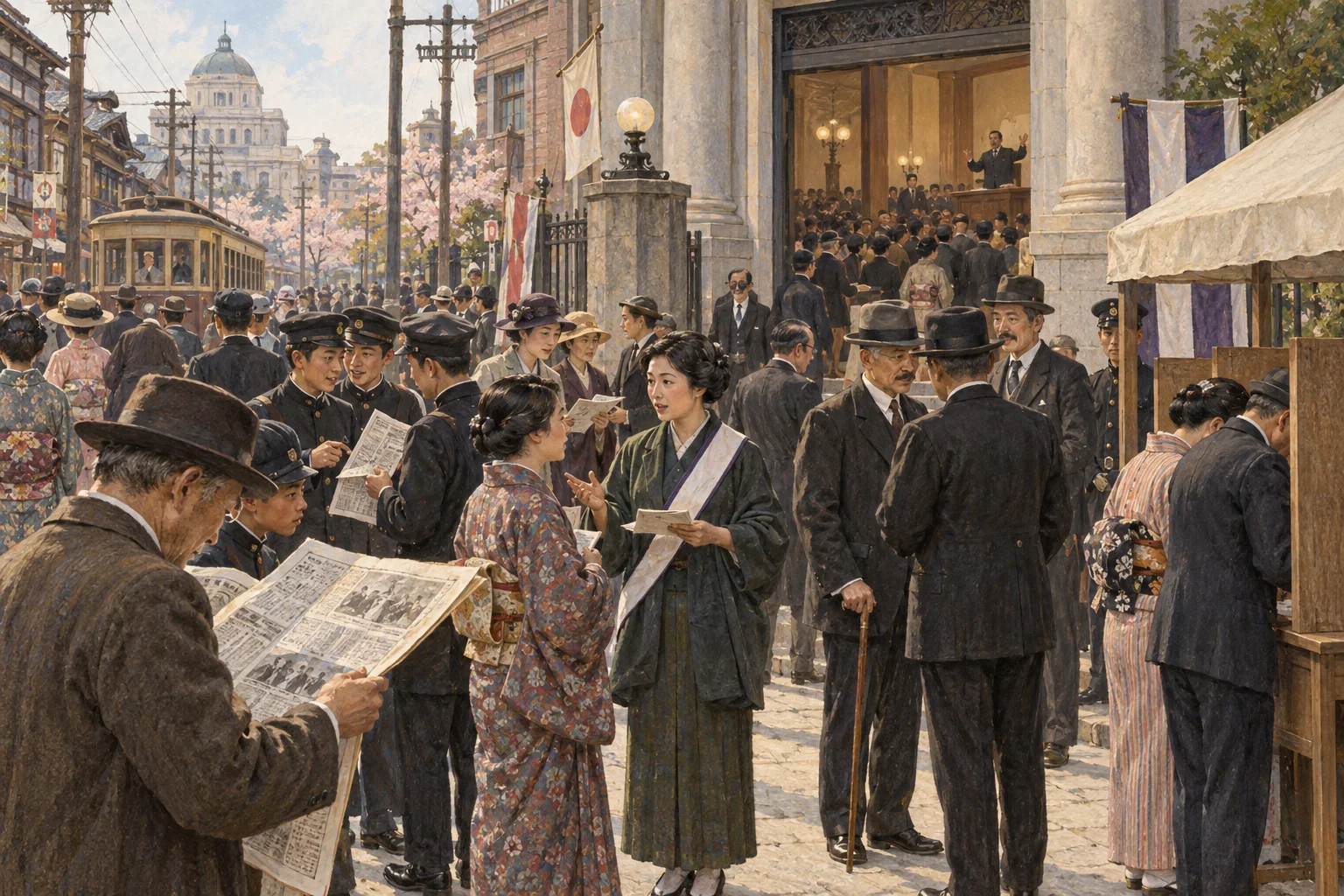
In one line
The shortest answer that works
Taisho demokurashi, or Taisho democracy, is the liberal political and cultural current in Japan in the 1910s and 1920s.
大正デモクラシーとは、1910年代から1920年代の日本に広がった自由主義的な政治と文化の潮流です。
In 30 seconds
The standard explanation
Between roughly the 1910s and the 1920s, Japan saw party cabinets, mass rallies, a lively press, labor and tenant movements, campaigns for women's rights, and in 1925 a law giving the vote to all men aged twenty-five and over. Cities filled with cafes, magazines and cinema. The same year brought the Peace Preservation Law, which criminalized movements against the national polity, and the liberal current was pushed back in the 1930s.
おおよそ1910年代から1920年代にかけて、日本には政党内閣、大衆的な集会、活発な新聞、労働運動や小作争議、女性の権利を求める運動があり、1925年には25歳以上のすべての男性に選挙権を与える法律ができました。都市はカフェと雑誌と映画であふれました。同じ年に治安維持法も成立し、国体を否定する運動が処罰の対象になり、この自由主義的な潮流は1930年代に後退しました。
As a short speech
A full paragraph you can read aloud
People outside Japan often picture the prewar country as uniformly militarist, which flattens a much more interesting period. Taisho democracy is the label historians give to the liberal current running through roughly the 1910s and 1920s, named after the Taisho era.
It included cabinets formed by political parties rather than by oligarchs, huge public rallies, a bold press, labor unions and tenant farmer movements, campaigns for women's political rights, and intellectuals arguing that sovereignty should be exercised for the benefit of the people. In 1925 a law extended the vote to all men aged twenty-five and over, multiplying the electorate several times over.
Cities produced a recognizably modern culture: cafes, department stores, baseball, radio, magazines, and young people labeled modern boys and modern girls. But the same year produced the Peace Preservation Law, aimed at movements challenging the national polity, and it was used with increasing severity. Economic crisis and the pull of empire strengthened the military in the 1930s, and the current receded.
国外の人は戦前の日本を一様な軍国主義として思い描きがちですが、それでははるかに面白い時代が平板になってしまいます。大正デモクラシーとは、おおよそ1910年代から1920年代を貫いた自由主義的な潮流に歴史家がつけた呼び名で、大正という元号から来ています。
そこには、藩閥ではなく政党が組む内閣、巨大な大衆集会、大胆な新聞、労働組合や小作争議、女性の参政権を求める運動、そして主権は民衆の利益のために行使されるべきだと論じる知識人がいました。1925年の法律で25歳以上のすべての男性に選挙権が広がり、有権者は数倍になりました。
都市は今日から見ても近代的な文化を生みました。カフェ、百貨店、野球、ラジオ、雑誌、そしてモダンボーイ、モダンガールと呼ばれた若者たちです。しかし同じ年に治安維持法が生まれ、国体を否定する運動に向けられ、次第に厳しく使われました。1930年代には経済の危機と帝国の引力が軍部を強め、この潮流は退いていきます。
Questions people actually ask
And how to answer them.
Did women get the vote then?
No. The 1925 law covered men aged twenty-five and over only. Women campaigned for political rights throughout this period, won the vote after the war in December 1945, and first voted in the election of 1946. That gap is worth stating clearly when the period is described as democratic.
得ていません。1925年の法律の対象は25歳以上の男性だけでした。女性はこの時期を通じて参政権を求めて運動し、戦後の1945年12月に参政権を得て、1946年の選挙で初めて投票しました。この時代を民主的と呼ぶときは、その差をはっきり言うべきです。
Why did it end?
Several pressures at once: the financial crisis of the late 1920s and then the world depression, hardship in farming villages, political scandals that discredited the parties, assassinations of politicians, and the army acting on its own in Manchuria from 1931. The legal tools for suppression were already in place.
複数の圧力が同時に働きました。1920年代末の金融恐慌と続く世界恐慌、農村の困窮、政党の信用を落とした汚職、政治家の暗殺、そして1931年以降の満州での軍の独走です。弾圧の法的な道具はすでに用意されていました。
Is this on entrance exams?
Frequently, because it is a clean example of how a political current rises and falls. Examiners like the pairing of the 1925 suffrage law with the 1925 Peace Preservation Law, since passing both in the same year shows the period's contradictions in a single date.
よく出ます。政治の潮流が高まり退いていく過程の分かりやすい例だからです。出題者は1925年の普通選挙法と治安維持法の組み合わせを好みます。同じ年に両方が成立したことが、この時代の矛盾を一つの年号で示すからです。
A common misunderstanding
MYTHPrewar Japan was militarist from beginning to end.
FACTThe 1910s and 1920s saw party cabinets, mass movements, a vigorous press and an expanded male franchise, and the militarist turn came later, in the crisis conditions of the 1930s.
Phrases you can use
- Party cabinets were normal in the 1920s.1920年代には政党内閣がふつうでした。
- Men aged twenty-five and over got the vote in 1925.1925年に25歳以上の男性が選挙権を得ました。
- Women had to wait until after the war.女性は戦後まで待たなければなりませんでした。
- The same year brought a law to suppress dissent.同じ年に思想を取り締まる法律もできました。
- Prewar Japan wasn't militarist the whole time.戦前の日本がずっと軍国主義だったわけではありません。
Words you need
- suffrage / the vote選挙権・参政権
- party cabinet政党内閣
- labor movement労働運動
- suppress / crack down弾圧する・取り締まる
- electorate有権者
- depression恐慌
Watch
From YouTubeBackground (Japanese)
大正デモクラシーは、大正時代を中心に明治末から昭和初期にかけて広がった自由主義的な潮流を指す言葉です。吉野作造が唱えた民本主義は、主権の所在を問わずに政治は民衆の利益と意向に沿うべきだとする考えで、この時代の代表的な議論とされます。1925年には25歳以上の男子に選挙権を認める普通選挙法が成立し、有権者数は大きく増えましたが、同じ年に治安維持法も成立しました。女性の参政権は戦後の1945年の法改正で認められ、1946年の衆議院議員総選挙で初めて行使されました。都市ではカフェ、百貨店、円本と呼ばれる廉価な全集、ラジオ放送、職業婦人といった新しい生活が広がり、モダンボーイ、モダンガールという言葉も生まれました。